-
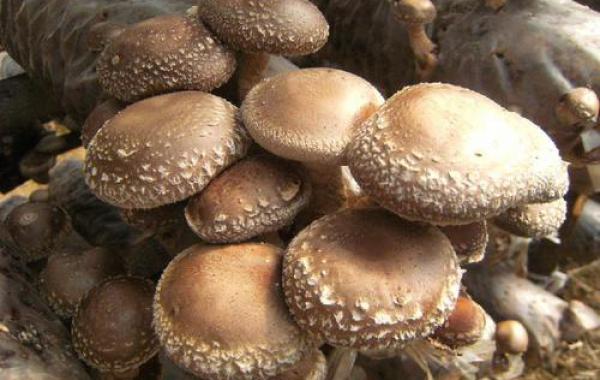
What Are the Grading Standards for Edible Mushrooms? Read This One Article to Understand
What are the grading standards for edible mushrooms?
-
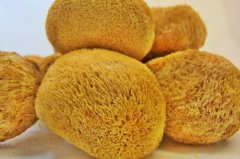
Where is the best origin for lion's mane mushroom? Eating it this way best nourishes the stomach
Lion's mane mushroom is a food ingredient with extremely high nutritional value, and it has a great many effects and functions. The most widely known of its functions is nourishing the stomach. So do you know how to eat it to best nourish the stomach? And which places in China produce lion's mane mushroom? Where is the lion's mane mushroom produced
-

Growing edible mushrooms from sugarcane, this cultivation technique is worth learning
In Chengmai, Hainan, there is a company that grows edible mushrooms from sugarcane! "This is the oyster mushroom, crisp and fresh in taste, hailed as the finest of mushrooms," the company's person in charge...
-

What Is Matsutake? Get to Know This Edible Mushroom
Matsutake is a delicacy from the mountains. The first ingredient featured in the documentary series "A Bite of China" was matsutake. Matsutake is a delicious mushroom known as a "treasure bestowed by nature." It...
-

Early-spring mushroom fruiting tips: manage it this way for good fruiting
After the Start of Spring, temperatures gradually rise. If you carry out simple yet clever management of mushroom beds that already fruited continuously the previous autumn, you can easily prompt a season of spring mushrooms. The specific methods are as follows: 1. Loosen the compost and replenish the soil. When the temperature rises back to 10°C, loosen the compost and replenish the soil promptly. This not only helps expel waste gases from the compost, but is even more helpful for breaking apart old mycelium, promoting the growth of new mycelium, and forming strong mycelium, laying the foundation for increasing spring mushroom yields. Loosening the compost is divided into deep, medium and light loosening, and should be determined according to the actual condition of the mushroom bed compost.
-
What Is the Wine Cap Mushroom? Getting to Know This New Mushroom Variety
The wine cap mushroom, also known as the wine-red stropharia, has brightly colored fruiting bodies, tender and smooth flesh, a crisp and refreshing stem, rich nutrition, and excellent taste; dried mushrooms have a strong aroma comparable to flower shiitake. It is a rare edible fungus with great market development potential, and it is also one of the new mushroom varieties recommended by the Food and Agriculture Organization of the United Nations to developing countries. It is suitable for cultivation in areas such as western Guangdong and northern Guangdong in our province.
-
Peat can be used to cultivate edible fungi, and Japan already has practical experience with this.
Japan has successfully developed a method for cultivating edible fungi using a mixed substrate based mainly on 20% to 30% peat and oil-containing grains (both measured on a dry matter basis). Before cultivation, the long fibers in the peat are cut and chopped, and a mixture of barley husks, rice bran and sawdust, which can effectively increase aeration, is added, after which the substrate is bottled, sterilized and inoculated. When the formula is suitable, the harvest rate of oyster mushrooms per bottle reaches 55%, an increase of 30% compared with cultivating oyster mushrooms using a substrate of sawdust and rice bran alone. The growth period can be shortened from 50 days to 56 days
-
What excellent varieties of oyster mushrooms are there? This article provides a detailed introduction for you
According to the different temperature requirements during the fruiting body differentiation stage, oyster mushrooms are divided into four groups, namely the low-temperature type, the medium-temperature type, the high-temperature type, and the wide-temperature type. For the low-temperature type, the optimum temperature for fruiting body differentiation is 10-15°C, such as Pleurotus ostreatus, Pleurotus pulmonarius, Jingzhou No. 1, Suping 48, and 4011. For the medium-temperature type, the optimum temperature for fruiting body differentiation is 16-22°C, such as Florida oyster mushroom and Phoenix mushroom. For the high-temperature type, the optimum temperature for fruiting body differentiation is 22-26°C, such as Pleurotus citrinopileatus, Pleurotus djamor, and Suping No. 1
-
A detailed guide to oyster mushroom preservation techniques: this way they keep much longer
Under ordinary conditions oyster mushrooms are difficult to store and have a short shelf life. Two days after picking, oyster mushrooms lose water and their freshness drops sharply, the caps turn yellow and an off-odor appears. Whenever the fruiting peak comes, large quantities of fresh mushrooms flood the market at once, causing prices to fall sharply; on the other hand, in the off-season and in cities far from mushroom-growing areas, there is little mushroom supply and nothing to sell. For this reason, we carried out research on the storage and preservation of oyster mushrooms, briefly described below. Test materials: common oyster mushroom strains PL-32, PL-35 and Florida, all second-flush mushrooms, collected from farmers' mushroom gardens on the outskirts of Gutian County; the preserv
-
What is the fresh-keeping principle for edible fungi? This article will help you understand it clearly
Fresh-keeping for edible fungi (theprincipleoffresh-keepingforediblefungi): Mushroom bodies separated from the culture substrate still have vitality, and living organisms have resistance to adverse external environments and microbial infection. However, the stronger the life activity, the faster the rate of freshness decline. Therefore, without destroying the normal physiological functions of the organism, by controlling various factors that affect the physiological and biochemical changes of fresh mushroom products, the life activity of the mushroom body can be kept as low as
条件筛选