-

What are the processing methods for Angelica sinensis? Read this article to find out
After harvesting, shake off the soil, pick out the rotten roots, remove the remaining leaf stalks, and after the moisture has slightly evaporated, tie them into flat bundles weighing 0.5~1 kg and place them in a smoking shed. Inside the smoking shed, build a 130 cm high rack, lay bamboo strips on top, and place the angelica bundles on it alternately flat and upright, with a thickness of 30~50 cm. Use soybean stalks, wet poplar, willow wood, etc. as fuel; after lighting, spray water so that it only produces smoke and no open flame, smoke them to color, until the surface of the angelica turns reddish red, then switch to coal fire or firewood (grass) fire and smoke for about 10 days, then turn over
-
What plant is Caragana? Read this one article to understand
A plant of the genus Caragana in the Fabaceae family, scientific name Caragana Fabr., also known as ningtiao and Caragana korshinskii. Its English name is also peashrub. This genus has about 60 species. Native to Eurasia, China produces about 50 species, most of which are grassland psammophytic, xerophytic deciduous shrubs, and are forage and green manure plants. Widely distributed in the northwest, Inner Mongolia and other places. Mongolia and Siberia of the former Soviet Union also have distribution. Leaves often clustered or alternate, even-pinnate compound leaves or false palmate compound leaves, leaflets 4-20, entire, stipules small
-
What is the fresh-keeping principle for edible fungi? This article will help you understand it clearly
Fresh-keeping for edible fungi (theprincipleoffresh-keepingforediblefungi): Mushroom bodies separated from the culture substrate still have vitality, and living organisms have resistance to adverse external environments and microbial infection. However, the stronger the life activity, the faster the rate of freshness decline. Therefore, without destroying the normal physiological functions of the organism, by controlling various factors that affect the physiological and biochemical changes of fresh mushroom products, the life activity of the mushroom body can be kept as low as
-
What are the tree species characteristics of the dawn redwood? Read this one article to understand
The tree species characteristics of the dawn redwood are: it is a deciduous tree of the Taxodiaceae family. It can reach a height of more than 35 m, with a diameter at breast height of 2.5 m. The trunk is upright at the top, and the base is often swollen; the crown is conical. It is a precious tree species unique to China. It is an ancient relict plant. The dawn redwood is highly adaptable, but it prefers a mild and humid climate and deep, fertile, moist soil. Drought, barrenness, low temperatures and saline-alkali conditions are not conducive to the growth of the dawn redwood. The wood of the dawn redwood has straight grain, is light and soft, has little difference in shrinkage, and is easy to process. It is suitable for timber for construction, furniture, farm tools, ships and so on, and can also be used as a raw material for papermaking. At the same
-
What are the common diseases of peppers in early spring? This article summarizes them for you
Recently, continuous cloudy, snowy and cooling weather has seriously affected the normal growth of chili peppers and sweet peppers. According to what the author learned on March 5 in pepper growing areas such as Jitai Town, Sunjiaji Subdistrict Office and Gucheng Yangjia Village in Shouguang City, chili peppers and sweet peppers currently in the fruiting stage are commonly infected due to the unfavorable weather, mainly with gray mold and sclerotinia disease --- brown water-soaked lesions appear at the top or stem end of young fruits, then become sunken and rot, and a gray mold layer appears on the surface of the lesions; sclerotinia disease spreads from the fruit stalk to the whole fruit, showing water-soaked rot, light grayish brown,
-
How to Tell Spring, Summer and Autumn Tea Apart? This Article Teaches You to Distinguish Them with Ease
In winter, the main growing part of the tea plant is the root, and amino acids are synthesized in the root of the tea plant and then transported to the tips. After winter dormancy, the tea plant has stored many nutrients internally; in winter and spring, sunlight is weak and the tea plant grows slowly, which is a main factor in the formation of certain aroma substances in tea. Therefore, spring tea has the advantages of a lustrous and oily color, a rich and fragrant aroma, a thick taste with a sweet aftertaste, and a soft and thick leaf base. In addition, spring tea is generally rather plump, stout and heavy, with more downy hairs, fine and dense leaf veins, and inconspicuous serrations along the leaf margin. In summer, temper
-
What is a wild porcini mushroom? This article introduces you to this wild mushroom
Porcini mushrooms are nutritious and delicious, and are a well-known and highly popular edible mushroom. They have the effects of clearing heat and relieving restlessness, nourishing the blood and harmonizing the middle, aiding digestion, expelling wind and dispelling cold, and tonifying deficiency and boosting energy. In folk medicine they are often used to treat colds and coughs, food stagnation and abdominal distension, and spleen deficiency with fatigue and listlessness. Other notes: The wild edible mushroom series are all collected from the well-preserved ecological environment of the completely pollution-free Jingning She Township and the wild environment of Yunnan, and are processed, packaged and stored according to organic requirements. Baixing's wild and natural edible mushroom series products are not only highly nutritious and delicious, but also particularly precious.
-

What are the cultivation requirements for Aconitum carmichaeli? Read this article to understand the growing techniques
Cultivation requirements for Aconitum carmichaeli
-
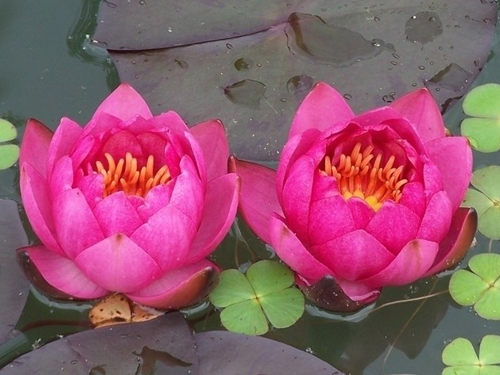
What are the common cultivated varieties of water lilies? This article gives you an overview
Water lilies have large flowers and beautiful leaves, and are fragrant. They generally open around 12 noon to 3-4 pm, close after sunset, open again the next day, and can bloom continuously for 3-5 days. Common cultivated water lilies include: 1. White water lily. Flowers white and large, 10-15 cm in diameter, petals 16-24, arranged in 2-3 whorls
-

Taxus care knowledge: this one article is all you need
1. Care of newly purchased bonsai. For a newly purchased Taxus bonsai, it is best to spray the leaves with a 800- to 1000-fold dilution of potassium dihydrogen phosphate solution about every three or four days, generally before 10 a.m., or around 4 p.m. After spraying three to four times in a row, gradually reduce to spraying about once a month
条件筛选