-
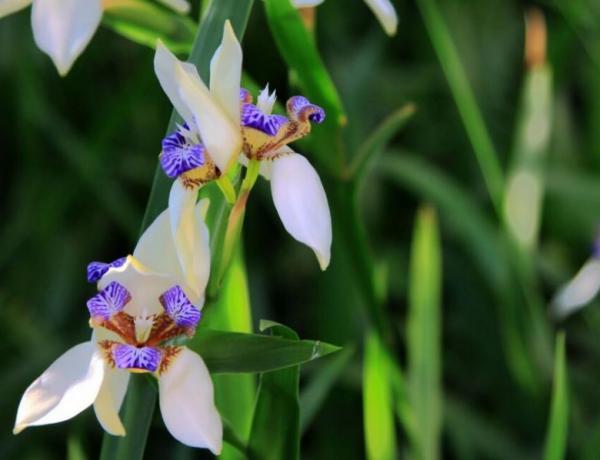
What are the uses and benefits of Cymbidium goeringii? Read this article to understand its value
What are the uses of Cymbidium goeringii?
-
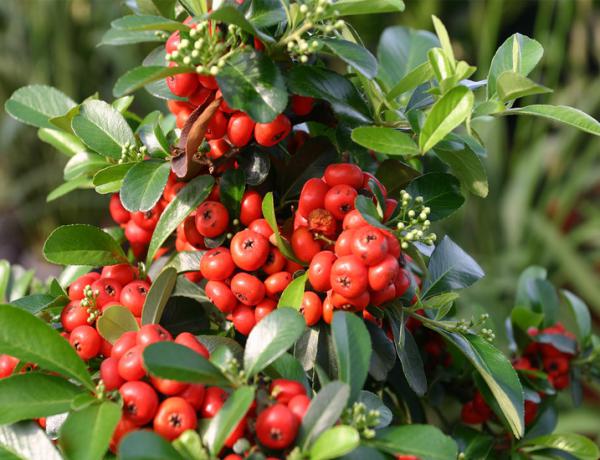
Can the fruit of the Ardisia crenata be eaten? You'll understand after reading this article
Can the fruit of the Ardisia crenata be eaten?
-
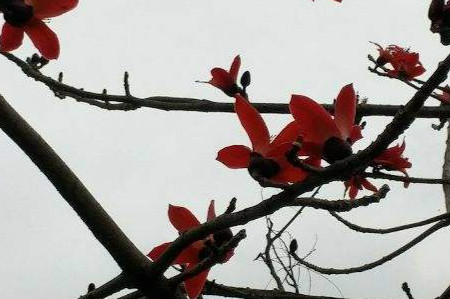
Is the kapok a flower or a tree? This article will help you get to know the kapok
What is the kapok, a flower or a tree
-

What are the propagation methods for Persian buttercup? This article explains in detail
Propagation methods for Persian buttercup
-

What are the propagation methods for crape myrtle? This article explains seedling techniques in detail
Propagation methods for crape myrtle
-

What is the difference between Torreya grandis and Taxus? This article teaches you to tell them apart quickly
Torreya grandis, also known as Chinese torreya, Yu torreya, and torreya seed, is an evergreen tree of the genus Torreya in the family Taxaceae, and is an economic tree species unique to China. It mainly grows in Zhejiang, Anhui, Fujian, Jiangsu, Guizhou, Hunan, Jiangxi and other provinces south of the Yangtze River in China, among which Zhejiang's Fengqiao Chinese torreya, Anhui's Taiping Chinese torreya, and Jiangxi's Yushan Chinese torreya (nut) are the most famous. Its fruit is a treasure among dried fruits, containing rich protein and a variety of trace elements. In addition, Chinese torreya is also a precious Chinese medicinal material, with the effects of killing parasites, relieving food stagnation, and moistening dryness.
-
What are the values and uses of the glossy privet tree? Read this article to understand
Landscaping uses: The glossy privet (Ligustrum lucidum) sways in all four seasons, with well-spaced branches, dense foliage and a neat tree shape. It is a commonly used ornamental tree species in gardens, and can be planted alone or in clusters in courtyards, or used as a street tree. Because of its strong adaptability, fast growth and tolerance to pruning, it is also used as a hedge. It generally takes 3 to 4 years to take shape and achieve a screening effect. It is easy to propagate and raise seedlings from seed, and can also serve as a rootstock for grafting and propagating osmanthus, lilac, and the colored-leaf plant golden-leaf privet. Medical uses of glossy privet leaves: The leaves are opposite, leathery, ovate or ovate-lanceolate, 5-14 cm long,
-
How to carry out tending and management of dawn redwood? Read this article to understand the key points
Tending should be carried out promptly after afforestation. Watering during April and May is the key to ensuring survival. When planting large saplings, special attention must be paid to drought resistance during the hot season. Weed and loosen the soil two to three times each year, with tending from May to June and from August to September having notable results. After 2 years, applying fertilizer once before spring bud break is very necessary. Generally, pruning is not necessary before the stand is established, but after the stand is established, pruning should be moderate. When the tree height is 6 to 10 m, the pruning height is one quarter to one third of the tree height; when the tree height is 10 to 15 m, the pruning height is one third to one half of the tree height.
-
What are the tree species characteristics of the dawn redwood? Read this one article to understand
The tree species characteristics of the dawn redwood are: it is a deciduous tree of the Taxodiaceae family. It can reach a height of more than 35 m, with a diameter at breast height of 2.5 m. The trunk is upright at the top, and the base is often swollen; the crown is conical. It is a precious tree species unique to China. It is an ancient relict plant. The dawn redwood is highly adaptable, but it prefers a mild and humid climate and deep, fertile, moist soil. Drought, barrenness, low temperatures and saline-alkali conditions are not conducive to the growth of the dawn redwood. The wood of the dawn redwood has straight grain, is light and soft, has little difference in shrinkage, and is easy to process. It is suitable for timber for construction, furniture, farm tools, ships and so on, and can also be used as a raw material for papermaking. At the same
-
What pesticides can be used on tobacco leaves? Read this article to understand
What pesticides can be used on tobacco leaves? Please give an introduction. The pesticides commonly used on tobacco mainly include dimethoate, omethoate, pirimicarb (pirimor), aldicarb (temik), endosulfan (thiodan), carbaryl (sevin), trichlorfon, esfenvalerate (sumicidin), lambda-cyhalothrin (kongfu)...
条件筛选