-

What are the propagation methods for crape myrtle? This article explains seedling techniques in detail
Propagation methods for crape myrtle
-

What varieties and types of Angelica sinensis are there? This article explains in detail
The whole Angelica sinensis root is roughly cylindrical. The upper end of the root is called the "gui tou" (head), the main root is called the "gui shen" (body) or "cun shen," the branch roots are called the "gui wei" (tail) or "gui tui" (leg), and the whole is called "quan gui" (whole root). The whole root is 15-25 cm long, with a fine, dense outer skin, yellow-brown to dark brown, with longitudinal wrinkles and transversely elongated lenticels; the upper end of the root is swollen, 1.5-4 cm in diameter, bluntly rounded, with residual leaf sheaths and stem bases; the main root is thick and short, l-3 cm long, l.5-3 cm in diameter, with 3-5 or more branch roots below, thick at the top and thin at the bottom, mostly twisted, with a few fibrous root scars. The texture is flexible and tough, and the cut surface is yellow-white
-
What is the difference between Panax notoginseng and Gynura segetum? This article teaches you to tell them apart
Also known as red-backed sanqi, soil sanqi, and blood-breaking elixir. The source is the root of the Asteraceae plant Gynura segetum (Lour.) Merr. Plant morphology: perennial herb, 1-1.5 m tall. Stem erect, somewhat succulent, with fine longitudinal ridges. Basal leaves clustered, spoon-shaped, entire or serrate or pinnately divided, purple-green beneath; cauline leaves alternate, oblong, 10-25 cm long, 5-10 cm wide, pinnately divided, lobes ovate to lanceolate, margin shallowly
-
Which plants fear rain and sun exposure in summer? This article is all you need
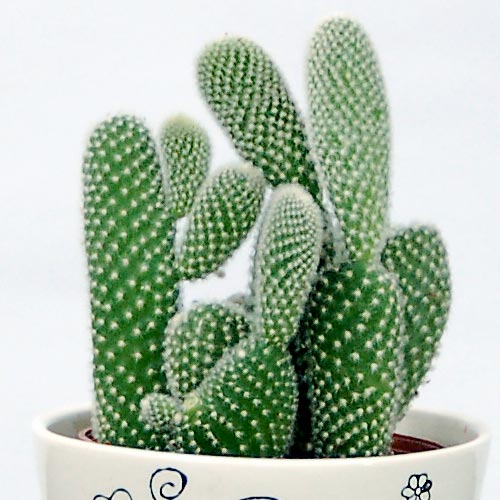
Summer is a season of high temperature and high humidity, which is bad for the growth of flowers and plants. Below are how some common potted flowers react to high humidity. Flower lovers should pay more attention to preventing dampness, so that the flowers they have painstakingly cultivated do not die. In home potted cultivation, cacti and cactus balls (Echinopsis) are fairly drought-tolerant, and the water used for watering must be clean, without any dirt
-
What are the key points of summer management in a peach orchard? This article is all fruit growers need to read
Summer is an important period for peach shoot growth and fruit enlargement. Strengthening peach orchard management is the key to increasing production this year and achieving a bumper harvest next year. 1. Fertilize according to the tree: In late May, apply a topdressing to peach trees that have borne a lot of fruit this year and are relatively weak in vigor. Conversely, do not fertilize peach trees that have borne little fruit and are relatively vigorous. When fertilizing, dig a ring-shaped fertilization trench about 1 m long and 0.25 m deep and 0.25 m wide at the drip line of the canopy. For mature fruiting trees, apply 40-50 kg of decomposed human, livestock, and poultry manure water per tree, plus 0.3-0.4 kg of ammonium phosphate (or
-
What are the excellent varieties of honeysuckle? This article introduces them in detail
Currently, Pingyi County has 21 varieties of honeysuckle, planted throughout the county. Due to the long history of cultivation and long-term propagation by cuttings and sexual reproduction, many varieties or strains have naturally formed, with the good and the poor mixed together and difficult to distinguish. The currently common varieties include the Mao Hua (hairy flower) series: Da Mao Hua, Xiao Mao Hua; the Ji Zhua (chicken claw) series: Da Ji Zhua Hua, Xiao Ji Zhua Hua, Shan Yin Hua, Xian Hua Zi, Zi Jing Zi, Da Ma Ye, Xiao Ma Ye, E Ling Tong, Hong Hua Zi, Ye Li Cang, Ye Li Qi, etc. In recent years, the center has, through multiple rounds of purification and rejuvenation and seed verification of the Mao Hua series and Ji Zhua Hua series, bred excellent varieties and named them "Menghua No. 1 and No. 2". Their main advantages are: 1. Many branches when seedlings 2. Where there are branches, there are flowers 3. Fewer seedlings needed for planting 4. Fast development of branches and leaves 5. Large flower buds, high yield 6. 1-2 years earlier entry into the high-yield period. The excellent varieties are mainly developed as economic forests, and the mixed varieties are mainly developed as ecological forests.
-
What excellent varieties of oyster mushrooms are there? This article provides a detailed introduction for you
According to the different temperature requirements during the fruiting body differentiation stage, oyster mushrooms are divided into four groups, namely the low-temperature type, the medium-temperature type, the high-temperature type, and the wide-temperature type. For the low-temperature type, the optimum temperature for fruiting body differentiation is 10-15°C, such as Pleurotus ostreatus, Pleurotus pulmonarius, Jingzhou No. 1, Suping 48, and 4011. For the medium-temperature type, the optimum temperature for fruiting body differentiation is 16-22°C, such as Florida oyster mushroom and Phoenix mushroom. For the high-temperature type, the optimum temperature for fruiting body differentiation is 22-26°C, such as Pleurotus citrinopileatus, Pleurotus djamor, and Suping No. 1
-
What are the common tea plant diseases in China? This one article gives you a full understanding
More than 100 tea plant diseases have been recorded, and more than 30 are common. I. Leaf diseases: nearly 40 have been recorded. Bud and leaf diseases mainly include: tea blister blight, which occurs rather severely in high-mountain tea gardens in the southwestern tea region; tea white star disease and tea round red star disease, which cause severe damage under conditions of low temperature and high humidity in high-mountain tea gardens in the provinces of East China and Southwest China; tea bud blight is one of the common important diseases in Zhejiang, Hunan and other provinces. Diseases of mature leaves and old leaves include tea cloud-pattern leaf blight, tea ring spot disease, tea anthracnose, tea brown
-
What are the digestive physiological characteristics of donkeys? Read this article to understand
Digestive physiological characteristics of donkeys: Donkeys have hard, well-developed teeth and flexible upper and lower lips, suitable for chewing coarse and hard feed. Donkeys have well-developed salivary glands; every 1 kg of forage can be softened and digested by 4 times its amount in saliva. The donkey's stomach is small, only equivalent to one-fifteenth that of a cow of the same size. The cardiac sphincter of the donkey's stomach is well-developed, while the vomiting nerve is underdeveloped, so it is not easy to feed feed that ferments and produces gas, to avoid gastric dilation. Chyme stays in the stomach for a short time; when the chyme in the donkey's stomach reaches two-thirds, as feeding continues, the stomach contents are continuously
-
What are the living habits of the red swamp crayfish? A detailed explanation in this article
The red swamp crayfish is commonly known as the crayfish. For beginners raising red swamp crayfish, understanding the living habits of the red swamp crayfish and taking targeted aquaculture technical measures is the key factor for successful red swamp crayfish farming. The main living habits of the red swamp crayfish related to farming are introduced below. Activity habits: The red swamp crayfish is a nocturnal animal that lives a benthic crawling life. During the day it often hides in dim corners at the bottom of the water body, beside rocks, in grass or in burrows, and comes out at night to feed. Therefore, feed should be given mainly as a single afternoon feeding. The red
条件筛选