-
Are there pesticides with strong efficacy for controlling edible mushroom diseases and pests?
Are there pesticides with strong efficacy for controlling edible mushroom diseases and pests?
-

What new methods are there for controlling pests in edible fungi?
What new methods are there for controlling pests in edible fungi?
-

What methods are there for identifying the quality of mushroom spawn stock?
How to identify the quality of mushroom spawn stock
-
What Varieties of Bamboo Fungus Are There? Growth Environment and Premium Producing Areas Explained
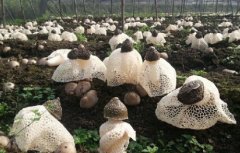
There are many varieties of bamboo fungus, such as yellow-skirt, variegated, spiny-backed, long-skirt, short-skirt, red-skirt bamboo fungus, etc. Among them, the yellow-skirt bamboo fungus is toxic and cannot be eaten, otherwise food poisoning will occur. The biggest characteristic of the yellow-skirt bamboo fungus is that both the skirt and the stipe are yellow.
-
Differences Between Russula vinosa and the Emetic Russula, and Cultivation Techniques
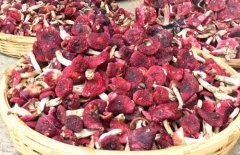
Russula vinosa and the emetic russula are very similar, so how do you tell them apart? Can Russula vinosa be cultivated artificially? What are the cultivation techniques for Russula vinosa? Let's take a look. Russula vinosa and others have fruiting bodies that are generally medium-sized; the emetic russula, also known as the vomiting russula, looks similar to
-
What Types of Edible Mushrooms Are There? An Introduction to Common Varieties and Their Classification
Edible mushrooms refer to macrofungi with large fruiting bodies that can be eaten, commonly known as mushrooms. More than 350 species of edible mushrooms are known in China, and common ones include shiitake, straw mushroom, button mushroom...
-
What types of mushroom compost are there for straw mushrooms? How to prepare them
The raw materials needed for cultivating straw mushrooms come from a wide range of sources. Currently, the most commonly used are rice straw, wheat straw, waste cotton, and cottonseed hulls. Some spent substrate left over from cultivating other edible fungi can also be used to grow straw mushrooms. 1. Rice straw Choose golden-yellow, mold-free dry rice straw, and sun-dry it for 1-2 days before use to prevent the appearance of coprinus or other contaminating fungi during cultivation. There are generally two ways to treat rice straw. One is to cut the rice straw into pieces about 5 cm long, then soak them in 3% limewater for 1-2 days, then add dry pig manure or dry cow manure equal to 20%-25% of the straw weight and compost the mixture
-
What excellent varieties of oyster mushrooms are there? This article provides a detailed introduction for you
According to the different temperature requirements during the fruiting body differentiation stage, oyster mushrooms are divided into four groups, namely the low-temperature type, the medium-temperature type, the high-temperature type, and the wide-temperature type. For the low-temperature type, the optimum temperature for fruiting body differentiation is 10-15°C, such as Pleurotus ostreatus, Pleurotus pulmonarius, Jingzhou No. 1, Suping 48, and 4011. For the medium-temperature type, the optimum temperature for fruiting body differentiation is 16-22°C, such as Florida oyster mushroom and Phoenix mushroom. For the high-temperature type, the optimum temperature for fruiting body differentiation is 22-26°C, such as Pleurotus citrinopileatus, Pleurotus djamor, and Suping No. 1
-
There is an art to watering oyster mushrooms, and mastering the six observations is key
First, observe the climate. In dry weather, water more to raise humidity; in humid weather, water less. Second, observe the water temperature. When the mushroom house temperature is above 25°C, water at night or in the early morning or evening after the air temperature has dropped. Third, observe the mushroom house's moisture-retention performance. Mushroom houses with poor moisture retention need more watering, otherwise less. Fourth, observe the dryness or moisture of the substrate at both ends of the mushroom bag. When the substrate is dry, the amount of water sprayed should be sufficient, and the frequency correspondingly reduced. Fifth, observe the strength of the mycelium. When the mycelium in the substrate is strong, more water should be used, and the water for pinning and for the flush transition should be heavy; otherwise, it should be light. Sixth, observe how many mushrooms there are. When there are many and large mushrooms on the substrate surface, the water requirement is
-
What methods are there for identifying the quality of edible mushroom spawn?
Many edible mushroom growers often report that the use of poor-quality spawn leads to cultivation failure, yet they do not know how to tell good spawn from bad. For this reason, the author specifically introduces several simple methods for identifying good and poor edible mushroom spawn. 1. Oyster mushroom. Spawn with white, dense, thick mycelium, appearing cottony-woolly, and showing the phenomenon of climbing the bottle wall is good spawn. If spawn cultivated on sawdust is used, sawdust that has been decomposed takes on a light yellow color, and a small number of primordia appear, it is good spawn. If the mycelium is sparse or forms strands, the cottonseed hull substrate turns dark red, the
条件筛选