Differences Between Russula vinosa and the Emetic Russula, and Cultivation Techniques
Russula vinosa and the emetic russula are very similar, so how do you tell them apart? Can Russula vinosa be cultivated artificially? What are the cultivation techniques for Russula vinosa? Let's take a look.
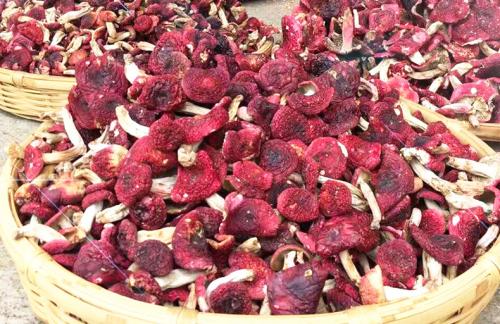
Russula vinosa and others have fruiting bodies that are generally medium-sized. The emetic russula, also known as the vomiting russula, looks similar to Russula vinosa, but its fruiting body is generally smaller. It is a fairly widely distributed poisonous fungus. All of them belong to the order Agaricales, family Russulaceae, genus Russula.
Russula vinosa: initially a flattened hemisphere, then spreading flat; sticky when young, lusterless or velvety; the center is dark red to dark (black) red, while the margin is lighter, appearing deep red, with fine transverse lines commonly seen along the cap edge.
Emetic russula: flattened hemispherical, later becoming flat and spreading, and concave when old. Light pink to coral red; spores nearly spherical and colorless; cystidia lanceolate.
What are the cultivation techniques for Russula vinosa? At present, Russula vinosa is rarely cultivated artificially, because of technical issues and its growing conditions. There are three important points. First, temperature: generally 20°-24° is its best growing temperature. Second, bedding material: the growing nutrients for Russula vinosa come largely from the bedding material, so only high-quality bedding material will let it develop better. Third, humidity: when culturing the mycelium, the air humidity should be kept at around 65%-75%, as this humidity is the most suitable for the growth of Russula vinosa mycelium.