-
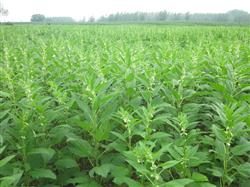
What diseases should be prevented and controlled during the cultivation of white sesame?
What diseases should be prevented when growing white sesame? Please explain that the following diseases should be prevented when growing white sesame: 1. Characteristics of major disease occurrence. The main sesame diseases include sesame stem spot blight, sesame Fusarium wilt, sesame bacterial wilt, sesame Phytophthora blight, etc. 1. Sesame stem spot blight. Sesame stem spot blight is also called sesame stem blight, sesame black root madness, etc.
-
What are the precautions for planting sesame in summer?
What problems should be noted when planting sesame in summer? Please give an introduction because during the summer sesame sowing period, temperatures are high and the weather is changeable. If drought occurs, the seedlings are easily "scorched to death," causing gaps in the stand; if heavy rain occurs, they are easily "smothered to death," also causing gaps in the stand. Therefore, mechanized sowing is recommended, sowing 0.7 kg per 667 sq m, using 2...
-
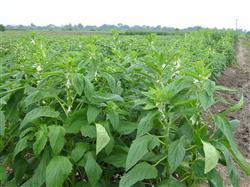
What are the key technical points for summer management of black sesame?
How should black sesame be managed in summer? Please give guidance. The summer management methods for black sesame can refer to the following: First, thinning and final thinning of seedlings, checking seedlings and filling gaps. Because sesame seeds are small and many seedlings emerge, after emergence, when the first pair of true leaves grows, the seedlings should be thinned; when 2-3 pairs of true leaves grow, the seedlings should be thinned again; at 4 pairs of true leaves, the seedlings should be finally thinned. Black sesame generally leaves about 8,000 plants per mu; if seedling gaps or broken rows occur due to poor soil moisture at sowing, transplanting dense seedlings to fill sparse areas or replanting after sprouting can be used to ensure full and strong seedlings.
-
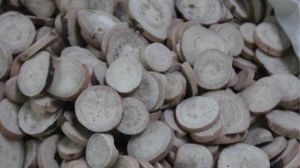
Is peony the same as white peony root? A detailed explanation of their relationship and differences
Peony and white peony root are different. Specifically, peony is divided into white peony root and red peony root. Generally speaking, what we call white peony root is just one type of peony, so it cannot be said that peony is white peony root. In simple terms, the broad concept of peony includes the narrower concept of white peony root, but it cannot be said that peony is white peony root, as that would be an overgeneralization.
-
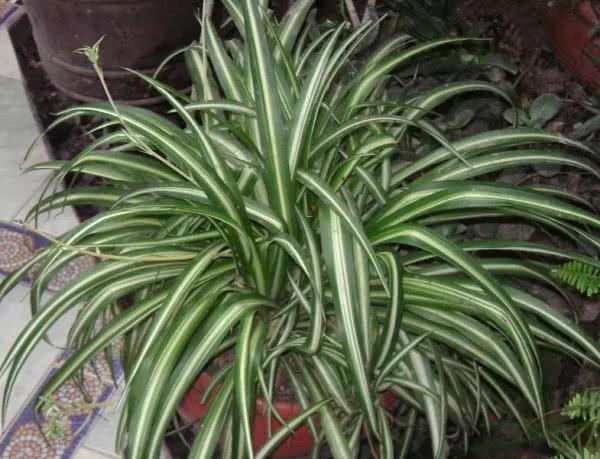
Take all the branches and stick them in to fill the pot - it will be bursting with growth that very same year!
1. Spider Plant. The spider plant is a very common green plant in gardening enthusiasts' homes. It is highly adaptable, easy to keep alive, and has low soil requirements. Its roots and leaves resemble those of an orchid, staying green all year round, and it also has a certain air-purifying ability, making it a great green plant choice for many newly renovated homes...
-

A Punk Guide to Wellness: Self-Destructing and Self-Rescuing at the Same Time, Every Point Hits Home
When it comes to wellness, many people think of the grandparents born in the 1960s, but time flies so fast - who would have thought that the once-rebellious post-80s and post-90s generations have all reached the age where they need to "practice wellness." But first, let's take a look at these new humans...
-

-
-
What are the agricultural prevention methods for sesame diseases?
Agricultural prevention methods for sesame diseases
-
What are the chemical control methods for sesame diseases?
Chemical control methods for sesame diseases
条件筛选