Take all the branches and stick them in to fill the pot - it will be bursting with growth that very same year!
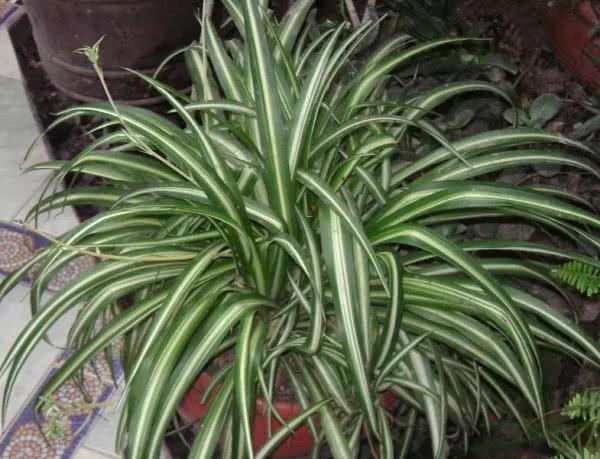
1. Spider Plant
The spider plant is a very common green plant in gardening enthusiasts' homes. It is highly adaptable, easy to keep alive, and has low soil requirements. Its roots and leaves resemble those of an orchid, staying green all year round, and it also has a certain air-purifying ability, making it a great green plant choice for many newly renovated homes.
The spider plant sends out flower stems from its leaf clusters, forming creeping roots with aerial roots on them - just cut them off and put them in soil or water and they will survive!
Care Methods
Soil: Loose, well-draining, fertile
Water: Keep moist
Temperature: Optimal 15-25°C, above 5°C in winter
Light: Partial shade
Fertilizer: Relatively fond of fertilizer
Propagation Methods: Division, cuttings
2. Peperomia
Peperomia, also called round-leaf pepper or pepper plant, belongs to the Piperaceae family and is a year-round green plant. This plant is small and lovely, with a height under 30 cm. It is mainly grown for its leaves, which are very beautiful. It is mainly placed by windows, on desks, or on coffee tables indoors.
Peperomia can be propagated by leaf cuttings or division. Propagating with stems is faster, at a temperature between 20-25°C, keeping the substrate moist and the air humidity high, roots and adventitious buds will form in 2-3 weeks.
Care Methods
Soil: Loose, well-draining, fertile sandy soil
Water: Likes water and moist environments
Temperature: Optimal 20-30°C, above 5°C in winter
Light: Partial shade or diffused light environment
Fertilizer: A light feeding once a month, no fertilizer in winter
Propagation Methods: Division, cuttings
3. Purple Spider Plant
Purple spider plant, also called inch plant, is a perennial foliage herbaceous plant. In full sunlight the leaves are purple-green, while in more shaded environments the leaves grow greener.
It is usually propagated by cuttings. Pick a few nodes of healthy stems and insert them into moist sand and they will survive. The optimal temperature for cutting roots is 18°C-25°C.
Care Methods
Soil: Loose, well-draining soil
Water: Keep the pot soil moist, control watering in winter
Temperature: Optimal 15-25°C, above 10°C in winter
Light: Partial shade or diffused light environment
Fertilizer: A light feeding once a month, no fertilizer in winter
Propagation Methods: Cuttings
4. Moss Rose
Moss rose is the earliest plant many families grow. Snap off a bit of stem and just toss it anywhere, and it will grow into a big potful - it can even grow on roof tiles and in wall cracks. Moss rose blooms facing the sun, as gorgeous as brocade and embroidery, at its most abundant at noon, each flower straining to open wide, fully enjoying the warmth the sun gives, adding endless charm and a unique style to the home.
Moss rose comes in rich, colorful varieties, and looks great placed at home. To propagate, just snap off a bit of stem and stick it in soil and it will survive.
Care Methods
Soil: Loose, well-draining soil, tolerates poor soil
Water: Keep the pot soil moist, control watering in winter
Temperature: Optimal 15-30°C, above 10°C in winter
Light: Full sunlight environment
Fertilizer: Apply monopotassium phosphate once every half month
Propagation Methods: Cuttings, sowing
5. Jade Plant
The jade plant has uniquely shaped leaves - its thick, plump green leaves are as glossy as jade, and its rugged, ancient-looking branches have the bearing of a large tree. Placed on a desk in the home, it closely resembles the jade-carved bonsai of the Imperial Palace, elegant and noble, with a beautiful scenic charm.
Except during the low-temperature dormant period in winter, it can be propagated by cuttings at any time. In particular, choosing a thick large branch with side branches as a cutting makes it easy to root, and the plant can quickly fill out and take shape.
Care Methods
Soil: Loose, well-draining soil, not demanding
Water: Keep the pot soil moist, in autumn and winter keep the pot soil dry but not parched
Temperature: Optimal growth temperature 20-25°C, above 5°C in winter
Light: Diffused light, relatively shade-tolerant
Fertilizer: 2-3 times during the growing season
Propagation Methods: Cuttings, sowing
6. Elephant Bush
The elephant bush has small leaves, but they are glossy and shiny, fleshy, and very pleasing to look at. It is excellent bonsai material, and it is often pruned for shaping - the pruned branches will survive if stuck in soil as cuttings.
Elephant bush can be propagated by cuttings in all four seasons, with faster rooting and higher survival rates in spring and autumn. Let the branches dry for 1-2 days first, then insert them into soil.
Care Methods
Soil: Loose, well-draining, fertile soil
Water: Keep the pot soil moist, control watering in winter
Temperature: Optimal growth temperature 15-25°C, above 5°C in winter
Light: Full sunlight environment
Fertilizer: Once every half month during the growing season
Propagation Methods: Cuttings
7. Pennywort
Pennywort can be grown hydroponically or in soil, and does very well half in water and half in soil. Many gardening enthusiasts keep a pot of it in the office, and the more sun it gets, the more it grows. If you see a friend who has some, ask for a few plants with roots, and in a few months you can grow a whole pot.
Care Methods
Soil: Half soil, half water
Water: Keep the pot soil moist
Temperature: Optimal growth temperature 15-25°C, above 5°C in winter
Light: Partial sun
Fertilizer: Once every 2-3 weeks during the growing season
Propagation Methods: Cuttings, division, sowing