-
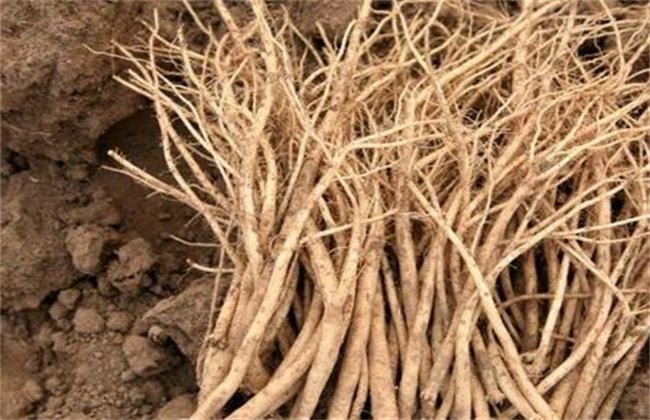
What are the common problems in the process of growing astragalus
Common problems in growing astragalus
-

What are the harvesting and processing methods for Asarum (wild ginger)?
For directly sown Asarum, it can be harvested after 3 to 4 years of growth. For transplanted Asarum, if two-year-old seedlings are planted, harvest 3 to 4 years after planting; if three-year-old seedlings are planted, harvest 2 to 3 years after planting. At present, in order to collect seeds, harvesting can be delayed by 5 to 6 years, collecting more seeds to expand direct sowing of seeds. Wild seedlings can be harvested in the 3rd year after transplanting. The customary harvesting period for wild Asarum is from May to June. For cultivated Asarum, harvesting from August to September gives good quality and high yield. After harvesting, remove all soil, tie every 10 or so plants into a small bundle, twist them into a braid with rope, and dry them in a cool, well-ventilated place under the eaves.
-
How to process Schisandra seeds? Detailed explanation of the correct processing method
After the Schisandra fruit ripens and is harvested, select plump, large, disease-free Schisandra fruits, soak them in warm water (40-45°C) for 3 days, rub off the flesh, pick out the seeds, then use water separation to remove the shriveled grains, and store them in a ventilated, dry place. After drying, carry out stratification. The stratification method is to fully mix the prepared seeds with 3 times their mass of wet sand; the sand's moisture level should be such that it does not form a ball when squeezed by hand. Dig a pit trench of 60cm×60cm×60cm, with the seed-and-sand mixture at a thickness of 40cm, cover with 15cm of soil, then cover with a
-
A Detailed Guide to the Processing Techniques and Methods for Goji Berries
1. Sun-drying: Place the freshly picked berries in a ventilated, shady spot for 2 days, then dry them in weaker sunlight. At night, cover them well so they are not exposed to dew, and do not turn them by hand, as this can cause the fruit to blister and turn black. 2. Oven-drying: First bake at 40-50°C for 24-36 hours, until the skin is slightly wrinkled; then bake at 45°C-50°C for 36-48 hours, until the fruit has fully shrunk and become wrinkled; finally bake at 50°C-55°C for 24 hours, and it will be thoroughly dry. Well-dried fruit,
-
Detailed Explanation of the Processing Method and Production Steps of Licorice Mango
It is made from salted mango blanks as the raw material, through desalting, soaking in seasoning, and sun-drying or oven-drying. (1) Process flow: salted mango blanks → desalting → drying → ingredient mixing → pickling → drying → finished product → packaging. (2) Key operating points: ① Desalting and drying: Soak the salted mango blanks in clean water to desalt, with a soaking time of about 6-8h, until the salt content is about 5%, then scoop them out and drain, sun-dry or use a dryer to dry to a semi-dry state, in preparation for soaking in the seasoning. ② Ingredients: 100kg mango blanks, 3kg licorice, 10kg granulated sugar, 45g sodium saccharin,
-
Detailed Explanation of the Key Processing Techniques for Licorice Bitter Melon
Remove both ends and the seeds from the bitter melon, split it into two halves, cut it into strips about 4 cm long, blanch them in a pot of boiling water, then soak them in a vat of cold water and take them out the next day to drain. Put them in a vat and add salt, one layer of melon and one layer of salt. After 1 to 2 days, transfer the whole batch, together with the brine, to another vat once, and after another 1 to 2 days, take them out and sun-dry them until fully dry to make dried bitter melon blanks for later use. Pour boiling water equal in weight to the original fresh melon into a vat, then add auxiliary ingredients such as perilla powder and licorice powder and mix well, so that the dried bitter melon is evenly moistened, then take it out and sun-dry until 80 percent dry.
-
What are the processing steps for Gastrodia elata? A clear explanation of every step at once
If Gastrodia elata is piled up for a long time after harvest, it will rot, so Gastrodia elata should be processed promptly after harvest. Its processing steps are as follows: 1. Grading. According to the size of Gastrodia elata, it can be divided into 3 grades. Those above 150 grams are first-grade products, 75-150 grams are second-grade products, and those below 75 grams and those damaged during digging are third-grade products. 2. Washing off soil. Wash the above 3 grades of Gastrodia elata separately with clean water. The washed Gastrodia elata must be processed the same day. If soaked in water overnight, the processed Gastrodia elata will be black, which will affect its medicinal use
-
What are the commonly used processing methods for Gastrodia elata?
The processing of Gastrodia elata must be done carefully and meticulously; otherwise, the good Gastrodia elata that was cultivated through hard work will be processed into inferior products, and all the effort will be wasted, failing to achieve good economic returns. There are 3 commonly used methods for processing Gastrodia elata: 1) Basket steaming method: the method of steaming Gastrodia elata in a basket is called the basket steaming method. Gastrodia elata processed by this method has bright color and the best quality. That is, wash the Gastrodia elata clean of surface soil with clean water, divide it into large, medium and small grades, place them separately in a ground basket and steam for 10-20 minutes; the small ones should be steamed for a shorter time, and the large ones slightly longer, with the degree of being steamed through and having no white core as the standard. 2) Rice-washing water boiling method: use 5
-
How to do the initial processing of Gastrodia elata? Detailed methods and steps
For sale as fresh produce, after harvesting, Gastrodia elata must be kept from being bumped, dropped, or mechanically damaged, then the silt on the tubers should be gently brushed off with a soft brush, and they can be packed into a wooden box or plastic box lined with soft material. If processing dried Gastrodia elata, it takes longer; generally, the boiling method or the steamer method is used for cooking, followed by drying by oven or sun-drying. In actual production, the steamer method and heated kang drying method are generally used to make dried product. The operation process is: grading Gastrodia elata - washing with clean water - steaming over high heat until cooked - heated kang drying at 50°C for 60 minutes, 60°C for 60 minutes, 70
-
Detailed Explanation of the Processing Technology and Method for Licorice-Flavored Melon Seeds
1. Ingredients: Use 5% licorice, 3% salt, and 0.05% saccharin, add water and boil into a broth. 2. Method: Wash the black melon seeds, air-dry them, put them into a wok and heat over high heat until hot to the touch. Switch to low heat, and at the same time sprinkle in the prepared broth, stirring while sprinkling, until the melon seed kernels turn yellowish.
条件筛选