-

China has mastered the key technologies of intelligent plant factories
China has mastered the key technologies of intelligent plant factories
-
New afforestation technologies and models are being vigorously promoted in Hebei
Hebei Province vigorously promotes new afforestation technologies and models
-
Detailed Explanation of 8 New Technologies for High-Yield and High-Efficiency Grain and Oil Crop Rotation
8 New High-Yield and High-Efficiency Technologies for Grain and Oil Crop Rotation
-
In the next ten years, those in rural areas who master these three technologies will succeed. Do you agree?
In the next ten years, those in rural areas who master these three technologies will succeed. Do you agree?
-
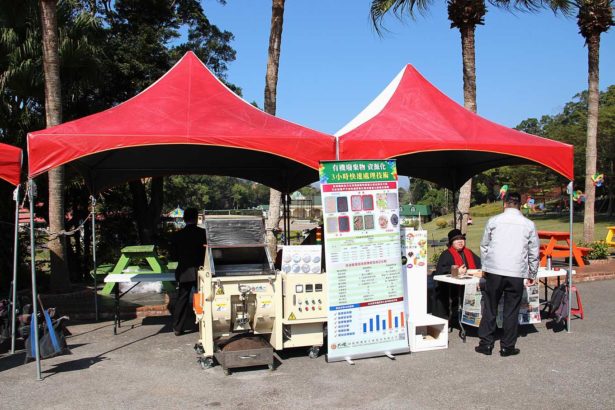
The Battle Against Epidemics and Food Waste 13"The Environmental Protection Administration estimates that emerging food waste treatment technologies will create NT$5 billion in business opportunities! How can a crisis be turned into an opportunity?
The Battle Against Epidemics and Food Waste 13"The Environmental Protection Administration estimates that emerging food waste treatment technologies will create NT$5 billion in business opportunities! How can a crisis be turned into an opportunity?
-
What are the new technologies for preserving cut tulips?
Harvesting stage: For Darwin varieties, cut when the flower bud is half colored and half green; for other varieties, cut when the entire bud is colored. Tulips should be cut several times a day, which makes the cut flowers uniform and gives them the best postharvest life. Storage and transport conditions: Cut tulips can be stored dry or wet for short periods. Varieties with a short postharvest life (such as Apollo) can be stored wet in water at 3°C for 3 days, or stored dry at 0-1°C for 6 days; varieties with a longer life (such as Aladdin and others) can be stored for about 3 days longer under the same conditions. From the soil
-
What are the latest rice breeding technologies? A full analysis of the world's cutting-edge methods
Research on salt-tolerant rice breeding The aims of this research are: 1. To enable new salt-tolerant rice to adapt to cultivation in saline-alkali land. 2. To make full use of seawater irrigation when freshwater is scarce. Abroad, there have been reports of salt-tolerant crops such as tomato, melon and barley. Salt-tolerant rice bred by the University of Sussex in the UK can grow vigorously in the field, but the complexity of regulating salt content in the field must be recognized. Research on genetic engineering of salt-tolerant rice is quite active in the UK. Researchers insert genes from salt-tolerant rice into rice,
-
Supporting Technologies of Improved Soybean Varieties and Methods for High-Yield Cultivation
1. Timely sowing: Select varieties with high yield-increase potential adapted to the local area, and sow at the right time. Apply herbicide before sowing soybeans, and apply herbicide again after sowing depending on the weed situation. Sowing time: spring soybeans from late April to early May, sowing depth 5 cm; soil moisture conditions must be given great attention at sowing. The conditions for soybean seed germination mainly include moisture, temperature and oxygen. ① Moisture: seed germination begins with water absorption, so water is an important factor for germination. When seeds germinate, the water absorbed equals 1.21
-
Detailed Explanation of the Southern Pig-Biogas-Fruit Ecological Model and Supporting Technologies
"Pig----Biogas----Fruit" makes use of resources such as mountain land, farmland, water surfaces, and courtyards, adopting the "biogas digester, pigsty, and toilet" three-in-one project, centering on leading industries, and carrying out comprehensive utilization of the "three biogas products" (biogas, biogas residue, biogas slurry) according to local conditions, achieving efficient use of agricultural resources, ecological environment construction, improved agricultural product quality, and increased farmer income. The project's orchard (or vegetable plot, fish pond, etc.) area, pig breeding scale, and biogas digester volume must be reasonably combined. The model engineering technologies include pigsty construction, biogas digester engineering construction
-
Detailed Explanation of the Principles and Key Technologies of the Three-Super Cultivation of Rice in Cold Regions
The Three-Super cultivation technology for rice in cold regions addresses the growth-limiting factors currently present in high-yield rice cultivation in cold regions, such as a short growth period, excessive basic seedlings, excessive consumption of growth, poor light-receiving posture of the plant type, and decline of late-stage growth. Taking the "ridge-edge rice cultivation effect" as a model, it takes creating the largest super-high-yield population with the fewest basic seedlings as its basic approach, and takes "extending and expanding the nutritional time and space, releasing production potential, and strengthening the dual canopy (plant canopy and root canopy) performance" as its basic principle. It adopts standard high-quality super rice, uses single (double) seed positioning with ultra-early, ultra-low-rate sowing
条件筛选