The Battle Against Epidemics and Food Waste 13"The Environmental Protection Administration estimates that emerging food waste treatment technologies will create NT$5 billion in business opportunities! How can a crisis be turned into an opportunity?
General News0 views
The Battle Against Epidemics and Food Waste 13"The Environmental Protection Administration estimates that emerging food waste treatment technologies will create NT$5 billion in business opportunities! How can a crisis be turned into an opportunity?
Share
+1
Tweet
Email
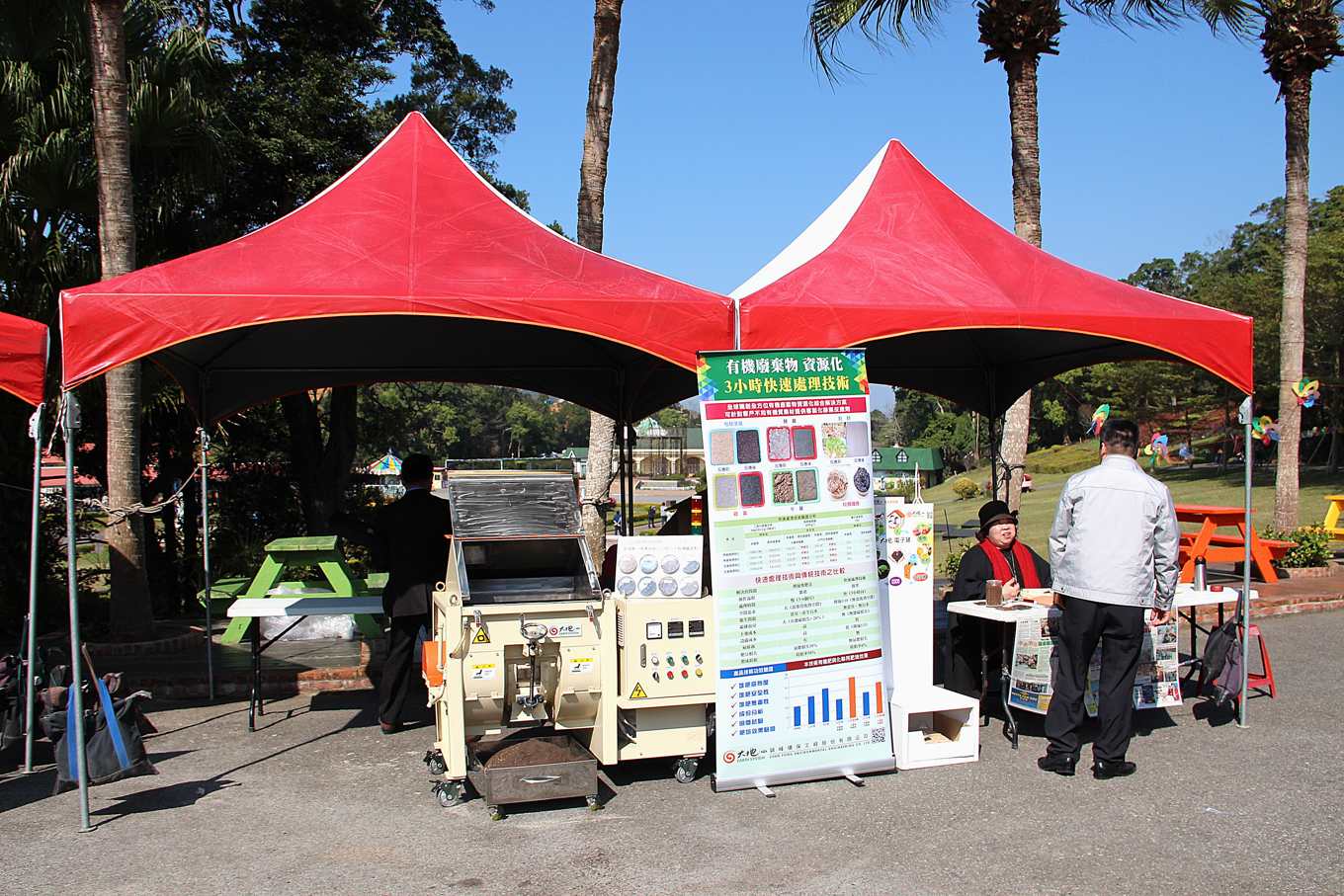
In order to prevent African swine fever and reduce all possible risks of transmission, food waste treatment has become a focus of attention across all sectors. The Environmental Protection Administration also held a matchmaking platform meeting for food waste treatment equipment and technologies, inviting local environmental protection bureaus, restaurant operators with food waste treatment needs, and 17 food waste equipment companies to gather together, showcase existing domestic food waste treatment technologies, energize the domestic food waste treatment market, and jointly solve the current problem of food waste disposal.
Li Yishu, section chief of the Environmental Protection Administration's Environmental Inspection Corps, said that emerging food waste treatment technologies in the future could create at least NT$5 billion in business opportunities. Domestic related technologies actually already exist, but in the past most cooked food waste was given to pig farmers to feed pigs, so there was no need to worry about disposal. As a result, food waste treatment companies currently mostly sell their equipment to foreign markets such as China and Southeast Asia, and no domestic market has formed. People with technology have nowhere to sell, and people with needs now do not know whom to turn to. The discussion on food waste disposal prompted by this African swine fever outbreak is also being used to understand both the demand side and the supply side of domestic food waste disposal, turning the crisis into an opportunity and integrating the domestic food waste treatment market.
Emerging food waste treatment technologies will create NT$5 billion in business opportunities, but regulations need to be revised before commercialization
The Environmental Protection Administration estimates that emerging food waste treatment technologies in the future could create at least NT$5 billion in business opportunities, including a phased plan for the short term in which local governments complete food waste crushing, dehydration and high-speed fermentation facilities, and guidance is provided to large enterprises to set up their own treatment facilities and to private composting plants to expand their intake of food waste, as well as the medium and long term in which the Environmental Protection Administration subsidizes local governments to set up biomass energy plants and regional composting plants.
Li Yishu also said that if food waste is made into compost, under the current compost application rules there are many conditions and restrictions. If it cannot be commercialized, then even if the food waste is treated, the compost produced will become another "needs disposal" problem. Therefore, the Environmental Protection Administration will also meet with agricultural authorities to discuss revising the application conditions for food waste compost products, so that in the future the compost products produced by local counties and cities and operators after food waste composting can be made into usable and sellable products, and from equipment to legal provisions all aspects will be fully promoted to advance food waste composting.
Japanese equipment processes 25 tons of cooked food waste per day, with immediate fermentation and drying
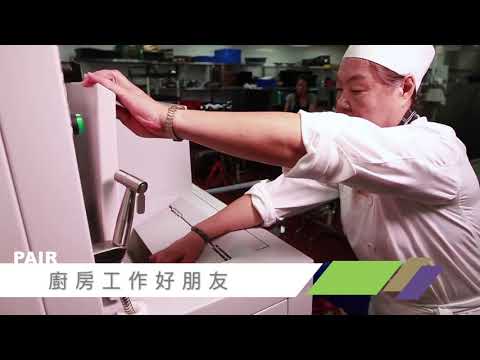
In addition to technologies that use food waste as compost, making it into feed was another possible direction proposed at this meeting. He Ziwu, head of Dianshi Resources, used equipment in Hiroshima, Japan as an example. If 25 tons of cooked food waste are processed per day, fermentation takes 0.5 hours and drying takes 1.5 hours. To prevent foot-and-mouth disease virus, a high-temperature and high-pressure sterilization procedure was also added, heating at 120°C for 1 hour. In total, within two to four hours, the food waste can be made into powdered feed.
Li Yishu explained that currently domestic "food waste composting" mainly uses raw food waste as the raw material, because cooked food waste is more "nutritious," and making compost from it requires three to six months of fermentation. "If cooked food waste is used, the smell is very strong." After raw food waste is made into compost, it is mostly distributed free of charge by township and town offices to farmers who need it.
Promote composting by restaurants and large employee cafeterias, for self-use or commercialization
If cooked food waste later also enters the composting industry, the Environmental Protection Administration will, on the one hand, promote to restaurant operators or large enterprises with employee cafeterias that they compost on their own and use it for their own gardening purposes, implementing a localized circular economy; on the other hand, it will also meet with agricultural authorities to discuss in detail and make relevant adjustments to the qualification conditions for applying to sell food waste compost products. If food waste compost can be made into sellable products, it will certainly invigorate the establishment of the domestic food waste composting market and form economies of scale.
The Environmental Protection Administration plans NT$450 million in funding to subsidize food waste composting-related equipment and implement regional composting
The Environmental Protection Administration has planned a budget of NT$450 million for this food waste disposal effort, and has recently held multiple strategy consultation meetings with local environmental protection bureaus. If local counties and cities or enterprises want to purchase food waste composting-related equipment, they can all apply to the central government, and the Environmental Protection Administration will also provide subsidies.
Li Yishu said that in the long term, future food waste disposal should hopefully move toward biomass energy. At present, the Taichung Waipu Biomass Energy Plant has been completed, Taoyuan is also planning construction, and other places such as Tainan and Kaohsiung are also making such plans. However, because finding land and building plant sites takes time, and the estimated cost of one plant site starts at "hundreds of millions," the current focus is still mainly on composting, which can be implemented immediately in the short and medium term.
Yilan sets up rapid composting machines, with food waste treatment cost of about NT$1,000-2,000 per ton
Jian Liangda, section chief of the Waste Management Section of the Yilan County Environmental Protection Bureau, said that before the meeting they had already contacted relevant food waste equipment companies. At the end of February, the company will first set up a rapid composting machine capable of processing 100 kg, for a two-week trial. If it can broadly match Yilan County's food waste situation, further detailed fine-tuning will be made. The preliminary estimated purchase cost is NT$20 million, with plans to buy two units. If future budget allocations are insufficient, then part of the waste will continue to be handled by traditional composting and part by rapid composting machines. He estimated that with the rapid composting method, each ton requires an additional NT$600 in bacterial culture costs, and adding equipment costs, treating one ton of food waste costs about NT$1,000 to NT$2,000.
Hsinchu plans to purchase labor services, with processing handled by contractors
Luo Shichen, deputy director of the Hsinchu County Environmental Protection Bureau, said that in the middle of last year the composting plant in the jurisdiction happened to undergo renovation and reorganization. At that time they secured a renovation budget, which is now being carried out, so there is temporarily no need to purchase equipment. If an outbreak occurs before the composting plant renovation is completed in July and before the composting capacity in the jurisdiction is sufficient, they will use an emergency operating budget of NT$3 million to outsource the direct dehydration and draining pre-treatment of food waste to contractors. "Buying equipment would be too late; we will probably move toward purchasing labor services to respond to emergency situations." Luo Shichen also said that, as he understands it, all counties and cities have submitted food waste disposal plans to the Environmental Protection Administration, and the Environmental Protection Administration will give responses and suggestions on each local plan. They are currently in the second adjustment stage.
Tainan and Changhua apply for high-efficiency fertilizer and dehydration and draining equipment
Qiu Ruiji of the Tainan City Environmental Protection Bureau said that in addition to purchasing larger food waste bins to prepare for a greater volume of food waste recycling, they will also apply to the central government for at least three sets of high-speed composting equipment, covering functions from dehydration and draining to fermentation and composting. Each set costs about NT$30 million, so the requested funding may reach NT$90 million. The Changhua County Government said that in the short term it will handle the matter through composting and has already submitted a plan to the central government, but whether to specify dehydration and draining equipment or whether to build dedicated buildings will depend on how the budget is allocated at that time, after which they will decide how far to proceed.