-

Key Technical Points for Planting Sichuan Pepper in Late Autumn and Early Winter
Compared with spring sowing, autumn sowing for raising Sichuan pepper seedlings gives better results. With autumn sowing of Sichuan pepper, there is no need for germination forcing; the seeds germinate naturally, and seedlings generally emerge completely from late March to early April of the following year, emerging 10-15 days earlier than with spring sowing. In this way, the seedling root system forms early, disease resistance and stress resistance are strong, and the rapid growth period arrives earlier. Land preparation and bed making. Choose a sandy loam plot that is sheltered from the wind and faces the sun, with deep and fertile soil and good drainage, as the seedbed. Apply 2000-3000 kg of barnyard manure per mu, and plow deeply and harrow finely. After land preparation, make beds 1 m wide
-
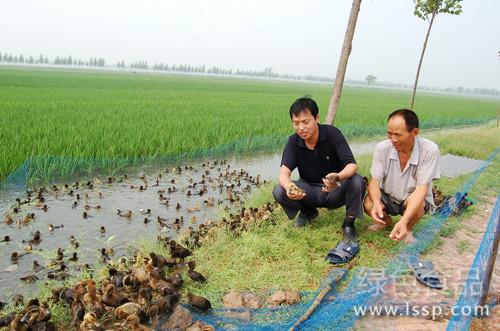
Rice Harvest and Fat Ducks: Key Technical Points of the Rice-Duck Symbiosis Model
Rice Harvest and Fat Ducks: Key Technical Points of the Rice-Duck Symbiosis Model
-
What are the key technical points for autumn fingerling management?
Pond clearing. Transfer the fingerlings into a pond that has been cleared and disinfected for rearing. If water source and pond rotation are difficult, all fingerlings can be transferred out for temporary holding, then the original pond disinfected with 75 kg to 100 kg of quicklime per mu, and the water quality fertilized by conventional methods; once the lime's potency has dissipated, transfer the fingerlings back. Separate rearing. Adjust and separate the fingerlings according to different sizes so that the fingerlings stocked in the same pond are of uniform size. Large fingerlings have a big appetite and strong food-grabbing ability; if small fingerlings are stocked in the same pond, the small fish will decline in condition because they cannot get enough feed. Fish
-
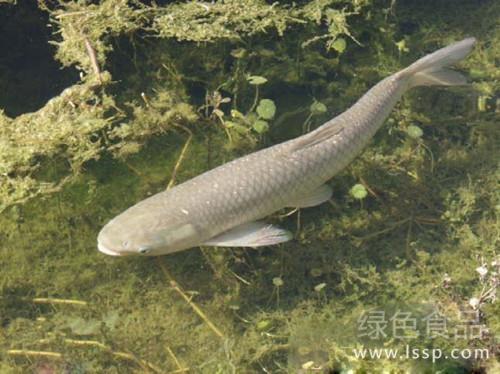
Key Technical Points for Polyculture of Grass Carp and River Snails: Fat Fish, Abundant Snails, and No Pollution
Fat Grass Carp, Abundant River Snails, and No Pollution: Key Technical Points for Polyculture of Grass Carp and River Snails
-
Detailed Explanation of Key Technical Points and Management Methods for Fish Fry Rearing
After the summer fry are divided into ponds, the 1-year-old fingerlings reared until the end of the year to a size of 12-15 cm and a body weight of 30-40 g are called spring fingerlings. The growth cycle of black carp and grass carp is 3-4 years, and in some places the 1-year-old fingerlings are reared into 500 g 2-year-old fingerlings. 1. Fingerling ponds: To rear large-size fingerlings, it is recommended to build dedicated fingerling ponds with an area of 3-5 mu and a water depth of about 2 m. The preparatory work before the summer fry are stocked into the ponds is the same as for fry ponds. 2. Stocking: There are two methods, monoculture and polyculture. Polyculture is generally adopted. For ponds mainly stocked with common carp, common carp 6
-
Clever Treatment Methods and Key Technical Points for Winter Dysentery in Pigs
Winter dysentery in pigs is caused by a viral infection and is characterized by gray, muddy feces, vomiting and dehydration. Prevention and control measures: (1) There is currently no ideal vaccine for this disease; (2) After the disease occurs, attention should be paid to replenishing fluids; (3) Keep the pigsty dry and hygienic, remove feces promptly, and disinfect regularly.
-
How to scientifically restrict-feed young chickens? Master these technical points
Under normal circumstances, young chickens should be given restricted feeding. In restricted feeding, some chicken raisers believe that the less the chickens eat the better, and the poorer the feed quality the better; therefore, they provide young chickens with a single feed, with no regularity, no plan, and no standard, and manage them carelessly. In fact, this practice misunderstands the original meaning of restricted feeding. The purpose of restricted feeding is to control the chicken's weight gain, prevent the chicken from reaching sexual maturity too early (laying too early), maintain the standard laying start time and body weight, slightly inhibit its growth, and prevent the chicken from increasing body
-
How to formulate ecological feed? Key technical points explained in detail
1. Wean in time and group reasonably. After lambs reach 2 to 3 months of age, separate the mother from the lambs for weaning. This allows the ewes' condition to recover quickly, achieving the goals of early estrus, early mating, and high yield with multiple births, while also promptly training the lambs' ability to live independently; for sheep farming, after weaning, group the lambs reasonably by sex, size, and strength in separate pens to prevent the strong from becoming stronger and the weak from becoming weaker, which would affect the overall development level and uniformity. 2. Mate at the right time to improve the reproduction rate. Mating too early will affect the ewe's own growth
-
How to prevent and treat highly pathogenic porcine reproductive and respiratory syndrome (PRRS)? A detailed explanation of the technical key points
This disease is a severe viral disease of pigs that has emerged in recent years, an acute highly lethal epidemic disease caused by a variant strain of porcine reproductive and respiratory syndrome virus. The virus is extremely contagious. In infected pig farms, the morbidity rate of piglets can reach 100%, the mortality rate can reach more than 50%, and the abortion rate of sows can reach more than 30%. It is also characteristic that growing-finishing pigs can develop the disease and die. 1. Pathogen: The pathogen of this disease is porcine reproductive and respiratory syndrome virus, caused by Lelystad virus. 2. Epidemiology
-

Anemarrhena Pest and Disease Control Methods and Key Technical Points
Pest and Disease Control Methods for Anemarrhena
条件筛选