-

Detailed Explanation of Key Technical Points and Management Methods for Fish Fry Rearing
After the summer fry are divided into ponds, the 1-year-old fingerlings reared until the end of the year to a size of 12-15 cm and a body weight of 30-40 g are called spring fingerlings. The growth cycle of black carp and grass carp is 3-4 years, and in some places the 1-year-old fingerlings are reared into 500 g 2-year-old fingerlings. 1. Fingerling ponds: To rear large-size fingerlings, it is recommended to build dedicated fingerling ponds with an area of 3-5 mu and a water depth of about 2 m. The preparatory work before the summer fry are stocked into the ponds is the same as for fry ponds. 2. Stocking: There are two methods, monoculture and polyculture. Polyculture is generally adopted. For ponds mainly stocked with common carp, common carp 6
-
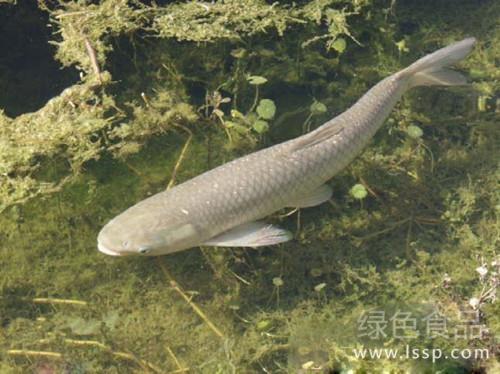
Key Technical Points for Polyculture of Grass Carp and River Snails: Fat Fish, Abundant Snails, and No Pollution
Fat Grass Carp, Abundant River Snails, and No Pollution: Key Technical Points for Polyculture of Grass Carp and River Snails
-
What are the key technical points for autumn fingerling management?
Pond clearing. Transfer the fingerlings into a pond that has been cleared and disinfected for rearing. If water source and pond rotation are difficult, all fingerlings can be transferred out for temporary holding, then the original pond disinfected with 75 kg to 100 kg of quicklime per mu, and the water quality fertilized by conventional methods; once the lime's potency has dissipated, transfer the fingerlings back. Separate rearing. Adjust and separate the fingerlings according to different sizes so that the fingerlings stocked in the same pond are of uniform size. Large fingerlings have a big appetite and strong food-grabbing ability; if small fingerlings are stocked in the same pond, the small fish will decline in condition because they cannot get enough feed. Fish
-
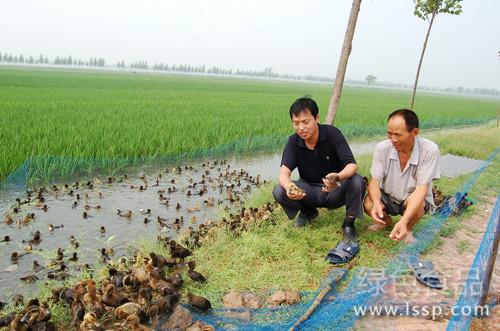
Rice Harvest and Fat Ducks: Key Technical Points of the Rice-Duck Symbiosis Model
Rice Harvest and Fat Ducks: Key Technical Points of the Rice-Duck Symbiosis Model
-
Key Technical Points for Planting Sichuan Pepper in Late Autumn and Early Winter
Compared with spring sowing, autumn sowing for raising Sichuan pepper seedlings gives better results. With autumn sowing of Sichuan pepper, there is no need for germination forcing; the seeds germinate naturally, and seedlings generally emerge completely from late March to early April of the following year, emerging 10-15 days earlier than with spring sowing. In this way, the seedling root system forms early, disease resistance and stress resistance are strong, and the rapid growth period arrives earlier. Land preparation and bed making. Choose a sandy loam plot that is sheltered from the wind and faces the sun, with deep and fertile soil and good drainage, as the seedbed. Apply 2000-3000 kg of barnyard manure per mu, and plow deeply and harrow finely. After land preparation, make beds 1 m wide
-
Processing Methods and Technical Key Points for Honey-Crisp Ginger
This product is a wet-type candied fruit. Although it is mainly purely sweet in flavor, because the product is crisp and has a strong fresh tender ginger flavor, it is a popular candied snack. The processing technology is as follows: 1. Raw material: use the youngest part of fresh young ginger, cut into pieces about the size of a thumb, pink in color; the raw material appears delicate and small and is expensive. 2. Peeling: each piece of young ginger is about 1-2 cm long, and the ginger skin can be removed by manual rubbing. 3. Color protection and hardening measures: soak in 0.1% calcium dichloride and 0.1
-
Technical Key Points and Implementation Methods for the Improvement of Abandoned Jujube Orchards
1 Breaking the Hardpan, Deep Plowing, Clearing Weeds and Removing Suckers Deep plowing can clear weeds, remove excess root suckers, and increase the soil's permeability and capacity to retain water and dissolve fertilizers. It can also turn pest eggs and larvae up to the surface to be dried out by the sun or picked out and killed. Deep plowing should be carried out when the soil is suitable for cultivation; if too dry or too wet, clods easily form and the structure is destroyed. Deep plowing should also be adjusted in depth according to position: the area far from the canopy should be deeper, reaching about 20 cm; the area near the canopy should be shallower, about 10 cm. This avoids excessive root damage that would affect tree vigor. Deep plowing creates favorable conditions for root regrowth; because the jujube tree has well-developed horizontal roots with strong outward extension and regeneration capacity, damaging part of the root system will also stimulate the sprouting of more horizontal roots.
-
How to manage greenhouse apricots? Master these four technical points
1. Fertilizer and water management. Apply base fertilizer every autumn. The base fertilizer is mainly organic fertilizer such as livestock manure, compost, and cake fertilizer, appropriately mixed with some nitrogen, phosphorus, and potassium fertilizers. After covering with plastic film, no more topdressing is applied; after fruit set and during the hard-core stage, spray once with 0.3% urea plus 0.2% compound micronutrient fertilizer and 0.3% monopotassium phosphate. Install drip irrigation pipes in the greenhouse and water reasonably according to soil moisture. Do not water too much, so as to avoid excessive growth of new shoots and cause physiological fruit drop. 2. Training and pruning. For "Y"-shaped training, mainly retain lateral branches (main branch branching angle about 70 degrees
-
Pear orchard pest and disease control methods and key technical points
Currently the pear orchard is in full bloom. At the end of the pear tree flowering period, fruit growers should promptly control the following pests and diseases: For pear gall midge and pear psylla, according to the flowering situation of the pear trees, spray for control promptly when flowering is basically finished. For the pesticide, 10% Shenjian 1500x solution plus 10% Shijia Bichlor 2000x solution can be used. For pear rust and pear scab, spray for control promptly at the end of pear tree flowering. For the pesticide, 15% Fenxiuning 1500x solution or 45% Dason 800-1000x solution, plus 10% Shigao 6000x solution, can be used.
-
Detailed Explanation of Key Technical Points for Pig Feeding and Management
(1) Common Technical Requirements for Feeding and Management of Pigs 1. Advocate feeding pigs with raw feed. In rural pig farming, feed is often cooked and mixed into a thin mash for feeding. This "clear soup to fill a big belly" method not only wastes feed, fuel and labor, but also results in slow weight gain and high feeding costs. If raw feed is used instead, the above shortcomings can be overcome. 2. Diversify feed types and rationally combine concentrated, green and coarse feed. Pig farming practice has proven that a diet composed of multiple varieties allows nutrients to complement each other,
条件筛选