-

Why is mushroom basket and box cultivation so profitable?
If a farmer's family does not have the conditions to use sunken-bed cultivation for mushrooms, they can adopt the economical and practical basket and box cultivation method. This method is simple and easy to carry out and can be used year-round. The method is: 1. Prepare baskets or boxes. Use old broken bamboo baskets, wicker baskets or miscellaneous wooden board packing boxes, and coat the bottom and all four sides with wheat straw mud mixed with a small amount of lime powder. The purpose is to keep warm, retain moisture, and prevent pests and diseases. After that, put the mud-coated baskets and boxes in a ventilated place to dry for later use. 2. Formula and ingredients. Put clean cottonseed hulls without mold in the sunlight
-
Fish Farming: Suitable Dosages of Medication for Several Fish Species
The dosage must not be too high, otherwise it may cause phytotoxicity to the cultured species. In particular, fish such as freshwater pomfret (piaractus brachypomus) and mandarin fish are sensitive to certain medications, and improper use can easily cause death. 1. Freshwater pomfret. Freshwater pomfret is most sensitive to organophosphorus pesticides. Therefore, the use of medications such as trichlorfon and dichlorvos is prohibited. 2. Mandarin fish. Mandarin fish is relatively sensitive to medications such as trichlorfon and copper chloride. When the concentration of trichlorfon is above 0.2 ml/L, or the concentration of copper chloride is above 0.7 mg/L, it can cause poisoning and death in mandarin fish. Therefore, it is necessary to master
-
Recipe and detailed cooking steps for moss vegetable prawns
Cuisine: Fujian cuisine Ingredients/seasonings: 12 prawns, make a prawn marinade with 1 tbsp wine, 1 tsp salt, 1 tsp sesame oil, 2 scallions, 3 slices ginger; 25 g moss vegetable; make an egg mixture with 1 egg, 1/2 tbsp wine, 1/2 tsp sugar; appropriate amount of Sichuan peppercorn salt or tomato ketchup. Preparation process: ① Wash the prawns, peel off only the shell from the middle section (remove the heads, but keep the shells on the tails), pull out the sand intestine and make a cut on the belly of the shell. ② Crush the scallions and ginger, put them into a large bowl, add the wine and salt
-
Why Schisandra chinensis seedlings should be soaked in water before planting and the suitable soaking time
Schisandra chinensis seedlings naturally have indistinct main and lateral roots and many fine fibrous roots. After the seedlings leave the nursery, they go through several stages such as transport, storage and transplanting, and water loss occurs in both the root and crown areas. Using such seedlings results in a low survival rate, so before planting they should be soaked in water for 24 hours.
-
Differences Between Madeira Vine, Tian Sanqi and New Vine Vegetable
Aliases: Tian Sanqi, tofu vegetable, new vine vegetable. Family and genus: Basellaceae, perennial herbaceous plant. Distribution: Cultivated in Yunnan, Sichuan, Hubei, Taiwan, China and other provinces, with bulbils and leaves used as food. Morphological characteristics: Madeira vine is a perennial succulent small vine of the Basellaceae family, with a well-developed root system; half a year after planting, tubers can form underground. The stem is round, the young stem is green, and the mature stem turns brown; adventitious roots easily form at the nodes. The leaves are alternate, heart-shaped, 8-15 cm long, 9-16 cm wide,
-
What are the suitable environmental conditions for the growth of Panax notoginseng?
1. Temperature: Temperature is the main factor affecting the normal growth and development of Panax notoginseng. It requires warm winters and cool summers, with small temperature differences across the four seasons, and an annual average temperature of 18-19°C is ideal. 2. Moisture: The growth and development of Panax notoginseng require a moist environment; it fears both drought and waterlogging. Soil moisture should generally be maintained at 25%-30%, and the relative air humidity should ideally be 70%-80%. 3. Light: Panax notoginseng is a shade-loving plant, sensitive to light, and avoids direct sunlight. Its growth and development require a cool, shaded environment with weak sunlight. Therefore, cultivation requires building
-
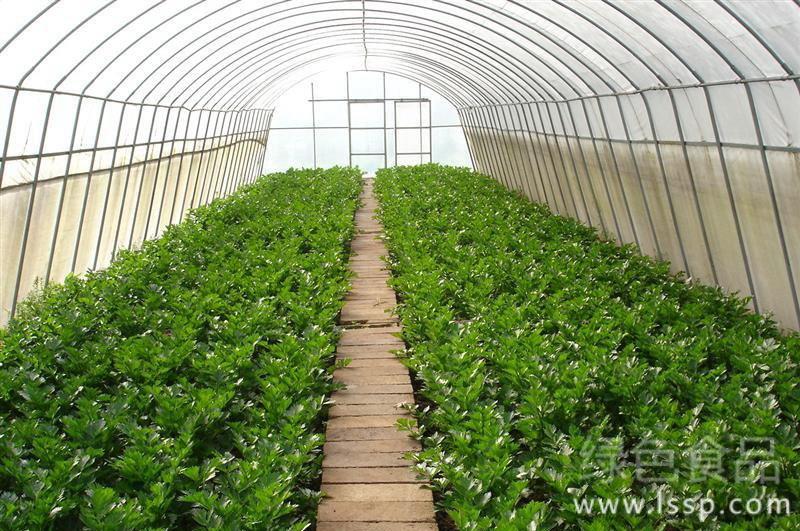
Six common mistakes to avoid when changing greenhouse film, vegetable growers should steer clear of them
Six common mistakes vegetable growers make when changing greenhouse film
-
Which hard-flesh peach varieties are good? Five recommendations suitable for the Yangtze River Basin
1. Qinwang. Average single fruit weight 210 grams, maximum fruit weight 350 grams, fruit size relatively uniform. The base color of the peel is yellow-red; at maturity, 80%-100% of the fruit surface turns bright red, the appearance is colorful, and the fruit surface has little fuzz. The fruit is round, the suture line is medium, the fruit shape is relatively symmetrical, the fruit apex is concave, and the stem cavity is medium-deep. The flesh is red-white, with 75% red blush. The flesh is especially hard and does not crack, the texture is fine, and the resistance to browning is strong. Soluble solids 13.7%, tastes sweet with slight acidity, slight aroma, excellent quality. Semi-clingstone, small stone, no stone cracking, edible rate 9
-
What breed of dog is suitable for family keeping
Female dogs are suitable for general family keeping. The reason female dogs are accepted by families is, first, that most dogs kept today are mixed-breeds, and in order to produce dogs of good bloodline and raise the standard of dog keeping, dog-loving families are willing to keep many female dogs; second, that when a female dog gives birth to puppies, the keeper can experience the joy of new life being born. In other words, by keeping a female dog one can achieve the goals of purifying the breed and improving the dog's constitution. Most dog keepers hope to keep a dog of good breed and breed an excellent next generation,
-
What kind of environment is suitable for growing Panax notoginseng?
Panax notoginseng is a shade-loving plant. It prefers a warm winter and cool summer environment, and fears severe cold and intense heat; it likes moisture but is afraid of waterlogging, and the ideal soil moisture content is 22%-40%. It can grow when the summer temperature does not exceed 35°C and the winter temperature does not fall below minus 5°C, with the suitable growing temperature being 18-25°C. Panax notoginseng has no strict soil requirements and adapts to a wide range, but loose, well-drained sandy loam is best. Any excessively clayey, excessively sandy, or low-lying, easily waterlogged plots are not suitable for planting. Continuous cropping is avoided, and the soil pH is 4.5-8. One-year-old Panax notoginseng has only 1 palmate
条件筛选