-

Integrated Control Methods for Pineapple Wilt Disease and Sunscald
Pineapple (scientific name: Ananas comosus), officially and academically known as "fengli" in Taiwan, China and mainland China, is called "ong-lai" in Taiwanese Hokkien, "fanli" in the Chaoshan region, "huangli" in Malaysia and Singapore, and is also commonly known as "boluo" in mainland China, Hong Kong, China and Macao, China. Pineapple is a species native to
-
The Latest Methods for Preventing and Treating Mango Sunscald
Mango is a fruit that everyone loves very much. It is distributed across various tropical regions and is a typical tropical fruit, rich in nutrients and known as the "king of fruits." However, because it is a tropical fruit, it also comes with some problems caused by high-temperature damage.
-
What are the control methods for sunscald in Schisandra chinensis?
Control methods for sunscald in Schisandra chinensis
-
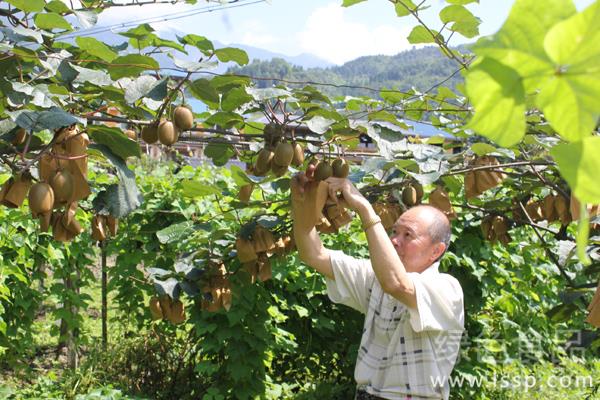
Kiwifruit bagging technology and management, preventing fruit sunscald and pest damage
Kiwifruit bagging technology and management for preventing fruit sunscald and pest damage
-
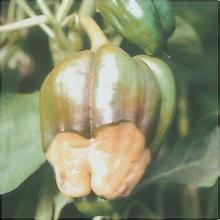
How to Prevent Sunscald and Blossom-End Rot in Sweet Peppers in Summer
How do you prevent sunscald and blossom-end rot when growing sweet peppers in summer? Here are the methods. In greenhouses, sweet peppers often develop rotten fruit, and the main causes are sunscald and blossom-end rot. Sunscald is mainly caused by direct sunlight on the fruit surface, or by dew droplets forming in the morning on the greenhouse film or the fruit; when the sun shines on them, the light concentrates and generates heat, causing the skin cells...
-
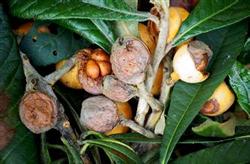
What are the symptoms of loquat sunscald
Symptoms of loquat sunscald: Sunscald can occur on branches and fruit. In the early stage of branch sunscald, the bark becomes shriveled and sunken, drying, cracking and lifting; later the affected area expands into a scorched patch, reaching deep into the xylem, resembling fire scorch. After fruit sunscald occurs, the flesh on the sunny side of the fruit is scorched and shriveled, and the affected area shows dark brown sunken, dried-up lesions, completely losing...
-
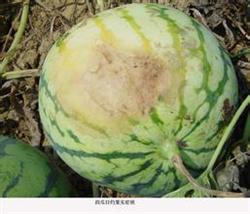
Control Methods for Sunscald in Spring Watermelons
Symptoms: Watermelon fruits exposed to the blazing sun have a very high surface temperature, and the fruit tissue is scorched and necrotic, forming a dry scar. Causes: Sunscald is related to variety; varieties with dark rind color are prone to it. Secondly, in hilly areas the soil is relatively poor, plant vegetative growth is weak, there are few vines and leaves, and it occurs more often when the fruit is exposed...
-
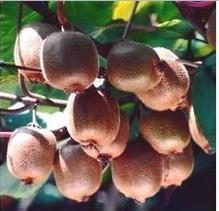
Kiwifruit sunscald disease must be prevented in advance during the high-temperature season
Kiwifruit is particularly sensitive to wind. In summer, the shoots grow very vigorously and are easily broken off by wind from the base, which not only affects the growth and fruiting of the current year but also affects the yield of the following year. At the same time, wind also easily bruises leaves and fruit, making the trees more susceptible to disease and reducing the marketability of the fruit. Strong winds can also cause leaf drop, affecting flowers...
-
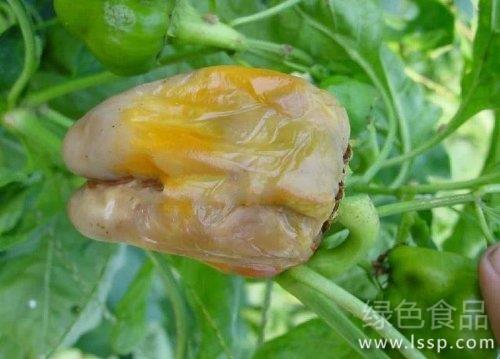
How should bell pepper sunscald, where the flesh loses water and thins before finally rotting, be prevented and controlled?
Prevention and control methods for bell pepper sunscald, where the flesh loses water, thins and finally rots
-
Causes and Control Methods of Sunscald in Schisandra chinensis
Sunscald on Schisandra chinensis fruit is a common physiological disorder that causes certain losses in production every year. With global climate warming, this disease tends to worsen year by year. 1. Disease symptoms Sunscald in Schisandra chinensis mainly affects the fruit. The sunscald sites often appear blistered, with sunken necrotic spots, lignification, hardened lesions, or necrotic spots in the flesh tissue. The surface of affected berries initially turns white (yellow or pink), then becomes black-yellow to brown. When sunscald is severe, sunken necrotic spots appear in the flesh tissue, localized flesh tissue becomes necrotic, and the affected areas are prone to infection by other fruit rot pathogens, causing fruit decay.
条件筛选