How should bell pepper sunscald, where the flesh loses water and thins before finally rotting, be prevented and controlled?
Both young and mature bell pepper fruits can be damaged by sunscald. When the sun-facing side of the bell pepper is scorched by the sun, it first loses its green color, and the flesh of the affected part gradually loses water and thins, forming a nearly transparent, glossy, leathery texture; then the affected part expands, becomes slightly sunken, and the tissue necroses and hardens, becoming prone to cracking. The affected part of the bell pepper is easily infected by pathogens, developing black or pink mold layers, and even rotting.
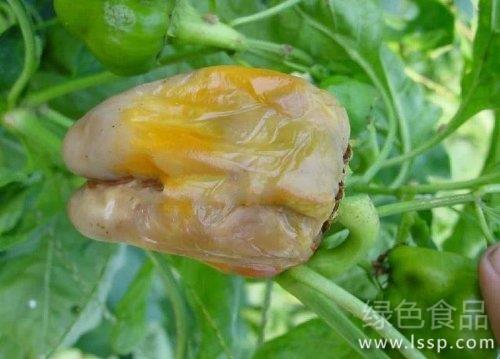
Bell pepper sunscald
Cause: Bell pepper sunscald is a physiological disease. When the leaves cannot shield the fruit from the sun and the bell pepper is exposed to strong direct sunlight, the temperature of the fruit skin rises, and a large amount of water evaporates, causing the local temperature of the bell pepper to rise and resulting in scorching. Generally, the greater the temperature difference between the sun-facing side and the shaded side of the bell pepper, the more severe the disease. The peak season for fruit enlargement and harvest of spring-planted bell peppers falls in midsummer and early autumn; if the soil lacks water, the leaves do not provide good shade, the weather stays dry and hot, or after rainy, dewy or foggy days there is sudden bright sunshine and intense heat, the disease is easily triggered. If planting is too sparse, water and fertilizer are lacking, the bell pepper plants grow poorly, pests and diseases cause missing plants, or leaves drop early, the disease is more severe.
Prevention and control methods: (1) Appropriately increase planting density according to the characteristics of the bell pepper variety. (2) Practice intercropping of bell peppers with tall-stemmed crops or grow them under shade netting. (3) Apply more phosphorus and potassium fertilizer to promote the development of the bell peppers. During the flowering and fruiting period, water promptly and evenly to keep the ground moist, so as to reduce the disease. (4) Promptly prevent and control pests and diseases to prevent early leaf drop of bell pepper plants caused by pest and disease damage.