-

Detailed Explanation of Key Techniques for Summer Squash Cultivation Through the Summer
The so-called over-summering cultivation refers to a cultivation method in which sowing is done from the end of May to early July, and harvesting begins from early July to late August. Its models are divided into three major types: large cold sheds, insect-proof net-covered sheds, and open field. So, do you know the cultivation techniques for over-summering summer squash? 1. Over-summering summer squash
-
Detailed Explanation of Key Points for Summer Goat Farming Management
Build the goat shed well. A multi-tier goat shed is best. The shed's dividing layer should be made of wooden strips laid out, with the spacing between the wooden strips kept such that the goats' feet do not slip through. The distance between the dividing layer and the ground is generally 20-30 cm, keeping the shed airtight and making it easy to clean manure. The height of the goat shed should be kept at 2 m
-
Key Technical Points for Over-summering Management of Spring Bag-cultivated Shiitake Mushrooms
After the color change of spring bag-cultivated shiitake mushrooms is completed in mid-June, the high-temperature season begins. Shiitake mycelium is intolerant of high temperatures and drought; when the temperature exceeds 35°C and persists for 4 hours, the mycelium begins to die, or even self-lyse. The following are the key technical points for ensuring that mushroom bags safely over-summer in production, for the reference of mushroom growers: 1. Cooling. Use shade, ventilation, sprinkling water on the ground, hanging clean wet burlap pieces and other methods to lower the temperature, so that the substrate temperature does not exceed 30°C. On sunny summer days, close doors and windows from 9 o'clock until sunset to prevent hot air from entering the room. 2. Shading. Thicken the shading
-
Key Technical Points for Over-summering Management of Semi-cooked Substrate Cultivation of Nameko Mushrooms
In the Dandong area, from mid-June each year, the weather shifts from dry and muggy to the continuous rain season, with persistent drizzle and no adequate sunlight for more than 10 days, high temperatures and high humidity, resembling "sauna" weather. From mid-July until the opening of the beds, there is again scorching sun, and the spawn bags in a high-temperature, high-humidity environment are highly prone to spawn degeneration or invasion by pests and diseases, causing the spawn beds (bags) to become soft and rotten after opening or after the first watering, resulting in varying degrees of economic loss for mushroom growers. Based on our cultivation practice in recent years, we have mastered a set of over-summering management methods. The key management points are introduced as follows:1
-
Analysis of Common Physiological Diseases of Over-summering Vegetables
Analyzing common physiological diseases of over-summering vegetables
-
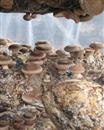
Detailed Explanation of Key Techniques for Summering Cultivation of Shiitake Mushrooms
The quality of summering management for shiitake mushrooms directly affects yield and profitability. Doing a good job of summering management is a key part of shiitake production, and can be carried out either indoors or outdoors. I. Indoor spawn running for summering (1) Reduce the number of shiitake bags indoors and the number of layers of bags as much as possible. Stack two bags in a crosshatch pattern, with no more than 5 layers at the highest. Between stacks and stacks...
-
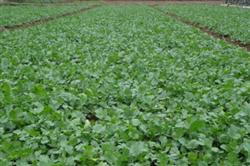
Cilantro Cultivation Techniques and Precautions for Over-Summering
What should be noted when growing over-summering cilantro? Please provide guidance. When growing over-summering cilantro, note the following points for reference: 1. Select superior varieties. Choose varieties that are drought-tolerant, fast-growing, and not prone to bolting, such as Beijing cilantro, American large-leaf cilantro, Thai heat-tolerant large-grain cilantro, etc. 2. Seed treatment. Summer temperatures...
-
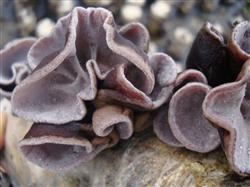
Cultivation Methods and Technical Key Points for Oversummering Auricularia polytricha
How to cultivate oversummering Auricularia polytricha? Please give guidance. For substitute-material cultivation of Auricularia polytricha and Auricularia maxima, there are two types: spring cultivation and autumn cultivation, and in most regions it is spring cultivation. However, in spring cultivation, the early stage generally has low temperatures, making mycelial growth difficult; in the later stage, the fruiting temperature is high, resulting in many malformed fruiting bodies. To solve this problem, soil-covering oversummering cultivation is carried out. Feeding 200...
-
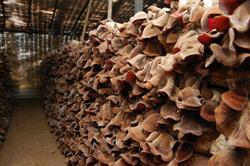
Detailed Explanation of Key Management Techniques for Oversummering Wood Ear Mushroom (Auricularia polytricha)
How to manage oversummering wood ear mushroom (Auricularia polytricha)? Please give an introduction. Oversummering wood ear mushroom (Auricularia polytricha) can be managed by referring to the following methods: 1. Making fungus logs. For soil-covered oversummering cultivation of wood ear mushroom (Auricularia polytricha), the inoculation time for making fungus logs should be postponed by 30-45 days compared with conventional spring cultivation, that is, from late April to early May. At this time, the temperature is 20-30°C, which is just suitable for...
条件筛选