Detailed Explanation of Key Techniques for Summering Cultivation of Shiitake Mushrooms
The quality of summering management for shiitake mushrooms directly affects yield and profitability. Doing a good job of summering management is a key part of shiitake production, and can be carried out either indoors or outdoors. I. Indoor spawn running for summering (1) Reduce the number of shiitake bags indoors and the number of layers of bags as much as possible. Stack two bags in a crosshatch pattern, with no more than 5 layers at the highest. Between stacks and stacks...
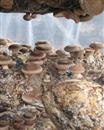 I. Mushroom schedule: Generally, spawn is made in early February, bags are filled and sterilized in late April, fruiting begins in early August, and harvesting is completed in early November.
II. Variety selection: Choose high-temperature-tolerant varieties. In our area, varieties such as Suxiang No. 1 and 1310 are used.
III. Cultivation site: The cultivation site should be as cool and moist as possible. Use greenhouses, or small arched sheds under high-yield forests, on back slopes, and similar locations for production. Cover the top of the greenhouse with shade netting, or plant climbing crops such as luffa and winter melon in front of the shed.
IV. Cultivation management: ① Formula: 80% sawdust, 18% wheat bran, 1% sugar and 1% gypsum, material-to-water ratio 1:1.2; 20% sawdust, 60% corncob, 15% wheat bran, 4% cornmeal, 1% gypsum, material-to-water ratio 1:1.25-1.35. ② Mixing: Sift the raw materials and remove hard objects such as wood chunks to prevent puncturing the bags. Weigh according to the formula requirements and turn and mix evenly. Do not use too much wheat bran; too much easily causes the material to sour and spoil. Then sprinkle the dissolved white sugar water and water into the material in batches and mix evenly. Afterward, it is best to fill bags within 2 hours to prevent souring and spoilage. When temperatures are high, 0.1% carbendazim or Kemeiwang, etc., can be added to the material. ③ Bag filling: Adjust the prepared material with limewater to pH 6-6.5. After it has absorbed enough water, immediately fill bags and compact them. A bag-filling machine can also be used. Use high-density low-pressure polyethylene film for the spawn bags, specification: length x width x thickness of 50-60 cm x 15-17 cm x 0.05 mm. ④ Sterilization: After bag filling, sterilize in the pot immediately. Place the material bags neatly, preferably in transfer baskets. First use a strong high heat, reaching 100°C within 2-3 hours, maintain for 8-10 hours, then gradually cool down. ③ Inoculation: Move the sterilized spawn bags into the inoculation room and stack them in a crosshatch pattern. When the temperature drops below 28°C, inoculate. Before inoculation, all tools in the inoculation room need to be disinfected with smoke disinfectant; the surfaces of spawn bottles and bags and the operators' clothes and hands should be disinfected with 75% alcohol. Keep the inoculation blocks as intact as possible, which helps mycelium germination and survival. The inoculation speed should be fast and the inoculation amount sufficient; try to avoid people walking around and talking in the inoculation room; inoculation is best done in the early morning or evening. ⑥ Spawn running: After inoculation, gently move the spawn bags indoors. If running spawn in a shed, disinfect it before use and scatter lime powder on the ground. When temperatures are high, ventilate in the early morning and evening; when low, ventilate at noon. Turn the bags once every 10 days, check the mycelium growth, and switch the positions of the upper, middle, and lower layers. Handle them gently. If contaminant colonies are found within 5 cm, inject with 95% alcohol or 20% formaldehyde, massage by hand to let the medicine penetrate, and seal the opening with adhesive tape; severely contaminated bags should be isolated and handled. As the mycelium grows, it is necessary to manually puncture holes at the mycelium growth areas to increase oxygen. Pay close attention to the spawn-running temperature and adjust the stacking layers as appropriate. ⑦ Bag removal: The best time for bag removal is 10-15 days after the bags are full. Generally counted from inoculation, early-maturing varieties take 60-65 days, and mid-to-late-maturing varieties take 80-90 days, when the mycelium is light yellow. ⑧ Mushroom induction: Move the bag-removed logs into a shed with supports already set up, place them upright on the ground, set up small arched sheds above them, and cover with plastic film to help retain moisture, taking care to provide shade. After clean buds appear, strengthen ventilation every day and increase sprinkler irrigation.