-

Yangtze finless porpoise calf successfully born inside the enclosure, the first such case in China
China's first finless porpoise calf successfully born in an enclosure
-

Is cranberry useful for mold infections and gynecological inflammations such as cervicitis?
Cranberry, also known as lingonberry, is a plant that grows in North America (especially Massachusetts). In recent decades, it has been widely used to prevent or treat bacterial infections of the urinary tract and vagina. What are the benefits of this fruit? Is it really helpful for gynecological inflammation?
-
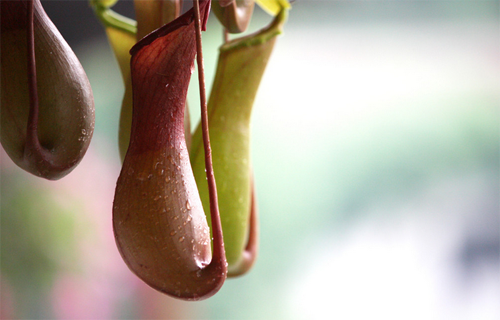
How do you prevent and treat pests and diseases of pitcher plants such as scale insects, leaf spot, and fusarium wilt?
The pitcher plant is so formidable, yet it can still get pests? Isn't the pitcher plant specifically a plant that eats insects? It can even be eaten by insects, and scale insects really are the nemesis of the pitcher plant. What pests does the pitcher plant have? How should they be handled? Fusarium wilt: the leaves and pitchers of a pitcher plant bought not long ago withered, which is usually caused by not adapting to the environment.
-
Why oyster mushroom transplanting gives such good yield increases
Practice has shown that thinning and transplanting densely clustered mushroom buds gives good yield increases. The transplanting method is as follows. 1. Transplant at the right time: transplant when the mushroom buds have just appeared. 2. Planting material: there are no strict requirements; they can be planted on either spawn material that has not yet fruited or material that has already been harvested. Spawn material that has not yet fruited helps the mycelium wounds from transplanting heal and the fruiting bodies develop well. 3. Transplanting method and management: transplanting should be done by digging holes in the spawn brick or spawn bed. Place the small clump of mushroom buds that has been picked into the hole that has been dug, and press firmly around it so that the mushroom buds and the spawn material on the surface of the spawn brick or bed
-
Detailed explanation of other diseases such as duck fungal disease and spirochetosis
Spirochetosis is an acute, septicemic infectious disease caused by Borrelia anserina in poultry and wild birds such as ducks and geese. Its main clinical and pathological features are fever, diarrhea, enlargement of the liver and spleen, and necrosis. The disease has a high mortality rate, and affected birds often die in large numbers after onset. Spirochetosis occurs worldwide, but is more common in free-range poultry in tropical and subtropical regions. 1. Pathogen and epidemiological characteristics The pathogen is Borrelia anserina, which belongs to the order Spirochaetales, family Spirochaetaceae. Spirochetes cannot grow on ordinary bacterial culture media
-
The dove tree blooms like a flock of dancing doves. Have you ever seen such a beautiful sight?
The dove tree, also known as the dove tree, originally grows in the cold high mountain areas at an altitude of 1000 to 2000 m. It prefers shady, moist, slightly acidic or neutral soil and is a national first-class protected tree species. It blooms in spring, and its flowers resemble doves, hence the name "dove tree." The Xiangfan City Forestry Research Institute in Hubei Province introduced and cultivated it in 1980, and more than 200 trees are now preserved. The largest one is 13 m tall with a diameter at breast height of 14 cm. On April 10, this 27-year-old dove tree was already covered in flowers, about more than 800 of them, like a flock of dancing doves. The Xiangfan City Forestry Research Institute is located in the Ancient Longzhong Scenic
-
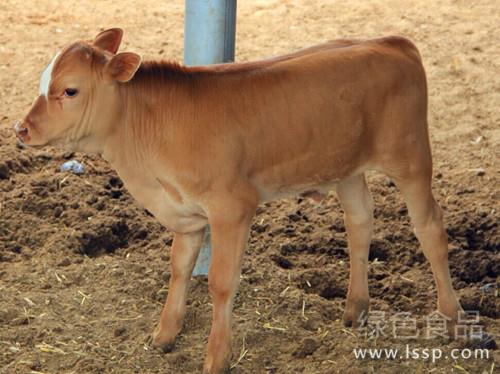
How to prevent and treat bovine respiratory distress syndrome in calves? Causes such as premature birth and hypoxia are complex
Complex causes such as premature birth and hypoxia: prevention and treatment of bovine respiratory distress syndrome in calves
-
Why is high-mountain cloud-and-mist tea of such good quality?
That high mountains and cloud and mist can produce good tea is something people have come to recognize gradually through long years of production practice. Green tea from cloudy and misty mountains has a high aroma, a rich and full flavor, is fresh and brisk, and is of good quality. The reasons for this are mainly related to the ecological factors of high mountains. First, in tea gardens at a certain altitude, with high mountains and dense forests, abundant rainfall, moist air and plenty of scattered light, a unique set of ecological conditions is formed, resulting in deep and fertile soil, short sunshine hours and high relative humidity there; the tea plants are nourished by mist and dew all year round, which exactly suits their growth characteristics of liking warmth and moisture and tolerating shade.
-

How to grow sprouts at home? A detailed guide to home growing methods
Sprouts can be grown in several ways; some are suited to water culture, while others require soil culture. First, let's talk about water-cultured sprouts. Among the sprouts suited to water culture, the most standard and most popular are alfalfa sprouts and mung bean sprouts; in addition, soybeans and black beans can also be grown without soil, as long as
-
What are natural enemy insects? An introduction to common natural enemy insects such as green lacewings
What are natural enemy insects, what characteristics do they have, what do they mainly eat? Using natural enemy insects to control pests is a special control method that can reduce environmental pollution and maintain ecological balance. The mass rearing and use of natural enemy insects in China have achieved remarkable
条件筛选