How to grow sprouts at home? A detailed guide to home growing methods
Sprouts can be grown in several ways; some are suited to water culture, while others require soil culture. First, let's talk about water-cultured sprouts. Among the sprouts suited to water culture, the most standard and most popular are alfalfa sprouts and mung bean sprouts; in addition, soybeans and black beans can also be grown without soil, as long as you buy a container at a garden store or health food store. Some vegetables can be grown both in water and in soil, but they often grow better in soil, for example red bean sprouts, sunflower seeds, and pea sprouts.
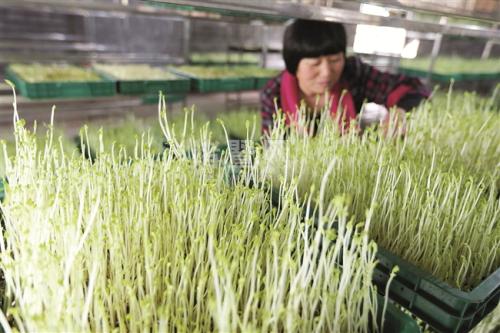
Seed selection
You must choose seeds of good quality, with a high germination rate, and that have not undergone chemical treatment, because many seeds are currently imported in bulk; for example, soybeans have already been irradiated when imported, so the germination rate is very low, and therefore you must pay extra attention when purchasing. It must be specially noted that, whether for eating or for growing, you should buy seeds that have not been irradiated, because not only is the germination rate higher, it also means higher energy.
Steps of the water culture method
A. Soaking: Soak the seeds in warm water at 45 - 50 °C for 5 minutes; this can kill a small portion of the bacteria on the seed surface and reduce infection by pathogens. Then switch to soaking in cold water; for the time, please refer to Table (1).
B. Germination: Drain the soaked seeds and place them in a cool, shaded spot to germinate for about one to one and a half days (this varies with different seeds). Small seeds need germination, such as alfalfa, sesame, radish sprouts, wheat, bok choy, and mustard; large seeds do not go through the germination stage.
C. Watering and harvesting: Spread the seeds evenly over the bottom of the container and water 3 - 4 times a day. At this time you must pay attention to the growing conditions of the seeds; for example, alfalfa sprouts and wheat are temperate crops, and if grown in the subtropical climate of Taiwan, China, especially in summer, they are very prone to rotting and molding. Therefore, if you grow this kind of crop, you can water it with ice water, otherwise the sprouts will absorb a large amount of the substance; if the plant being grown must not be exposed to light, then it must be placed in a dark spot or grown in a light-proof container. In this way, after watering for 3 or 4 days or 7 days (depending on the seed), it can be harvested. This is the cleanest kind of sprout!
Steps of the soil culture method:
Seeds suited to soil culture include wheat, peas, and those with a high germination rate.
First, prepare a container suited to soil culture with drainage holes in the bottom, then spread peat moss or various media evenly over the growing tray. The medium can be vermiculite, perlite, rice husks, or even cotton or wood shavings. Because the nutrients of the sprouts come from the seeds themselves and not from the soil, the main function of the medium is simply to support them. Note that when spreading the medium, materials such as peat moss must first be soaked in water so they fully absorb water before being spread on; a few people use a wet towel instead of a medium.
For the seeds, first soak them in warm water for 5 minutes, then switch to soaking in cold water (see Table 1 for the time). Spread the soaked seeds on the medium, then take a lid and cover it to keep out light, because most seeds do not need light during the initial germination stage. After that, water 3 - 4 times a day. Once the cotyledons grow out, remove the lid and grow them under not-too-strong sunlight, watering 3 - 4 times a day. When they have grown to about 7 - 8 cm, they can be harvested. The whole process takes about 4 - 7 days (depending on the sprout).