-

Detailed Explanation of Key Points of Water-Saving Irrigation Techniques for Citrus Planting
1. Straw mulching Straw mulching is a water-saving technique with abundant resources and obvious benefits, and it also has notable characteristics such as improving the soil and increasing fertility, conserving soil and water, and increasing yield. Cut the weeds in the citrus orchard, use the weed resources on the terrace walls, spread them in the tree, and then cover them with a thin layer of soil
-
What are the precautions for winter mulching of strawberries?
After late autumn, strawberries gradually enter dormancy. Strawberry roots are shallow and can tolerate low temperatures of -8°C and short periods of -10°C; if the temperature drops further, cold injury occurs, and in severe cases the plants die, causing a decline in economic returns. In northern cultivation, the main measure for overwintering cold protection of strawberries is
-
Detailed Explanation of Strawberry Mulching and Cold Protection Techniques
Strawberry is a fruit with a relatively high market price in China, but even with its market price, it is still loved by many people. Therefore, strawberry cultivation is still very common now, and after strawberry cultivation enters winter, it is necessary to do a good job of mulching and cold protection.
-
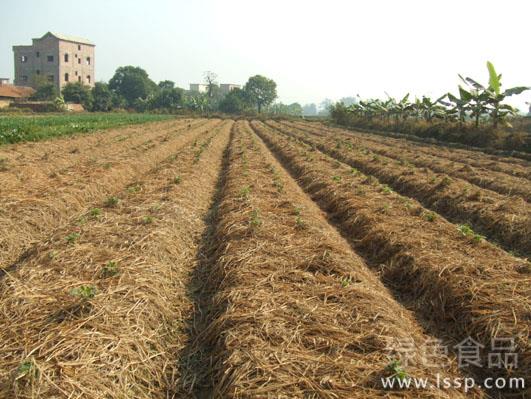
New no-till potato cultivation technique with straw mulching: less labor, high returns
No-till straw mulching saves labor and gives high returns: a new no-till potato cultivation technique
-
Key Technical Points and Application Methods of Wheat Straw and Wheat Chaff Mulching
Wheat straw and wheat chaff mulching involves evenly spreading wheat straw or wheat chaff around autumn crops or between rows to form a certain mulch layer, with an appropriate amount of soil pressed onto it in spots, so as to mulch and preserve soil moisture. For wheat straw and wheat chaff mulching, it is necessary to grasp the timing and mulching amount well, and to apply chemical fertilizers reasonably and according to other such principles. 1. Timing. The relatively suitable mulching time is from late June to early to mid-July. Too early makes it easy to press down the seedlings, while too late means the crop plants are tall and difficult to work with. After mulching, if there is no rain or insufficient rainfall, it will affect the rotting and decomposition of the straw, and the effect will be poor, so watering should be done in time. It can also be done at
-
The role and application methods of wheat straw and wheat chaff mulching
Wheat straw and wheat chaff mulching is the even scattering of wheat straw or wheat chaff around autumn crops or between rows to form a certain mulch layer, with an appropriate amount of soil pressed over it in spots so as to cover and preserve soil moisture. For wheat straw and wheat chaff mulching, it is necessary to properly grasp the principles of timing, mulching amount, and rational application of chemical fertilizers, etc. 1. Timing. The relatively suitable mulching time is from late June to early and mid-July. Too early makes it easy to press down the seedlings, while too late means the crop plants are tall and not easy to work with. After mulching, if there is no rain or the rainfall is insufficient, it will affect the rotting and decomposition of the straw, and the effect will be poor, so timely watering is needed. It is also possible to water at the first topdressing at the end of June.
-
Key Technical Points for Autumn Potato Cultivation with Rice Straw Mulching (Part 2)
4. Timely early sowing. Potatoes prefer a cool climate, and the sowing period should be when the daily average temperature steadily drops below 25°C. In plain and hilly areas below 500 m in altitude, the suitable sowing period is from late August to early September; in low mountainous areas at 500-800 m in altitude, the suitable sowing period is in late August. 5. Reasonable close planting and sufficient base fertilizer. For fields with rice stubble potatoes intercropped with rapeseed, both potatoes and rapeseed are planted in wide-narrow row patterns. For potatoes, the wide row is 0.6 m, the narrow row is 0.2 m, the hill spacing is 0.22 m, and about 700
-
Key Technical Points for Winter Potato Cultivation with No-Till or Minimum-Till Rice Straw Mulching
I. No-till or minimum-till field preparation. 1. Selection of no-till or minimum-till fields. No-till or minimum-till potato cultivation is best carried out in sandy loam fields with convenient drainage and irrigation, loose soil, a pH value of 5.5-6, and good water and fertilizer retention. It is especially suitable for planting in sandy loam paddy fields with good drainage and irrigation conditions during the winter fallow period in our city. Fields prone to drought and water shortage and shallow, poor fields, heavy clay fields, low-lying fields, mountain pit fields, cold waterlogged fields, and rotten
-
Detailed Explanation of Potato Cultivation Technology with Rice Straw Mulching
In 2000, Zhejiang Province carried out research on a new technique for no-till rice paddy cultivation of potatoes with full rice straw mulching, changing "planting seed potatoes" to "placing seed potatoes" and "digging potatoes" to "picking potatoes." The whole process can be vividly summarized as "place, cover, pick," eliminating many operations such as plowing and land preparation, digging holes for planting, intertillage weeding, and digging potatoes. The fresh potato yield per 667 sq m was over 1500 kg. A few years ago, our province introduced this technique and demonstrated it successfully. 1. Select good varieties. Varieties suitable for planting in our province include:
-
Detailed Explanation of No-Till Potato Cultivation with Rice Straw Mulching
First, selecting the field and preparing the beds. Choose a neutral or slightly acidic paddy field. When harvesting rice, it is best to leave stubble 15-20 cm high. Before sowing, first mark out beds and open furrows, with a bed width of 1.4-1.6 m, a furrow width of 20-30 cm, and a furrow depth of 15-20 cm. When opening the furrows, scatter the excavated soil evenly in the middle of the bed, and shape the bed surface into an arched back to facilitate drainage. Second, seed potato treatment. Select virus-free seed potatoes that are free of pests and diseases, have smooth and fresh skin, and weigh more than 20 g each. Before sowing, according to the distribution of the buds and the
条件筛选