-
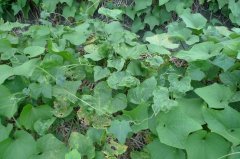
How to prevent and control gummy stem blight and viral diseases spreading in farmland due to temperature and continuous rainfall?
Recently, temperatures have gradually risen, and combined with continuous rainfall, the weather has been unstable. The Hualien District Agricultural Research and Extension Station has found that "gummy stem blight" and "viral diseases" are gradually spreading in the chayote shoot fields of the Ji'an area in Hualien County. Farmers are advised to take preventive measures as early as possible to avoid affecting
-

Symptoms and control methods of stem blight, Phytophthora blight and southern blight in herb plants
Since herb plants were introduced from abroad by horticultural growers, they have been used not only as seasoning for meals, but also brewed into herbal drinks, or made into herbal bath products. Various forms of use have blended into the daily lives of the general public and are gradually becoming popular. In addition to
-

Causes and Control Methods of Pumpkin Gummy Stem Blight
Pumpkin is a very nutritious and healthy food, and it is also one of the anti-cancer foods. Pumpkin is not only soft and sweet in taste, but also has the effect of lubricating the intestines and promoting bowel movements, making it especially suitable for the elderly and children. Diseases during pumpkin cultivation are relatively few, but they still
-
Integrated Control Methods and Technical Key Points for Rice Sheath Blight in Wild Rice Stem
Wild rice stem (Zizania latifolia) is a unique aquatic vegetable of our country. Only our country and Vietnam cultivate wild rice stem as a vegetable worldwide. The ancients called wild rice stem "gu". Before the Tang Dynasty, wild rice stem was cultivated as a grain crop, and its seeds were called gu rice or diaohu, one of the "six grains" (rice, millet, broomcorn millet
-
The Pathogenesis and Control Methods of Water Chestnut Stem Blight
Water chestnut, also known as Chinese water chestnut, water chestnut, shao, fuci, wuyu, puji, dili, belongs to the monocotyledonous Cyperaceae family, is a perennial root herbaceous plant, oblate, pointed at the top, smooth and glossy surface, purplish-red or dark brown, grows in ponds and marshes, with dark green
-
Detailed Explanation of Control Methods and Technical Key Points for Gourd Loofah Stem Blight
Gourd loofah, namely Trichosanthes kirilowii, also known as bitter gourd (Yueqing), diaogua (Wenzhou Wencheng), laoyagua (Wenzhou). Its root (traditional Chinese medicine name Tianhuafen), fruit (traditional Chinese medicine name Gualoushi), fruit peel (traditional Chinese medicine name Gualoupi), and seeds (traditional Chinese medicine name Gualouren) belong to the Cucurbitaceae family, Trichosanthes genus, a perennial climbing herb that can grow up to 10 m long.
-
How to scientifically prevent and control Fusarium wilt and stem spot blight in sesame
I think many people are very familiar with sesame. Sesame has many benefits: it can be made into all kinds of small pastries, and it can also be pressed into sesame oil. So sesame has a great many uses and benefits, and for this reason sesame cultivation is gradually becoming more common now.
-
What to Do When Muskmelon Gets Gummy Stem Blight? A Detailed Guide to Prevention and Control Methods
Muskmelon, the fruit of a Cucurbitaceae plant, has fleshy fruit with multiple locules and numerous seeds, much like a berry, but the receptacle and exocarp of these fruits fuse together, often forming a thick outer rind, and in classification they are specifically called pepos, of which muskmelon is a typical example. Muskmelon gets gummy stem blight
-
Control Methods for Cotton Red Leaf and Stem Blight
Cotton red leaf and stem blight is a physiological disease and one of the main diseases of cotton in the middle and late stages. Over the years, it has occurred severely in sandy loam soil and poor cotton fields in our county. In drought years, especially after a long drought followed by rain or during continuous overcast and rainy weather, red leaf and stem blight breaks out, and cotton plants dry up and die.
-
How should watermelon gummy stem blight be treated?
There are three treatment methods for watermelon gummy stem blight. The first is seed treatment: before sowing, soak the seeds in mancozeb wettable powder for 1-2 hours, then plant them. The second is agricultural control: doing a good job with water and fertilizer management, garden cleanup and other tasks can effectively treat it. The third is chemical
条件筛选