-
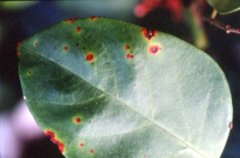
Pests and Diseases of Star Fruit: Symptoms of Anthracnose in Star Fruit and Common Pest and Disease Control Methods
There are many common diseases when growing star fruit. Do you know about anthracnose in star fruit? What are its symptoms? How do you prevent star fruit pests and diseases? Let's find out together. Symptoms of anthracnose: This disease mainly affects young tender shoots, leaves and fruit.
-
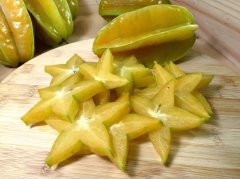
Nutritional Composition of Star Fruit and Common Varieties in Taiwan, and Who Should Not Eat It?
Do you like eating star fruit? Star fruit has fairly high nutritional value, but do you know what its nutritional value is? What are the common varieties? Star fruit is scientifically known as wu lian zi (Averrhoa carambola), and is commonly called feng guo in the Minnan region. Star fruit originated in the tropical and subtropical regions of Southeast Asia, and was introduced to China from Vietnam around the Han Dynasty.
-

How many years does it generally take for a Malus robusta 'Balen' tree to start bearing fruit?
Malus robusta 'Balen' is an excellent apple rootstock with strong resistance to waterlogging and salinity-alkalinity, so how many years does it take for a Balen crabapple tree to bear fruit? 1. Growth habits of the Balen crabapple tree. The Balen crabapple tree is a deciduous small tree of the Rosaceae family and Malus genus, also called Huailai crabapple
-
How many years does it generally take for a Tunisian pomegranate to start bearing fruit?
Tunisian pomegranate generally refers to Tunisian No. 2 soft-seeded pomegranate, which is the best among pomegranates and has the highest economic benefit. It blooms in May-June, the fruit fully ripens in early September, and it sheds its leaves in November. So is the Tunisian pomegranate genetically modified? How many years after planting does it bear fruit? The Tunisian pomegranate is genetically modified
-
How to Grow Star Fruit: Star Fruit Planting Methods and Precautions
Currently, there are many places with abandoned fields and hillsides. People often want to make use of that abandoned land. So they want to plant some saplings. Star fruit is a fruit everyone is familiar with, and its fruit is very beautiful, so people plant star fruit seedlings. So, how
-
Planting Methods and Cultivation Techniques for Star Anise Trees
The fruit and seeds of the star anise tree can be used as a spice and also as medicine. It mainly grows in humid and warm subtropical valleys. Today I will introduce the planting methods for star anise trees. 1. Site selection. For planting star anise trees, choose the north slope of hilly mountainous land with undulating terrain and good wind shelter, and soil
-
How to Grow a Star Fruit Tree: A Detailed Guide to Planting Methods and Key Techniques
Star fruit is a fruit that looks like a five-pointed star, very eye-catching, and it commands a relatively high price on the market, so it is grown in many regions. So how do you grow a star fruit tree? 1. Site selection and orchard establishment: If building an orchard on hilly land, it is best to choose a south- or southeast-facing mid-to-lower slope with a water source for irrigation, relatively good soil, and a gentle gradient.
-
What season is star fruit from? A detailed guide to its ripening and market season
The flowering period of star fruit is from April to July, and the fruiting period is from July to December, making it a fruit of summer, autumn and winter. The star fruit of the best seasonal quality generally flowers in July, and by around the Mid-Autumn Festival in autumn, the fruit tends to ripen. Star fruit, also known as yangtao, is an oxalis
-
Carambola is also known as star fruit. What are its growing conditions?
Carambola, also known as yangtao and wulianzi, is a typical tropical fruit tree native to Asia. It is now widely cultivated in southern China, Taiwan, China, and the Philippines. In recent years it has become increasingly rare on the market because its growing conditions mean its yield is not high. Below
-
Detailed Explanation of Efficient Grafting Techniques for Carambola (Starfruit) Seedlings
Carambola is a fruit native to China. When planting, many fruit growers often use grafting methods to cultivate plants in order to improve the plants' disease resistance and increase yield, thereby increasing income. So how do you graft carambola seedlings? Attached is an introduction to efficient grafting techniques! 1. Selection
条件筛选