-

Key Technical Points for Standardized Feeding and Management of Beef Cows
I. Feeding and Management of Foundation Cows 6-12 months of age: Calculated on the basis of 100 kg live weight, feed 5-6 kg of silage, 1.5-2 kg of hay, 1-2 kg of straw, and 1-1.5 kg of concentrate per day. 12-18 months of age: The diet should be based mainly on roughage and succulent feed. Calculated on a dry matter
-
Detailed Explanation of Standardized Cultivation and Management Techniques for Carrots
The carrot, also known as red radish, clove radish, and hulu fujin, and also called hulufu, red beetroot, yellow radish, etc., is an umbelliferous biennial herbaceous plant, cultivated for its fleshy root, which is eaten as a vegetable. Every 100 grams of fresh carrot contains 1.67-12.1 mg
-
Detailed Explanation of Standardized Cultivation and Management Techniques for Pumpkin
Pumpkin is one of the older crops cultivated by humans, with a long planting history. Pumpkin has strong stress resistance, many varieties, strong adaptability, wide geographical distribution, high yield and good storability, and its fruits vary in shape, size and quality, with colorful fruit colors. Pumpkin is an annual trailing herb
-
Key Technical Points for Standardized Cultivation and Management of Perilla
Perilla is a herb of the Lamiaceae family with strong adaptability, and it is grown in many provinces of China. The whole plant is used as medicine. It has the effects of dispelling cold and releasing the exterior, and regulating qi and relieving chest tightness. The main value of perilla: Perilla is commonly used as traditional Chinese medicine in China, while Japanese people mostly use it in cooking, especially when eating sashimi
-
Key Technical Points for Standardized Cultivation and Management of Yellow Chives
By growing chive roots in a dark environment to produce a softened product lacking chlorophyll, yellow chives are obtained. As a premium health vegetable, yellow chives are deeply favored by consumers. Yellow chives belong to the Liliaceae family as a perennial herbaceous plant, with seeds and leaves used in medicine. They have stomach-strengthening,
-
Detailed Explanation of Standardized Cultivation and Management Techniques for Root Mustard
Mustard (Brassica juncea) is an annual or biennial herbaceous plant of the genus Brassica in the family Cruciferae (Cruciferae). It is a famous specialty vegetable of China, originating in China, and is a commonly cultivated vegetable throughout the country, mostly distributed in the provinces south of the Yangtze River. The main and lateral roots of mustard are distributed
-
Key Technical Points for Standardized Cultivation and Management of Lotus Root
Lotus root, a plant of the Nelumbonaceae family. Lotus root is slightly sweet and crisp, can be eaten raw or cooked, and is one of the common table vegetables. Lotus root is also a plant of fairly high medicinal value; its roots, leaves, flower stamens and fruits are all treasures and can be used as tonics and medicine. Lotus root powder can aid digestion and stop diarrhea, stimulate the appetite and clear heat,
-
Key Technical Points for Standardized High-Yield Cultivation and Management of Chinese Milk Vetch
Chinese milk vetch, also known as qiaoyao, honghuacao, or caozi, originated in China. It prefers warm and humid conditions and has a certain degree of cold tolerance. It requires sufficient water throughout its entire growth period. Chinese milk vetch is not demanding regarding soil, with sandy and clay loam being more suitable. It has poor salt tolerance and belongs to the Fabaceae (legume) family,
-
-
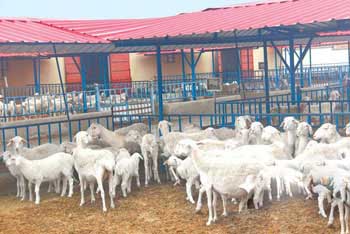
Large-scale cattle and sheep farming requires standardized management to keep pace
Large-scale cattle and sheep farming requires standardization to keep pace
条件筛选