-
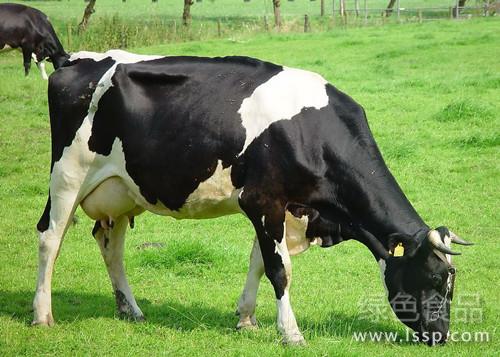
Blind Spots in Dairy Cattle Feeding Affect Milk Production, Only Standardized Management Can Achieve High Yields
Blind Spots in Dairy Cattle Feeding Affect Milk Production; High Yields in Dairy Cattle Require Standardized Management
-
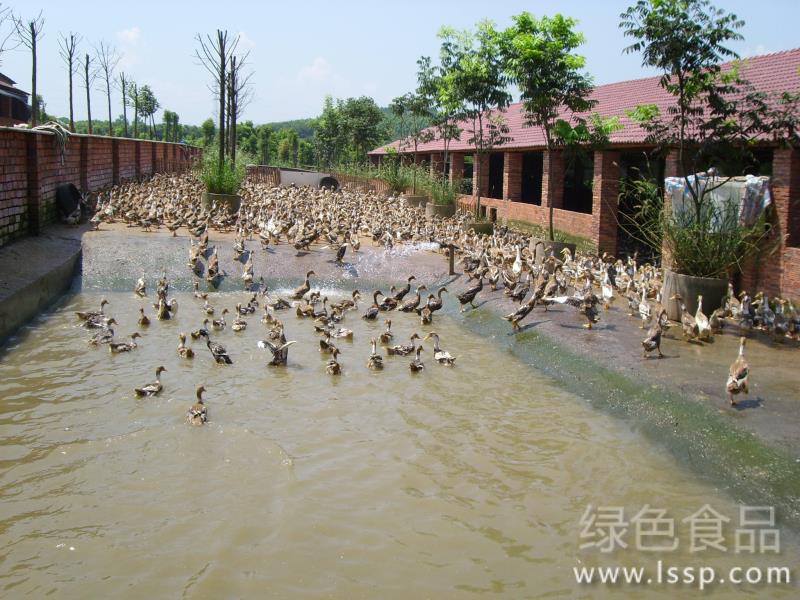
How to Increase the Egg Production Rate of Laying Ducks? Standardized Scientific Rearing Is the Key
Standardized and Scientific Rearing Methods Increase the Egg Production Rate of Laying Ducks
-

What are the construction principles for a standardized sheep farm?
Construction principles for a standardized sheep farm
-

Detailed Explanation of Standardized Pig Farm Construction Plans
Standardized Pig Farm Construction Plan
-

Introduction to Raccoon Dog Breeds and Detailed Explanation of Selection Standards
The raccoon dog belongs to the order Carnivora, family Canidae, and is a medium-sized fur-bearing animal. According to "Fauna Sinica" (1987), the raccoon dog in China can be divided into 3 subspecies, namely the nominate subspecies, the Northeast subspecies, and the Southwest subspecies: ① Nominate subspecies: found in Jiangsu, Zhejiang, Anhui, Jiangxi, Hunan, Hubei, Fujian, Guangdong, Guangxi and other provinces and regions, body length 50-53cm, short coat, underfur is brownish-yellow, guard hairs have fewer black tips, and the black longitudinal stripe on the back is not obvious. ② Northeast subspecies: found in Heilongjiang, Jilin, Liaoning and other provinces, body length 56-90c
-
How should fishery drugs be used in a standardized way? Master these key points for medication
Fishery drug residues are currently the most common source of contamination in aquatic products. There are many reasons for excessive drug levels in aquatic products, among which the abuse of drugs and feed additives is the main culprit. Standardized medication is a fundamental measure for preventing excessive drug residues in aquatic products, improving the quality of aquatic products and crossing the "green barrier". For this reason, the author discusses how to use fishery drugs in a standardized way from the following aspects, for the reference of the vast number of farmers. 1. Strictly implement national laws and regulations In recent years, relevant departments have successively issued
-
Detailed Explanation of Fishery Drug Use Rules and Precautions for Standardized Medication
The use of fishery drugs should be based on the fundamental principles of not harming human health and not damaging the aquatic ecological environment, and should be minimized; strictly comply with the regulations of relevant national authorities, and it is strictly prohibited to produce, sell, or use fishery drugs that have not obtained a production license, approval number, and production execution standards; when diseases occur, medication should be applied according to the symptoms, preventing the occurrence of behaviors such as abuse of fishery drugs, blindly increasing dosage or increasing the frequency of medication, and extending the medication period; drugs or additives prohibited by the state shall not be used in aquatic feed, nor shall they be used in feed
-
Detailed Explanation of Rearing Standards and Key Technical Points for Young Silkworms
The key to rearing young silkworms is to master reasonable temperature and humidity, appropriately mature fresh mulberry leaves and reasonable techniques for handling molting and awakening. For leaves used for collecting newly hatched silkworms, the leaf color is yellow with a hint of green, slightly wrinkled; in spring pick the 2nd leaf, in summer and autumn pick the 2nd-3rd leaf. For the 1st instar, use moderately mature leaves that are green with a hint of yellow, with a flat leaf surface, the 3rd-4th leaf, preferably tender rather than old, depending on the climate. For the 2nd instar, moderately mature leaves have a normal green color; for the 3rd instar in spring, three-eye leaves can be used. For the 1st-2nd instars, cut leaves into square pieces 1.5 times the body length of the silkworm, and use strip leaves when expanding the rearing bed. During the spring silkworm season, one can aim for 10 days to the third molt.
-
Standard mink
The coat color is deep black, with the fur color on the back and belly basically uniform, glossy and shiny, with even guard hair tips, no white spots or few on the lower lip, no mixed-color hairs, dense guard hairs distributed evenly, generally less than 25 mm in length, and thick, dense, even underfur more than 15 mm in length. Male mink are required to have a large head, well-developed cheeks, ears that are open and erect, a thick and long neck, broad shoulders and chest, deep chest, and a long and broad back. The abdomen is compact, the rump is broad, the body bends naturally and flexibly, the tail is thick and long, the limbs are spread apart, strong and powerful. The posture is spirited, and the entire body shape is well proportioned.
-
What are the characteristics of the standard White Plymouth Rock chicken breed?
The White Plymouth Rock (WhitePlymouthRock) originated in the United States. It was originally a dual-purpose type, and is now mostly used as the female line in broiler crossing with the Cornish male line to produce commercial broilers. Its characteristics are a single comb, red earlobes, and yellow beak, skin, and shanks and toes, with a large and full body. It grows quickly in the early stage, has well-developed breast and leg muscles, pure white feathers, and an attractive carcass, while retaining a certain level of egg production. The standard adult weight is 4.0-4.5 kg for roosters and 3.0-3.5 kg for hens, with egg production of 150-160 eggs; in many lines it can reach more than 200 eggs, with egg weight of about 60 g. It is recognized as the female line for white-feathered broilers.
条件筛选