-

What are the key points of field management for Sichuan lovage? Understand it in one article
Key points of field management for Sichuan lovage
-

What are the precautions for growing motherwort? Read this article to understand
Precautions for growing motherwort
-
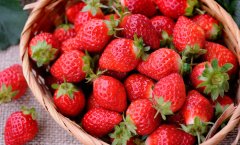
Is Taiwan strawberry famous? Understanding strawberry nutrition and benefits in one article
Is Taiwan strawberry famous? Yes, it is quite famous. Let's learn about the mystery of the origins of Taiwan strawberries. What nutrition do strawberries have and what benefits do they offer? The mystery of the origins of Taiwan strawberries: French strawberries originated in the wilds of North America, and commercial cultivation and mass production in France only began in the 18th century
-

What are the precautions for winter irrigation of wheat? Read this article to understand
Precautions for winter irrigation of wheat
-

Can squid be artificially farmed? You'll understand after reading this
Can squid be artificially farmed
-

Detailed Explanation of Straw Mushroom Grading Standards and Processing Techniques
I. Straw Mushroom Grading Standards: 1. Fresh mushroom grading: Grade 1: mushroom cap circumference 8-11 cm, solid. Grade 2: mushroom cap circumference 6-8 cm, solid. Grade 3: mushroom cap circumference 6-8 cm, wrapper slightly split. Broken-cap: cap cracking not exceeding 0.5 cm. Substandard: mushroom cap circumference 5-6 cm, with some broken caps. 2. Dried mushroom grading: base trimmed, free of sand and impurities, cap surface mouse-gray or grayish-white, flesh white. No mushrooms with opened veil or expanded cap, moisture content 12%, fragrant, free of insect damage and mold, free of scorched yellow or blackened areas.
-
What classifications do tulips have? Understanding tulip variety classification in one article
There are many varieties of tulips, about ten thousand or more. Two main classification methods are introduced here: 1. Classification by flower shape variation. They can be divided into cup type: the corolla is cup-shaped, with representative varieties including Cottage tulip, Darwin tulip, and Darwin hybrid tulip; bowl type: the corolla is shallow dish-shaped and bell-shaped, with many small flowers, and the representative variety is water lily tulip; lily type: the petal tips are gradually pointed, and the corolla resembles a lily flower, with the representative variety being lily tulip; ball type: the corolla is spherical, and these are the double-flowered types among Cottage tulips and Darwin hybrid tulips. 2. Classification by early or late flowering.
-
How to prevent and control cotton root rot in northern Xinjiang? Understanding the patterns of occurrence is key
In 2007, northern Xinjiang suffered varying degrees of cooling and rainfall in April, May and August respectively, and cotton root rot occurred rather severely, with the disease incidence in cotton fields reaching 20%-50%, causing a certain impact on cotton yield in northern Xinjiang. 1. Disease symptoms The pathogen overwinters as chlamydospores on plant residues in the soil and germinates to infect the following year. After cotton is infected, the leaves shrink or wilt, and soon afterward the plant lodges and dies. The stem base and roots of diseased seedlings are purplish brown and gradually rot, with the cortex drying and rotting; when pulled from the soil, the roots are decayed brown.
-
Detailed Explanation of Standardized Cultivation Techniques for Dry Pinellia (Pinellia ternata)
Dry Pinellia, also known as three-leaf pinellia, three-step jump, and hemp jade fruit, is a commonly used Chinese medicinal herb with the functions of drying dampness and resolving phlegm, and descending adverse qi to stop vomiting. It grows wild in both northern and southern China, but in recent years its resources have been declining year by year and its price has been rising continuously. Therefore, the prospects for artificial cultivation of dry Pinellia are very promising. Its cultivation techniques are introduced as follows: 1. Selection of planting site. Dry Pinellia prefers a mild and humid climate; its tubers can naturally overwinter in the soil. It is shade-tolerant and highly adaptable, and can be cultivated on hillsides, hills, and flat land. It can also be intercropped in orchards and woodlands or interplanted with tall crops such as corn, rapeseed,
-
Detailed Explanation of the Key Points of Standardized Cultivation Techniques for Su Banxia
Su Banxia is a unique authentic Chinese medicinal herb of Huaibei City. According to the "Suzhou Prefecture Gazetteer" from the Guangxu period of the Qing Dynasty: "Su Banxia is best only in Sipu and Sunding (now within the territory of Huaibei City). Su Banxia is full of powder and white in color, and Beijing Tongrentang specifically requested Banxia from this place." Due to the influence of chemical herbicides, chemical fertilizers, pesticides and techniques and other factors, the resources of Su Banxia find it difficult to meet market demand. In order to revive the glory of our city's traditional Chinese medicinal materials, cultivate a pillar industry of medicinal materials, and realize the standardized cultivation of Su Banxia, it has become even more urgent and particularly important. 1. Land selection and land preparation for Banxia
条件筛选