-

What to Do When a Clivia Miniata's Flower Stalk Gets Stuck? Detailed Explanation of Causes and Solutions
Detailed Introduction: What to Do When a Clivia Miniata's Flower Stalk Gets Stuck
-

Corn stalks processed into cattle feed generate 80 million yuan in revenue
Corn stalks turn into "bread," cattle mouths turn into gold: 80 million
-
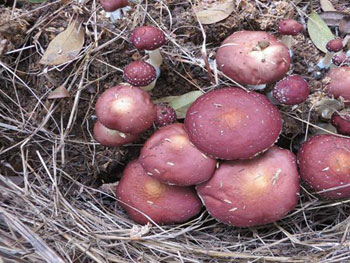
Growing Stropharia rugosoannulata with corn stalks brings 10,000 yuan per mu, and life gets better and better
Growing Stropharia rugosoannulata with corn stalks brings 10,000 yuan per mu and a prosperous life
-
There are national subsidies for corn stalks. Do you know about these policies?
There are national subsidies for corn stalks. Do you know all of these?
-
Cauliflower stems and leaves plus corn stalks can be turned into feed in 2 minutes
Cauliflower stems and leaves plus corn stalks turn into feed in 2 minutes
-
Technique for Cultivating Oyster Mushrooms by Combining Soybean Stalk Bags with Wall Cultivation
Using soybean stalks as the growing substrate and combining bag cultivation with wall cultivation to grow oyster mushrooms can reduce costs and increase benefits. Preparing the substrate: select dry, mold-free soybean stalks, sun-dry them for 2-3 days, then crush them. Substrate formula (by weight): soybean stalk powder 78%, wheat straw 10%, soybean cake 5%, cornmeal 2%, gypsum 1%, superphosphate 3.5%, urea 0.5%. Add 130 kg of water to the substrate, mix well, then pile it up for fermentation, turning the pile 3 times during fermentation. Bagging and inoculation: spread out the fermented
-
Method for treating piglet white scours with garlic stalk infusion
Wash the garlic stalks clean, put them in water to soak, and when the water turns tea-colored, mix it into the feed to feed lactating sows, 4 times a day; at the same time, give each piglet 5-10 milliliters by drench daily, which can prevent or treat piglet white scours.
-
What variety is the Iron Stalk Giant Onion? This article gives you a detailed introduction
Variety characteristics: This variety was developed by crossing selected and purified superior typical plants from Japanese bunching onions with a stable male sterile line of Zhangqiu bunching onion. Its characteristics: the white stalk is long, thick and firm, with a tight sheath opening, highly resistant to lodging, and thick leaf flesh. The leaves are dark green with a thick waxy layer. It is cold-resistant and highly heat-resistant. The inner leaves of the white stalk can still grow at minus 7 degrees, and it turns green early in spring, growing thick and long quickly. After bolting, the side buds grow rapidly, and it has strong disease resistance and stress resistance. It is a high-yielding variety that can be harvested all year round, making it an ideal choice for filling the off-season market. Cultivation points: ten-day average temperature 16-17°C
-
Introduction to the Iron-Stalk Giant Scallion Variety and Its Main Characteristics
Variety traits: This variety was developed by crossing selected and purified excellent typical plants from Japanese scallions (Allium fistulosum) with a stable male sterile line of Zhangqiu scallion. Its characteristics: the white stalk is long, thick and firm, with a tight sheath opening, highly resistant to lodging, and thick leaf flesh. The leaves are dark green with a thick waxy layer. It is cold-resistant and highly heat-resistant. The inner leaves of the white stalk can still grow at minus 7 degrees, and it turns green early in spring, growing thick and fast. After bolting, the side shoots grow rapidly, with strong disease resistance and stress resistance; it is a high-yielding variety that can be harvested all year round, making it an ideal choice for filling the off-season market. Cultivation points: when the average temperature over a ten-day period is 16-17°C
-
Scientific Methods for Feeding Cotton Stalks to Ruminant Livestock
With the current year-on-year increase in cattle and sheep populations, along with large-scale land development and cultivation, the original grazing pastures have sharply decreased. Therefore, solving the winter and spring forage problem for cattle and sheep is the primary issue for developing animal husbandry on all farming and herding farms. Faced with large areas of cotton stalks after picking is complete, livestock raisers can only follow the old method of letting cattle and sheep loose in the fields to graze freely, resulting in massive resource waste. In order to better utilize cotton stalks and achieve the effect of returning them to the field through the animal's digestive tract, a set of scientific methods for feeding cotton stalks to ruminant livestock has been summarized. After trial feeding and observation by livestock raisers on our farm
条件筛选