-

When is the best sowing time for spring peanuts?
Spring peanuts in the south can be sown from February to mid-March, while spring peanuts in the Yangtze River basin are sown from March to late April; in northern regions, the suitable sowing period for spring peanuts is from late April to early May. Spring peanut cultivation techniques 1. Land preparation and base fertilizer Spring peanuts should be planted in sandy soil with relatively high soil fertility and convenient drainage and irrigation, applying 150 dan of high-quality farmyard manure, 100 jin of compound fertilizer, and 2 jin of boron fertilizer per mu, then after plowing and harrowing to level, open furrows with a bed width of 5.2 chi and a ditch depth of 0.6 chi, ensuring the three ditches are connected.
-
When is the most suitable time to apply growth-control chemicals to spring peanuts
Spring peanuts refers to peanuts sown from the Beginning of Spring to the Beginning of Summer. They are an early-maturing or medium-early-maturing type of crop and are grown in various parts of China. So when are they sown? When are growth-control chemicals applied? When are growth-control chemicals applied to spring peanuts? Spring peanuts are best treated with growth-control chemicals at the pegging stage or
-
Key Techniques for Plastic Film Mulch Cultivation of Spring Peanuts
The plastic film mulch cultivation technique for spring peanuts is one of the "Top Ten" advanced agricultural technologies promoted by the Ministry of Agriculture. It was introduced to our city for trials in 1998 and began demonstration and extension in 1999. Years of practice have proven that this technique is indeed an important measure for improving peanut yield and quality.
-
Detailed Explanation of Key Techniques for Film-Mulched Spring Peanut Cultivation
Film-mulched cultivation of spring peanuts has the advantages of keeping warmth, preserving moisture and fertilizer, improving the soil environment, ensuring uniform and strong seedlings, promoting growth and development, advancing maturity, and increasing yield and income. It can generally increase yield by 20%-30% and increase net income by 50-100 yuan per mu. I. Fine land preparation
-
How to Grow Peanuts? 2020 Spring-Sown Peanut Production Technical Guidance
Peanut, also known as the "longevity nut," is distributed across both northern and southern parts of China, and is a nut with abundant yield and wide consumption in our country. Now that spring sowing is underway, how should peanuts be grown? Below, let's look at the 2020 Spring-Sown Peanut Production Technical Guidance issued by the Ministry of Agriculture.
-
When to sow spring peanuts? Plus high-yield cultivation techniques
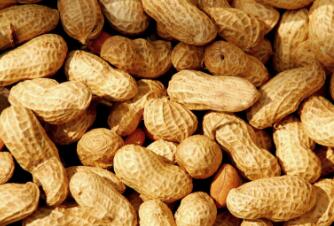
Peanut is a nutrient-rich food, known as the "meat among vegetables." Spring peanuts are also what we call peanuts sown from "Beginning of Spring" to "Beginning of Summer." The peanut-growing regions in the south have a long growing season, and all types can be produced there. The area of paddy field rotation is relatively large, with pearl bean-type varieties being the main ones planted.
-
How to plant spring peanuts for high yields? Save this scientific planting lesson plan
Peanuts are surely the most familiar accompaniment to drinks at everyone's dinner table. As one of the crops beloved by friends in agriculture, during the planting process we must plant scientifically...
-
Planning to plant spring-sown peanuts? Please learn about these precautions in advance
In 2017, compared with other crops, the price and yield of peanuts were fairly good. In the end, although there was a small weather hiccup, the overall peanut area in 2018 was still relatively...
-
Detailed Explanation of the Cultivation Technique of Interplanting Spring Peanuts with Sugarcane
Sugarcane originated in tropical and subtropical regions and was formerly limited to cultivation south of the Yangtze River. In recent years, through the unremitting efforts of scientific and technological workers, the sugarcane planting area in the Huang-Huai River basin has expanded year by year. During the planting process, the sugarcane stem cannot be used for high-temperature bud cultivation; if stems are used for bud cultivation, sugarcane cultivation will not succeed. To...
-
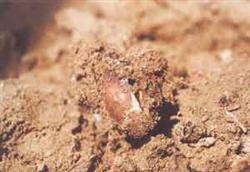
How to prevent and control seed rot after sowing spring peanuts
After sowing spring peanuts and before emergence, seed rot often occurs, with severe cases reaching a rot rate as high as 20%, causing missing plants and broken rows to varying degrees. Causes of seed rot: poor seed quality or improper storage, or too long a storage period; low-lying terrain, heavy clay soil, poor texture, and high soil water content, resulting in a long emergence time for seeds; poorly consolidated seedbed preparation, which affects the...
条件筛选