When to sow spring peanuts? Plus high-yield cultivation techniques
Peanut is a nutrient-rich food, known as the “meat among vegetables.” Spring peanuts are also what we call peanuts sown from "Beginning of Spring" to "Beginning of Summer." The peanut-growing regions in the south have a long growing season, and all types can be produced there. The area of paddy field rotation is relatively large, with pearl bean-type varieties being the main ones planted. So when should spring peanuts be sown? Which cultivation techniques must be mastered to achieve high yields?
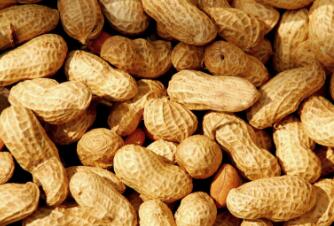
I. When should spring peanuts be sown?
1. Solar terms
Generally speaking, only after the solar term suitable for peanut sowing arrives does the temperature gradually stabilize. For regions where the solar term has not yet arrived, even if the recent temperature seems high, sowing is not recommended. For example, early-maturing peanuts in Northeast China are generally sown in mid-to-early May.
2. Temperature 10-15 days after sowing
The number of days for peanut emergence is closely related to the average temperature. After sowing, at 15°C it takes 20 days, at 23°C it takes one week. Roughly, for every 1°C difference in temperature, the emergence time differs by one and a half days.
3. Appropriately late sowing of spring peanuts
In the process of growing peanuts, sowing dates within the suitable sowing period that differ by 25 days actually mature together. This is mainly because early sowing with low temperatures causes slow growth in all aspects, while late sowing with high temperatures leads to faster growth, so there is little difference in the maturity period.
II. High-yield cultivation techniques for spring peanuts
1. Select excellent varieties
In terms of variety selection, excellent variety types and varieties should be reasonably selected according to market demand, cultivation methods, sowing dates and other factors. In many regions, peanuts are kept as seed year after year, and their traits seriously degrade, so appropriate seed replacement is still necessary. Seed selection should be adapted to local conditions, mainly using local varieties. Varieties from other regions can be appropriately trial-planted before introduction.
Good seed is the internal cause of increased yield, and selecting good seed is the foundation of increased yield. When selecting seeds, large, plump ones should be chosen as seed. It is advisable to choose varieties with strong resistance, suitable for close planting, and with high and stable yields.
2. Create a high-yield soil body and fertilize scientifically
For high-yield cultivation fields of spring-sown open-field peanuts, grain fields or vegetable plots with deep soil layers, fertile soil, and where peanuts have not been grown for many years (after 3~5 years of rotation) should be selected. After the previous crop is harvested, autumn plowing or winter plowing should be done as early as possible, with a plowing depth of 25 cm being appropriate. Fertilization should be mainly organic fertilizer with chemical fertilizer as a supplement, and mainly base fertilizer with topdressing as a supplement.
3. Establish a reasonable population structure
For spring-sown open-field cultivation, generally 10,000 hills per mu (200 million plants). When sowing, first-grade large seeds with strong vitality should be selected as seed, with two seeds per hill, to improve sowing quality and make the seedlings reach the standard of uniform, complete, even, and strong.
4. Strengthen field management
Spring-sown open-field peanut populations tend to grow excessively in the early stage and tend to premature aging in the later stage. Therefore, the general principle in field management is to control in the early stage and protect in the later stage, ensuring steady growth without decline.
(1) Early stage management
Through early seedling clearing and deep hoeing, restrain seedling growth to promote early development. For open-field cultivation, seedling clearing should be done promptly after the peanuts have basically emerged uniformly. From emergence to the beginning of flowering, the intertillage method of deep hoeing in the furrows and shallow hoeing on the ridges should be adopted, carried out 2~3 times in total, to help dissipate soil moisture and raise temperature, preserve moisture and prevent drought, promote deep penetration of the main root, and early development of lateral roots and main fruiting branches, laying the foundation for dense nodes, strong branches, and abundant and uniform flowers.
(2) Mid-stage management
Mainly through fertilizer and water management, disease and pest control, chemical regulation and other measures, control the plants to ensure steady growth. Peanuts are sensitive to soil drought during the flowering and pegging stage. When leaves slightly wilt at noon (turn white), irrigation should be carried out promptly. Leaf spot disease control should start from the early stage of onset, spraying a leaf surface protectant such as Bordeaux mixture every 10~15 days, or spraying fungicides such as carbendazim, chlorothalonil, and mancozeb according to the type of disease.
If the plants show a tendency to grow excessively, promptly spray on the leaves a 1,000 mg/kg B9 aqueous solution or a 50~100 mg/kg paclobutrazol aqueous solution, spraying 50~75 kg of solution per mu.
(3) Late stage management
Mainly through fertilizer and water management, protect leaves and prevent premature aging. During the full pod maturity stage, foliar topdressing should be carried out, generally spraying a 5,000-fold dilution of root-fruit-strengthening functional fertilizer and a 2%~3% superphosphate aqueous solution on the leaves every 7~10 days, for a total of 3~4 sprays. If the soil moisture content in the 0~30 cm soil layer is below 50% of the maximum water-holding capacity, lightly irrigate with a small amount of water for pod filling. When soil moisture is relatively high, attention should be paid to drainage to prevent pod rot.