Planning to plant spring-sown peanuts? Please learn about these precautions in advance
In 2017, compared with other crops, the price and yield of peanuts were fairly good. In the end, although there was a small weather hiccup, the overall peanut area in 2018 was still relatively stable. During this period, quite a few friends consulted Teacher Xia of the Fuda Peanut High-Yield Lecture Hall about spring peanut planting. Spring temperatures often fluctuate, so farmers are reminded to pay timely attention to the weather before planting and avoid low-temperature weather. The growth period of spring peanuts is relatively long. Unlike summer peanuts, which must be planted quickly after the wheat harvest, spring peanuts differ little whether planted a few days earlier or later, so be sure to sow after the temperature is stable.
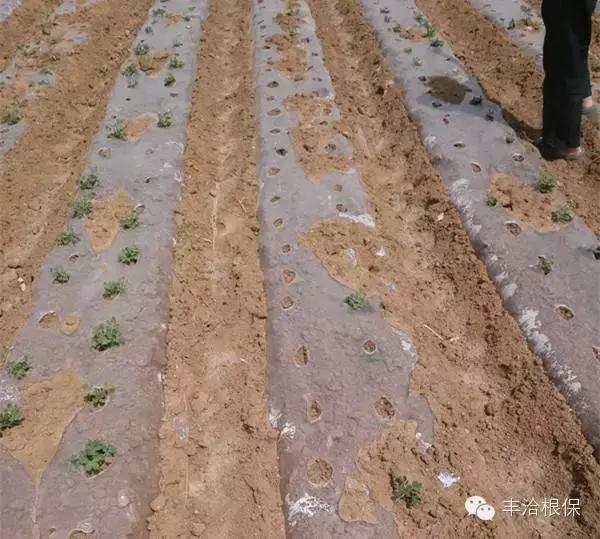
After spring peanuts are sown, seed rot often occurs before emergence, with severe rot rates reaching 20-30%, causing missing seedlings and broken rows to varying degrees. In some cases, it is due to poor seed quality, improper storage, and too long a storage period; in some cases, the terrain is low-lying, the soil water content is high, and the soil is highly clayey, so the seeds take too long to emerge and the sprouting vigor decreases; the land is not prepared well enough and the clods are too large, affecting the seeds' absorption of water and leading to weak seedlings; the seeds are not carefully selected, are uneven in size, and are sown carelessly or at uneven depths, causing uneven emergence or missing seedlings and broken rows; low temperatures last for a long time, causing delayed germination and emergence and thus seed rot; continuous cropping for many years without rotation leads to severe seedling-stage diseases, causing missing seedlings and broken rows; applying insufficiently decomposed organic fertilizer or fertilizer at too high a concentration causes fertilizer damage that affects emergence. Therefore, the above problems must be given sufficient attention.
Based on the above situations, the teachers of the Fuda Peanut Network expert team list several key matters to note for spring peanut sowing:
1. Sowing time
To determine peanut sowing time, use the 10 cm soil temperature as the basis. Generally, sowing can be done when the 10 cm soil temperature steadily passes 12°C, and it is best to sow when the 10 cm soil temperature steadily remains above 15°C.
In the southern spring-autumn double-cropping peanut region, the suitable sowing period is from February to mid-March; in the Yangtze River Basin spring-summer peanut transition region, the suitable sowing period is from March to late April; in the northern large peanut region and peanut-producing areas, the suitable sowing period is mostly from late April to early May. Germination temperatures for peanuts: the pearl pod type and multi-seed type can germinate above 12°C, while the common type and dragon-born type can germinate only above 15°C, so their sowing period is slightly later.
Sowing spring peanuts at the right time can improve the utilization rate of land and light energy, make the plants grow short and sturdy, with dense internodes, more branches, good root growth, more dry matter accumulation, more flowering and fruiting, and a high full-pod rate, making it easy to meet the requirements of high yield and good quality. Sowing too early means the seeds cannot germinate normally due to low temperatures, emergence is slow, the chances of soil-borne disease and pest damage increase, the emergence rate is low, the seedlings grow poorly, and flower bud differentiation and development are affected; but sowing too late means that in southern production areas, under high temperature and rainy conditions, peanuts are prone to excessive growth and lodging and bear few pods; peanuts in central and northern areas, especially common-type peanuts, often encounter autumn drought and low temperatures during the pod-setting and maturing period, affecting pod development and nutrient accumulation, resulting in low full-pod rate, kernel outturn rate, and oil content, and thus reducing yield and quality.
2. Variety selection
In variety selection, excellent variety types and varieties should be reasonably chosen according to market demand, cultivation methods, sowing date, and other factors. In many regions, peanuts are saved for seed year after year, and their traits degenerate seriously, so seed replacement should still be carried out appropriately. Seed selection should suit local conditions, mainly using local varieties; varieties from other regions may be appropriately trial-planted before introduction.
Good seed is the internal cause of increased yield, and selecting good seed is the foundation of increased yield. When selecting seeds, choose large, plump ones as seed. It is advisable to choose varieties with strong resistance, suitable for dense planting, and capable of high and stable yields.
3. Seed treatment
Before sowing, fully sun-dry the pods. This can break seed dormancy, improve physiological activity, increase water absorption capacity, enhance sprouting vigor, and raise the germination rate.
Generally, sun-dry the pods for 2-3 days before sowing, then shell them after drying. At the same time, select plump kernels that are large, uniform in size, and bright in seed coat as seed. Do not sow a mixture of large and small kernels, so as to avoid the coexistence of large and small seedlings, where large seedlings suppress small seedlings and cause reduced yield. According to experiments, sowing first-grade kernels increases yield by more than 20% compared with sowing mixed kernels, and sowing second-grade kernels increases yield by more than 10% compared with sowing mixed kernels.
Before sowing, carry out a germination test. Make sure to use seeds with strong sprouting vigor and a high germination rate, so as to facilitate fast and uniform emergence.
Seed coating has become an important means of protecting seeds globally. At present in China, after nearly ten years of promotion on peanuts, it has become a mature technology and the most labor-saving and simplest way to control peanut underground pests and seedling-stage diseases. Before sowing, dress the seed with Fengqia (600 g per liter imidacloprid suspension seed coating agent) and fungicide + 250 ml water, or Nongqia three-in-one + 250 ml water, which can effectively control soil-borne diseases (root rot, stem rot, etc.) and underground pests. Dry in the shade and then sow.
4. Seed dressing fertilizer
"Fengqia" seed dressing fertilizer, with the latest foreign technology, is a major magic weapon for increasing peanut yield. It can be mixed with regular seed dressing agents. Various nutrient elements enter the seed interior directly 30 minutes after seed dressing, eliminating seed differences, with extremely high cost performance. Its effects on peanuts are as follows:
Comprehensively supplement phosphorus and other elements needed by the seed. With BSN technology, nutrients enter the seed interior 30 minutes after seed dressing, eliminating seed differences and leading to uniform and strong emergence;
Sufficient nutrition improves the seed's ability to resist low temperature, high humidity, and other adverse weather;
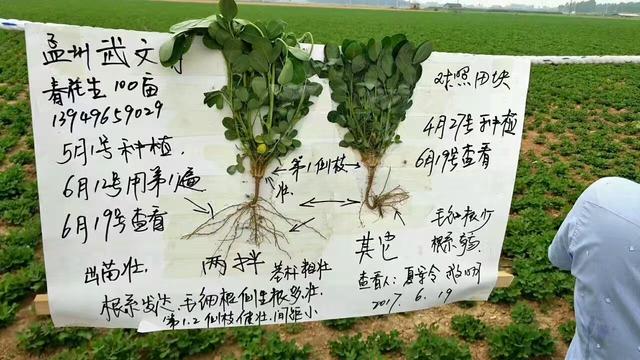
Balanced nutrition eliminates yellowing symptoms caused by nutrient deficiency, regulates seedling-stage growth, prevents excessive seedling growth, but the root system is very well developed, laying the foundation for the middle and late stages;
Uniform and strong seedlings, deep main root, well-developed fibrous roots, enhanced disease resistance, and strong water and fertilizer absorption capacity;
The first and second pairs of lateral branches of the peanut develop robustly, stimulating flower bud differentiation and prolonging flowering time;
The plants are robust without excessive growth, and fruit branches and pegs increase; they do not age prematurely or shed leaves, and the pods are numerous, large, and full.