-

Potato spindle tuber disease
[Virus English name] Potato spindle tuber viroid [Host crops] Potato, tomato, etc. [Disease diagnosis] Diseased plants have upright stems with very few branches. Leaves are held upright, and the angle between the petiole and the stem becomes smaller; leaf margins are wavy or curl upward, and leaves are stiff and brittle with a dark green color; leaves become smaller and curl into a half-closed, twisted shape. At the bud stage, plant growth is noticeably delayed, leaf color becomes lighter and sometimes yellowed, and severely diseased plants are stunted. Tubers are elongated, or one end is more pointed, forming a spindle shape, with
-
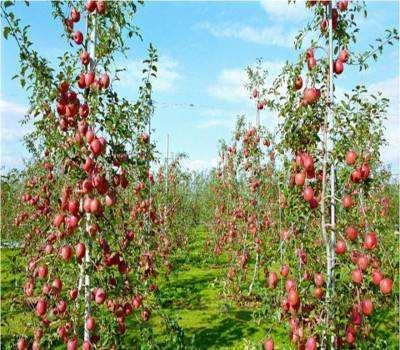
Apple Tree Double-Dwarf High Spindle Training and Cultivation Techniques
"Double-Dwarf" Apple Tree High Spindle Training and Cultivation Techniques. Special Project for the Construction of the National Modern Apple Industry Technology System (CARS-28). The dwarf rootstock intensive cultivation model is currently the main model adopted by advanced apple-producing countries worldwide, ...
-
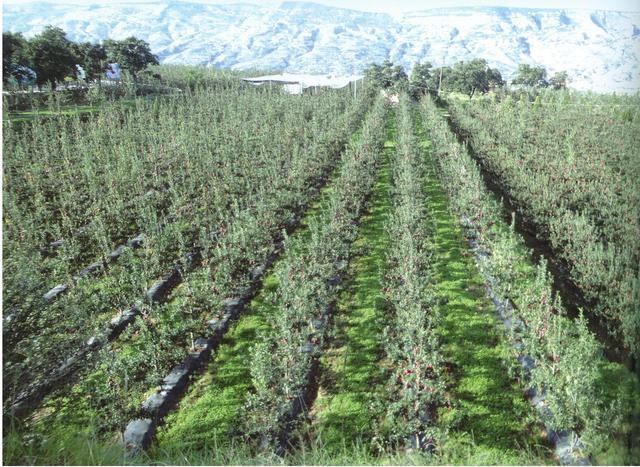
Detailed Explanation of the Training and Pruning Methods for the Slender Spindle Shape of Apple Trees
How do you train and prune apple trees into the slender spindle shape? The slender spindle belongs to the small canopy form and is one of the tree shapes with the fewest scaffold branches and the most fruiting branches, suitable for relatively dense planting, dwarfing rootstocks and spur-type cultivars. Generally the row spacing is 2.5-4.0 m, and the plant spacing is 2.0...
-
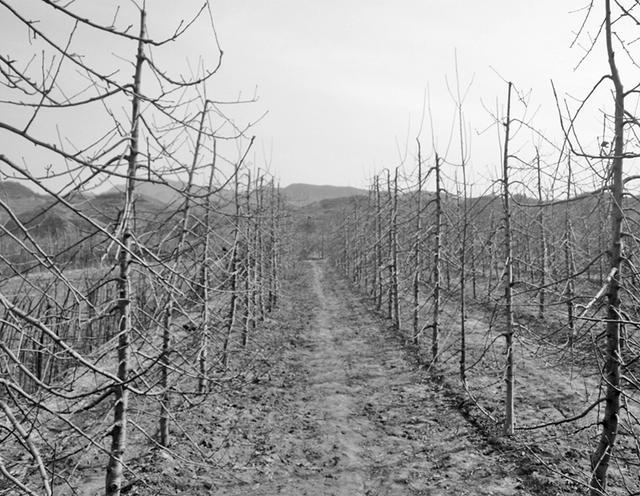
Pruning and Training Techniques for Young Apple Trees in the Slender Spindle Form
Pruning and Training Techniques for Young Apple Trees in the Slender Spindle Form At present, the slender spindle tree form has become mainstream in newly planted apple growing areas. In developing the slender spindle form for apple trees, pruning and training during the young tree stage is a crucial part. Based on recent...
-
Harvesting and Fresh-keeping Methods for Cut Leaves of Japanese Spindle
[Other Chinese Names] Yagi, Dongqing Weimao, Fufangshu, Haiweimao, Huangzhualongshu, Jiaweimao, Maixiang, Japanese Euonymus, Sijiqing, Zhengmu [Family and Genus] Celastraceae, Euonymus [Place of Origin] Japan, China [Plant Characteristics] Japanese spindle is an evergreen shrub or small tree. The plant height can reach 8 m. The branchlets are green. The simple leaves are opposite, obovate or narrowly oblong, 3-6 cm long, with an acute or obtuse apex, a broad wedge-shaped base, and finely blunt-toothed margins, smooth, leathery. [Cut Leaf Harvesting] Harvested part
-
What are the morphological characteristics of Euonymus japonicus (Japanese spindle)?
Evergreen shrub or small tree, up to 5 m tall; branchlets nearly four-angled. Leaves leathery, glossy on the surface, obovate or narrowly elliptic, 3-6 cm long, 2-3 cm wide, apex acute or obtuse, base cuneate, margins finely serrate; petiole about 6-12 mm long. Flowers greenish-white, in 4s, 5-12 arranged in dense cymes, axillary. Capsule nearly spherical, with 4 shallow grooves, about 1 cm in diameter; seeds brown, aril orange-red. Flowering period June-July, fruit ripening period September-October.
-
Symptom Identification and Control Methods for Leaf Spot Disease on Japanese Spindle (Euonymus japonicus)
Symptoms: The disease affects the young and old leaves of Japanese spindle (Euonymus japonicus). Yellow-brown spots appear on the upper surface of the leaves and expand into nearly circular or irregular shapes, 4 mm to 14 mm in diameter, with a grayish-white center, light brown concentric rings, and a dark brown slightly raised edge. Dense tiny black mold dots form within the lesions. The spots show through to the underside, though the color on the underside is slightly lighter than on the upper surface. After the lesions dry up, they crack apart from the healthy tissue, eventually forming holes. This often causes early leaf drop. Pathogen: fungus, Cercospora destructiva Rav. of the order Moniliales, class Hyphomycetes, subdivision Deuteromycotina.
-
Introduction to Several Propagation Techniques for Japanese Spindle (Euonymus japonicus)
There are many propagation methods for Japanese spindle (Euonymus japonicus). Several commonly used methods are briefly introduced below: 1. Cutting method: The cutting method is further divided into hardwood and softwood cutting methods. Hardwood cuttings are carried out between October each year and the end of March of the following year. For units with sufficient source material, the cuttings can be cut slightly longer; for units lacking source material, the cuttings can be slightly shorter. The cuttings are 8 to 15 cm long, and the insertion depth is generally 3 to 5 cm. Roots can grow after 1 month. As long as cuttings are made according to the method introduced below, well-grown seedlings can be obtained quickly: 1
-

How much does a Japanese Spindle (Euonymus japonicus) cost per plant? Detailed planting methods
Japanese Spindle prices and planting methods
-
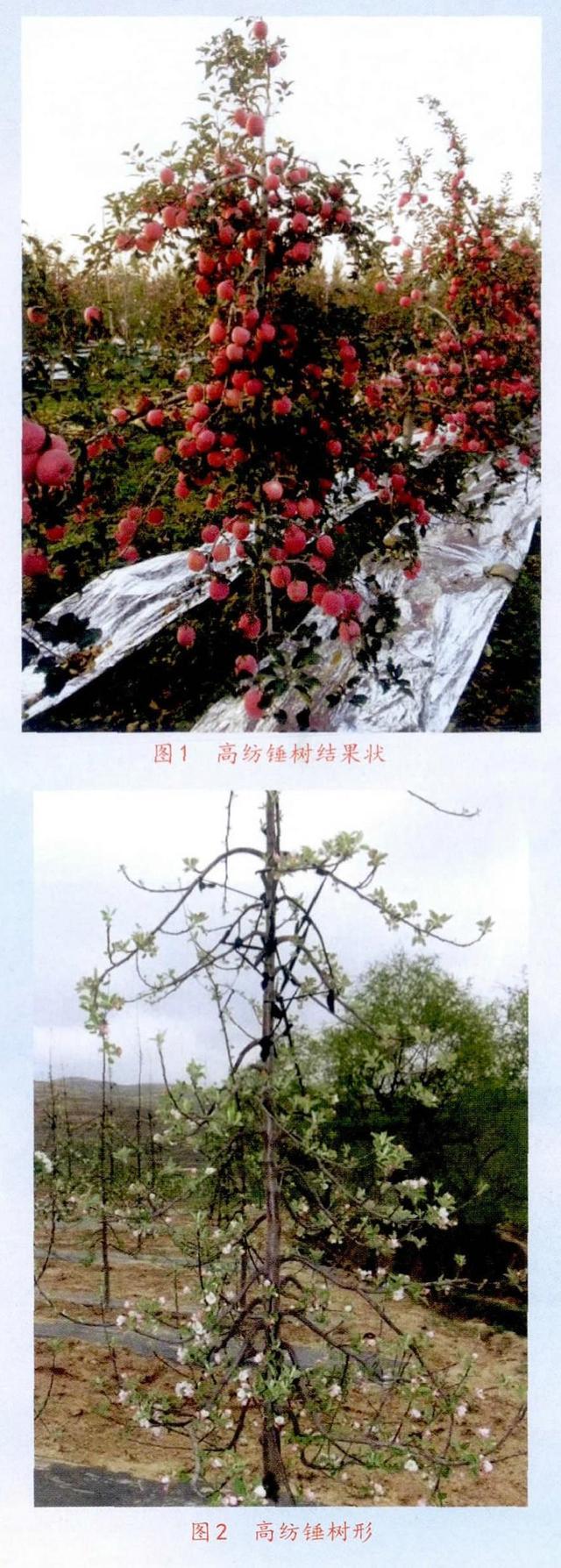
Problems in Training and Pruning Apple Trees to the Tall Spindle Shape and Their Solutions
Problems in Training and Pruning Apple Trees to the Tall Spindle Shape and Their Solutions Apple planting in Fengxiang County is mainly based on dwarfing interstocks and double-dwarf cultivation. Both of these apple cultivation types use the dwarfing high-density planting method, generally with a spacing of (1...
条件筛选