-
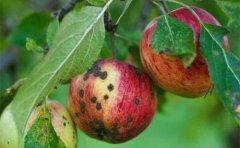
Apple Scab: Control Methods and Specific Fungicides
What does apple scab disease look like? What is the ecology behind its occurrence? What control methods are there? Symptoms: It damages leaves and fruit. Initially, olive-colored irregular round spots appear on the underside of leaves, later turning gray-black, sometimes with a black metallic sheen, and the leaf tissue
-

Detailed Explanation of Technical Specifications for Pollution-Free Pesticide Use in Potatoes
1. Cultivating strong seedlings free of pests and diseases (1) Seed potato selection: For pollution-free potatoes, seed potatoes that are pest- and disease-resistant, disease-tolerant, and free of pest and disease damage should be selected. A seed-production field free of pests and diseases should be strictly established, and pest- and disease-free small whole seed potatoes should be cultivated in the pest- and disease-free seed-production field. The small whole seed potatoes kept for seed should be selected during storage. After the seed potatoes are taken out of the cellar, they should be strictly selected, using young and mature tubers as seed, and eliminating tubers with undesirable traits such as irregular shape, rough and aged skin, protruding eyes, and dull skin color. The quality of seed potatoes shall meet the requirements for improved grain crop varieties or above under GB8079-1987.
-
Correct methods for using rice-specific compound fertilizer
Rice-specific compound fertilizer is a medium-concentration compound fertilizer developed according to the patterns of nitrogen, phosphorus, and potassium requirements of rice after transplanting, and it is most suitable for use as a basal fertilizer in rice transplanting fields. It has the characteristics of "low cost," "convenient use," "fast greening-up," and "good safety." After use, it can enhance crops' resistance to lodging, pests, and diseases, with obvious effects in increasing yield and income. Methods of use: as a basal fertilizer for rice, the dosage is generally 25 kg/mu, and no other chemical fertilizers need to be applied. After fertilization, rice seedlings can be transplanted immediately without
-
Product Introduction of Lvbang 98 Rice-Specific Formula
Main effects: (1) It promptly supplies all the nutrients needed for rice growth, helps cultivate strong seedlings, increases the number of effective panicles and grain weight per panicle, and raises yield by 10%-20%; (2) It has a good effect when used in the early stages of rice blast, sheath blight, bacterial leaf blight, rice false smut, and other diseases; (3) It effectively reduces stomatal aperture, promotes root development, and improves the rice plant's ability to resist transpiration. Usage: (1) Seed soaking: dilute 50 g in 15-20 kg of water, soak the amount of seed used for one mu of seedling field, pile for 12-24 hours, then
-
Detailed Explanation of High-Yield Soybean Cultivation Technical Specifications
Soybean is a major oil crop in our province. Developing soybean production is of great significance for improving people's food composition, developing animal husbandry, and improving soil fertility through crop rotation. From the actual situation of our province, soybean production mainly relies on increasing per-unit yield to increase total output. To achieve the target of over 200 kg per mu, it is necessary to liberate soybean from corn fields, because intercropping and mixed cropping of soybean with corn is one of the reasons for the low per-unit yield of soybean in our province, so clean planting of entire fields should be promoted; second, actively promote high-yield cultivation techniques centered on equidistant sowing, with increased application of farmyard manure
-
What are the common specifications for garlic oil? Read this to understand
Garlic oil is obtained by steam distillation of the bulbs of garlic (Allium sativum L.), a plant in the Liliaceae family. It is a clear, pale yellow to orange-red liquid with a strong, pungent odor resembling mercaptan. 1.050-1.095, 1.550-1.580. Its main components are allyl propyl disulfide, diallyl disulfide, diallyl trisulfide, allicin, etc. It is mainly produced in Egypt, China, and other countries. It is mainly used to prepare pungent seasonings, and also used in disinfectants and other pharmaceuticals. Garlic bulb
-
What to Do About Deformed Oyster Mushrooms? A Detailed Guide to Symptom-Specific Prevention and Control
During oyster mushroom production, inadequate management measures and unsuitable environmental conditions often easily lead to the formation of deformed mushrooms. In production, the causes of deformed mushroom formation should be identified and effective prevention and control measures taken. 1. Spherical or flask-shaped: The stipe of the oyster mushroom is spherical or flask-shaped, the surface is uneven or twisted into a wave-like shape, and the cap cannot form, with only a very small point or obvious icicle-like stripes. This is caused by viral infection, and should be prevented and controlled by spraying or smearing with Virus K, Virus A, or Xiaojunling. 2. Cauliflower-shaped: The fruiting bodies of the oyster mushroom
-
New sweet potato variety bred specifically for fuel ethanol
Recently, an "Eshu No. 5" acceptance inspection team composed of the Hubei Academy of Agricultural Sciences, the Jingmen Municipal Agriculture Bureau, the Science and Technology Bureau, and Hubei Jinlongquan Group conducted an acceptance inspection of Jinlongquan Group's demonstration planting base for sweet potatoes dedicated to fuel ethanol. The inspection results showed that the yields of generally sampled field plots were all above 2500 kg, indicating that "Eshu No. 5" has been successfully trial-planted in Jingmen City. In the first half of this year, Jinlongquan Group and the Hubei Academy of Agricultural Sciences jointly carried out demonstration planting of 28.4 hectares of "Eshu No. 5" sweet potatoes dedicated to fuel ethanol in Dongbao District, Jingmen City.
-
Introduction to the specific method of soil-covering cultivation of shiitake mushrooms
First, soil-covering cultivation of shiitake mushrooms adopts techniques such as natural color change, open fruiting, widening the wet-dry difference, and water management with alternating wet and dry conditions, which can make the shiitake fruiting bodies large, the flesh thick, and the number of flower shiitake abundant. Second, compared with the conventional method, the yield can be increased by 30%-40%. Third, after the substrate sticks are removed from the bags and covered with soil, they can change color naturally and are not easily infected. Fourth, after the substrate sticks are covered with soil, they can fully utilize and absorb the water and nutrients in the soil, which can save the cumbersome procedure of soaking the substrate sticks to replenish water after each flush of mushrooms. The specific method is as follows: bed width 80-100 cm, depth 20 cm
-
What are the specification standards for bonsai art?
Some years ago, when Chinese bonsai specifications were rapidly developing toward the two extremes of "extra-large", "super-giant" and "ultra-miniature", Mr. Naiweng pointed out in a timely manner that tree bonsai should have "a certain sense of proportion" in their specifications, "if too large, it becomes merely planting a tree; if too small, it cannot express the beautiful posture of the potted tree." Mr. Naiweng's incisive exposition is full of dialectical philosophical thought, is scientific and artistic true insight, and is a dose of cooling medicine for overheated minds. Now, regarding the question of bonsai specifications, the bonsai world is paying increasing attention,
条件筛选