-
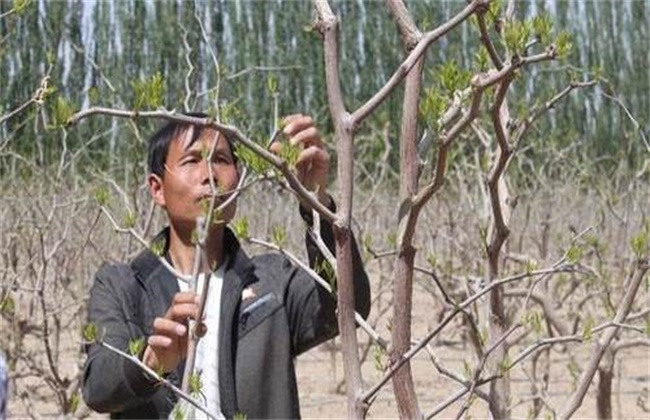
Detailed Explanation of the Timing and Specific Methods of Pinching Jujube Trees
Timing and Methods of Pinching Jujube Trees
-

Noteworthy specific germplasm of wild apricot (Prunus sibirica) in Chaoyang, Liaoning
Abstract: We surveyed apricot germplasm resources in Chaoyang City, Liaoning Province, and identified 11 specific germplasms, including 3 kernel-use germplasms, 4 landscaping germplasms, and 4 germplasms pending further identification. These new germplasms not only enrich the apricot germplasm resources of Liaoning Province, but also lay a material foundation for breeding new cultivars. Keywords: apricot germplasm, kernel use, landscaping. Chaoyang City, Liaoning Province is one of the main apricot production areas in China, with a long history of apricot cultivation. In the past, local wild apricots were mostly propagated by seed, and the genetic differences of wild apricot at the three levels of individual, stand and provenance were fully differentiated and accumulated.
-
Detailed explanation of the specific operation techniques for flower and fruit thinning in pear trees
1. Master the timing of flower and fruit thinning. Flowering, fruit set, and the number of cells in young fruit are mostly determined by stored nutrients. Remove as many excess flowers and fruits as possible to reduce wasteful consumption and concentrate all nutrients on the flowers and fruits that should be retained, so they can grow into large fruits. Therefore, from this reasoning, earlier thinning is better: thinning flower buds is better than thinning flowers, and thinning flowers is better than thinning fruits. However, decide whether to thin buds, thin flowers, thin fruits, or combine all three according to the year's flower quantity, weather during the flowering period, tree vigor, fruit-setting ability, and other conditions. For pear orchards with a large flower quantity (an "on" year), good weather, and a heavy workload, you can
-
What are the specific appearance grade indicators for pear fruit?
Pear appearance grade specification indicator items: Special grade, Grade 1, Grade 2. Basic requirements: fully developed, mature, fruit intact and good, fresh and clean, no off-flavor, no abnormal external moisture, no puncture wounds, no insect-damaged fruit and no disease. Color: has the color that this variety should have when mature. Single fruit weight (g): the single fruit weight grade requirements for major pear varieties are shown in Appendix A (normative appendix). Fruit shape: regular, relatively regular, may have defects, but no deformed fruit. Fruit surface defects: 1) Bruising and compression injury: none, none, slight bruising and compression injury allowed, area less than 0.5 cm2. 2) Abrasion injury: allowed area less than 0.5 cm
-
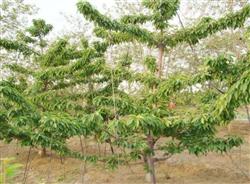
What are the specific fertilizer requirements of persimmon trees?
What are the fertilizer requirements of persimmon trees? Please give an introduction. Persimmon originated in China, and wild persimmons are widely distributed along the Yangtze River and in southern China. Cultivated persimmons are extremely widely distributed in China, with many varieties. Persimmon trees have well-developed taproots and deep roots, with very few fine roots. The taproot can reach 3-4 m deep, and horizontal roots generally extend 1.5-3 times beyond the canopy. Due to...
条件筛选