-

Exploring the Artificial Breeding of Chinese Sturgeon: The Ganzhou Dam Spawning Pool
Artificial Breeding of Chinese Sturgeon at the Ganzhou Dam Spawning Pool
-

What are the causes of contamination in Lingzhi (Ganoderma) spawning?
1. Damage contamination (1) Container damage: mechanical damage caused by failure to handle with care during filling, sterilization, inoculation, transport and cultivation. (2) Air-pocket damage: rapid heating, pressure rise or rapid cooling during sterilization; excessive exhaust speed, causing bags to swell with air and rupture. 2. Cotton plug contamination (1) Cotton plug contamination: the test tube mouth is stained with culture medium or the bottle (bag) mouth is not clean, or the culture medium comes into contact with the cotton plug. (2) Cotton plug dampened: improper stacking during sterilization, too much water added, or unreasonably built sterilization stove, or culture
-
Straw mushrooms take only 7-10 days from spawning to cultivation: cultivation techniques
I. Determining the cultivation period. Straw mushrooms (Volvariella volvacea) like high temperature and high humidity, so in northern regions they should be grown in summer. In central Hebei and southern Hebei, this is generally from late May to early September, when the temperature inside plastic greenhouses can be maintained at 22-31°C. When cultivated in this period, the mycelium generally germinates on the second day after spawning, the mycelium runs through the substrate on the third day, and the first flush of mushrooms can be harvested on days 7-9; growers in other regions can adjust the cultivation period flexibly according to local climatic conditions. II. Selection and treatment of the growing substrate. The growing substrate is the nutritional medium for growth, and choosing a suitable substrate is
-
Button Mushroom Spawning Methods and Technical Key Points
(1) Spawning date. In each region, an appropriate spawning period must be chosen according to local climatic conditions. The standard for the optimal spawning period is: during the mycelium-running stage of the compost, the natural temperature should be 24-26°C as far as possible. In the Yangtze River basin area, the spawning period is in early to mid-September; in Shanghai and areas near Shanghai, the optimal spawning period is September 8-12. If spawning is too early, temperatures above 28°C are often encountered after spawning, causing the spawn not to germinate and to die; if spawning is too late, the number of days suitable for fruiting is shortened, making it difficult to obtain high yields. (2) Before spawning
-
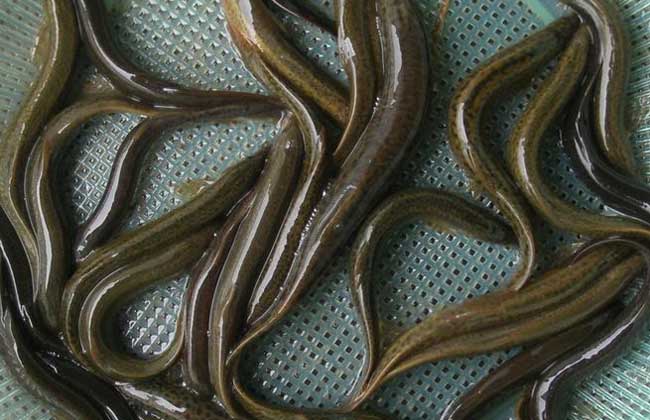
Key Points and Detailed Operation Methods of Loach Induced Spawning Technology
Induced Spawning Technology for Loach
-
Indoor Cultivation Techniques for Oyster Mushrooms: Detailed Explanation of Compounding, Filling, and Spawning Methods
1. For the formula of the growing substrate, cottonseed hulls are generally the better choice, because cottonseed hulls are relatively rich in nutrients and also have good air permeability. Choose dry cottonseed hulls with no mold, and it is best to sun-dry them for 2-3 days in advance. The raw material formula is: 100 kg cottonseed hulls, add 2 kg superphosphate, 3 kg gypsum, 0.2 kg carbendazim, and add about 150-160 kg water (depending on how dry the cottonseed hulls are and how much cotton lint they contain). Mix the above raw materials thoroughly, and adjust the moisture until it feels right when squeezed tightly by hand: water droplets appear between the fingers but do not drip
-

When do corals spawn? First record on the east coast, Taitung corals still healthy
Every year around the 23rd day of the 3rd lunar month, the birthday of Mazu, is the season when corals in the waters around Taiwan spawn en masse. On the 26th (the 22nd day of the 3rd lunar month), the Coral Reef Laboratory of the Biodiversity Research Center, Academia Sinica, recorded coral spawning at the Jihui coast in Taitung, and found that 8 species of coral, including Acropora, Stylophora, Pectinia, Lobophyllia, Merulina, Symphyllia, Hydnophora and Porites, were releasing sperm and egg bundles in large numbers.
-
How to Raise Berried Shrimp? A Detailed Guide to Berried Shrimp Rearing and Management
Berried shrimp are unhatched individuals after broodstock mating and spawning; after hatching, berried shrimp become shrimp fry. So how do you raise berried shrimp? 1. Water quality: Berried shrimp are stocked at high density, and water quality deteriorates very easily, so leftover feed and dead shrimp should be removed promptly, and increasing water changes
-
How to Fish During Carp Spawning Season? Practical Fishing Tips Shared
During carp spawning season, you need to find places suitable for fish to spawn and fish there, usually where there are aquatic plants, or where there are stones in shallow water. Although female carp do not feed during the spawning season, male carp will chase the female carp and will naturally eat when they see food. In this way you
-
Detailed Explanation of the Methods for Selecting Breeding Frogs in Stone Frog Culture
The spawning and hatching season of stone frogs is from April to September, with May to June being the peak spawning period. To increase the spawning rate and hatching rate, it is necessary to start from the revival of breeding frogs from hibernation and do a good job in the preparation work of selecting breeding frogs, mating, spawning, hatching, and so on. Selecting breeding frogs is the foundation of
条件筛选