When do corals spawn? First record on the east coast, Taitung corals still healthy
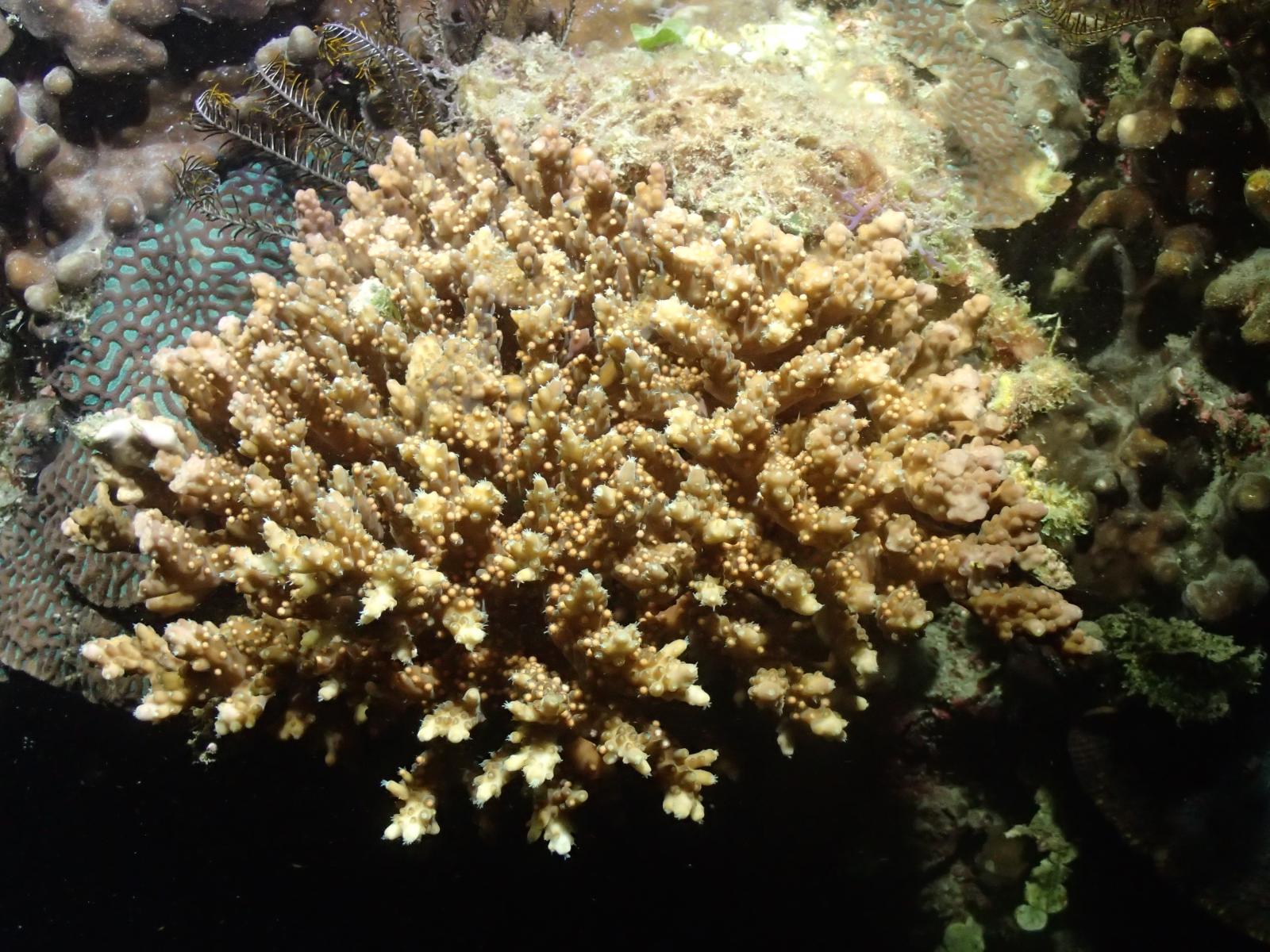
Every year around the 23rd day of the 3rd lunar month, the birthday of Mazu, is the season when corals in the waters around Taiwan spawn en masse. On the 26th (the 22nd day of the 3rd lunar month), the Coral Reef Laboratory of the Biodiversity Research Center, Academia Sinica, recorded coral spawning at the Jihui coast in Taitung, and found that 8 species of coral, including Acropora, Stylophora, Pectinia, Lobophyllia, Merulina, Symphyllia, Hydnophora and Porites, were releasing sperm and egg bundles in large numbers.
On the 25th, the Coral Reef Laboratory of the Biodiversity Research Center, Academia Sinica, arrived in Chenggong Township, Taitung County, to conduct long-term ecological research on the coral reef community at the Jihui coast. Kuo Chao-yang, a postdoctoral researcher at the Coral Reef Laboratory of the Biodiversity Research Center, Academia Sinica, who took part in the study, pointed out that an article recently published in the international journal Nature revealed that after the Great Barrier Reef suffered major bleaching events in two consecutive years, 2016 and 2017, large numbers of adult corals died, and the reproductive capacity of corals to produce sperm and eggs and the subsequent success rate of coral larvae entering the reef area also declined, leaving the reef unable to recover. At the Jihui coast, many kinds of corals were observed to still be spawning continuously, proving that the corals off the Taitung coast are still healthy and able to reproduce.
Chen Chao-lun, a researcher at the laboratory, said that this observation at Jihui is the first scientific record of coral spawning in the coral reef area of Taiwan's east coast, and is extremely valuable. However, Jihui and the coral reefs of the east coast currently face many large-scale development projects and coastal habitat destruction. Even if adult corals work hard to reproduce, the small corals they produce still have to face the predicament of disappearing habitat and having no home to live in, which is also a problem that public agencies must confront.