Key Points and Detailed Operation Methods of Loach Induced Spawning Technology
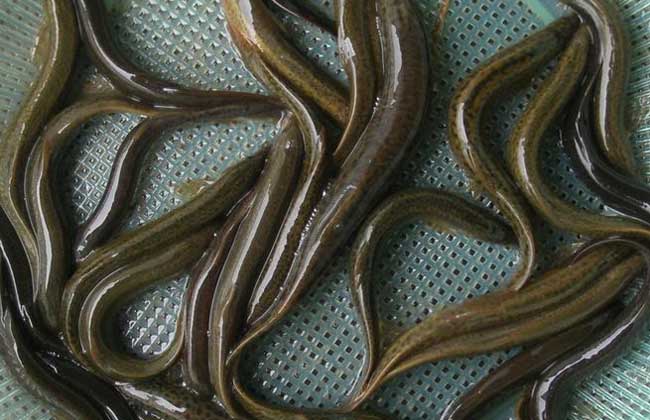
Loach usually reaches maturity at 2 winters of age and begins to reproduce in April each year (water temperature 18°C). The water temperature for reproduction is 18-30°C, with the optimum being 22-28°C. Spawning occurs in shallow water grass beds less than 30 cm deep. The eggs laid adhere to aquatic plants or submerged terrestrial grasses. The hatched larvae often live scattered and do not form groups. Let's take a look at the induced spawning technology for loach below!
Living Habits
Loach is a small bottom-dwelling fish that lives in still or slow-flowing water bodies with muddy bottoms. It has strong adaptability and can live in environments rich in humus. When water is low in oxygen, it can perform intestinal respiration, and after the water body dries up, it can burrow into the mud to lie dormant. It feeds on various small animals and spawns in batches. The main breeding season is from May to June. The largest individual can reach 300 mm in length. Its flesh is of excellent quality, and it is one of the aquatic products for export.
Selection of Parent Loach
The parent loach used for breeding is mainly selected from the adult loach ponds of the previous year, but can also be purchased from nearby markets. Female loach generally requires a body weight of more than 25 grams and a body length of 14-18 cm. Requirements for male loach body weight are not strict, generally more than 12 grams in weight and more than 10 cm in body length. The requirements are normal body surface color, smooth without disease spots, well-proportioned body shape, agile movement, and an age of 2-3 years. For induced spawning, female loach with better development and obvious ovarian outline in the abdomen and healthy, lively male loach should be selected for pairing, with a female-to-male ratio of 1:2.
Pond Conditions
Regardless of where the parent loach comes from, it must undergo pre-spawning cultivation in a pond for no less than 2 months. The parent loach cultivation pond area is 1200-1500 sq m, able to maintain a normal water level of 60-80 cm, a transparency of 20 cm, and moderate fertility. Before stocking the parent loach, use quicklime or bleaching powder, tea seed meal, etc., to thoroughly clear the pond and disinfect it. After the drug effect disappears, apply base fertilizer to fertilize the water quality, and then stock the parent loach. The stocking density is 325 kg of parent loach per mu of water surface, with females and males mixed together.
Loach Pond Management
Entering March, when the water temperature is above 10°C, artificial feed can be given. The feed requires a crude protein content of 30-35% and fat of 5%, mainly based on animal protein. When the pond water temperature is 15°C, the feeding amount is about 1% of body weight; when the water temperature is 20°C, the feeding amount is about 2% of body weight; when the water temperature is above 25°C, the feeding amount is about 3% of body weight. Feeding times are 8-9 AM and 16-17 PM. Regularly flush water once a week for 2 hours each time, deepening the water level by 5 cm. Do not change a large amount of water. Maintaining a certain degree of fertility is beneficial to the gonadal development of the large-scale loach (Paramisgurnus dabryanus).
Induced Spawning Time
The suitable induced spawning time for the large-scale loach (Paramisgurnus dabryanus) should be from mid-to-late April to early May, at a water temperature of 16°C-18°C. If too late, the gonads are prone to over-maturation. The main tools for induced spawning include several medical syringes with a capacity of 1-2 ml and matching needles, spawning-inducing agents for injecting parent loach, a dissecting tray, scissors, a knife, tweezers, etc., several towels for extracting testes, several hard feathers, 1 narrow-mouth bottle of 1000 ml, Grin's solution or medical saline, 2 pipettes of 20 ml or 50 ml, and several water basins or buckets.
Spawning-Inducing Drugs
Through experimental research, it was found that for induced spawning of the large-scale loach (Paramisgurnus dabryanus), the mixed hormones of domperidone (DOM) + human chorionic gonadotropin or domperidone + luteinizing hormone-releasing hormone analog have better effects. Using HCG alone is expensive and the effect is also not good. The injection dose is domperidone 0.5-1 mg per fish + human chorionic gonadotropin 300-500 units per fish, or domperidone 0.5-1 mg per fish + luteinizing hormone-releasing hormone analog 2-3 micrograms per fish.
Induced Spawning Method
First, use physiological saline to prepare the dosage for each fish into an injection solution. Generally, a parent loach of about 20 grams is injected with 0.5-0.7 ml. During injection, work in pairs: one person uses a loach control net to secure the loach, and the other person uses a medical syringe for the injection. Use the dorsal intramuscular injection method, with the needle tip at a 45° angle to the loach body, injecting the drug toward the head direction, at a depth of 0.2 cm. To prevent the needle from going too deep and injuring the loach, you can wrap cotton thread around the needle tip or put a small piece of rubber tubing over the needle to treat the needle tool, requiring 0.2 cm of the needle tip to be exposed.
Spawning and Hatching
After induced spawning is completed, use micro-flowing water to stimulate the parent loach to spawn. At a water temperature of 22°C, after 12-15 hours, and at a water temperature of 25°C, after 8-10 hours, the large-scale loach (Paramisgurnus dabryanus) begins to become sexually excited, chase, entwine, and spawn. The fertilized eggs fall through the mesh into the circular channel. After spawning is completed, remove the net cage and the loach together. The fertilized eggs enter the hatching stage. At this time, increase the water flow to wash up the loach eggs sunk at the bottom of the circular channel. At the same time, use a water-stirring plate to stir up the loach eggs from below. Continue the operation for about 30 minutes. After the clumped loach eggs separate, the flow rate can be reduced, controlled at about 10 cm per second. At a water temperature of 22°C, after 41 hours, 90% of the fertilized eggs hatch into loach fry. At a water temperature of 25°C, it takes 30-32 hours for the larval loach to hatch.