What to Do When Potted Lemons Drop Their Fruit? Causes and Solutions
Many gardeners love potted lemon trees. Not only can they serve as foliage plants, but gardeners also hope to see them covered with lemons. However, some gardeners have found that although their lemons set fruit, the fruit then drops off, and they do not know what to do.
A gardener asks: The lemon I bought 3 years ago drops its fruit every year when the fruit reaches the size of a fingernail, and not a single one is left. What is going on?
Answer: Lemon fruit drop is mainly caused by improper cultivation and management, weak tree vigor, and nutrients not keeping up. Before lemons bloom and after they set fruit, they need multiple rounds of topdressing: apply a compound fertilizer once a month, spray a flower nutrient solution once every half month, and carry out flower and fruit thinning measures to keep the fruit. First thin out excessive and overly dense flower buds; later, when the young fruit is 1 cm in size, thin out some of the fruit; after physiological fruit drop, set the final fruit according to a leaf-to-fruit ratio of 30 to 40:1, and do not keep fruit on weak branches.
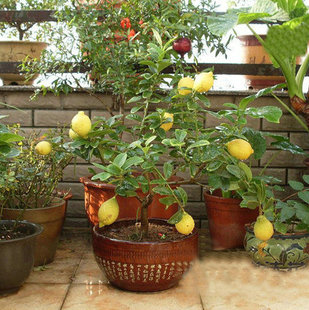
What to Do When Potted Lemons Drop Their Fruit
Lemon
The lemon is an evergreen small tree with small leaves but plump flesh. It is a very widely used fruit. After the fruit ripens, it can be sliced and steeped in water; the juice can be used in cooking; and the peel can be used to extract lemon oil. Because the taste is quite sour, it is not recommended to eat it as a fruit. Due to its place of origin, lemons are only suitable for cultivation in the south. Even if this requirement is met during cultivation, fruit drop can still occur. So what should be done when lemons show this condition?
I. What Are the Causes of Fruit Drop in Potted Lemons?
1. Watering is too frequent and there is standing water at the bottom of the pot, so the frequency of watering should be reduced.
2. Watering does not penetrate thoroughly: the bottom of the potting soil is dry while the surface is moist. Watering should follow the principle of "water thoroughly when you water."
3. Fertilization is inadequate; a single fertilizer should not be used, and mixed fertilizer should be applied frequently.
4. Insufficient light. Of course, intense sun exposure is also not acceptable; light should be provided reasonably.
5. The growing environment is too sheltered and ventilation is poor, so natural ventilation should be strengthened.
Lemon
II. How Can Lemons Be Loaded with Fruit?
1. Light
We should know that lemons like a warm and humid growing environment, so when growing them in pots, give them as much all-day light as possible. However, from after flowering to before fruiting, avoid direct strong sunlight, otherwise it can easily affect normal flowering and also hinder fruit set.
2. Watering
Lemons have high water requirements during growth and development, but unscientific watering is harmful to lemon growth, so watering is best done according to seasonal changes: water more in dry seasons, water moderately in cool seasons, and in the harvest season keep the soil moisture sufficient to ensure sound fruit development. Before overwintering, keep the potting soil dry, as this helps lemons overwinter smoothly.
3. Fertilization
Lemons like fertilizer. Before potting and repotting, apply sufficient base fertilizer, and during the growing period follow the principle of "light fertilizer applied frequently." For potted lemons in northern regions, because the soil tends to be alkaline, an acidic nutrient solution can be applied appropriately, which helps lemons flower and set fruit normally.
4. Hand Pollination
Usually, after lemons bloom, butterflies and bees in nature pollinate them, but to increase the fruit set rate, hand pollination is needed at this time. The best time for pollination is around 9 a.m. each day, after the petals have fully spread.
5. Remove Dense and Poorly Developed Fruit
Having many lemon fruits is a good thing, but when the nutrients transported by the plant are not enough for the fruits to absorb, it easily leads to competition for nutrients among the fruits, which ultimately not only burdens the plant but also causes poor fruit development. Therefore, before all the flowers have opened, remove some of the flower buds, and when fruit has set, remove some of the densely clustered young fruits.
6. Repotting
The purpose of repotting is to help lemons grow more healthily, so once every spring, carry out repotting, soil replacement, pruning, and fertilization. First cut off all old and worn branches and leaves, diseased branches and leaves, and leggy branches and leaves, then repot.
What to Do When Potted Lemons Drop Their Fruit
Many gardeners love potted lemon trees. Not only can they serve as foliage plants, but gardeners also hope to see them covered with lemons. However, some gardeners have found that although their lemons set fruit, the fruit then drops off, and they do not know what to do.A gardener asks: The lemon I bought 3 years ago drops its fruit every year when the fruit reaches the size of a fingernail, and not a single one is left. What is going on?
Answer: Lemon fruit drop is mainly caused by improper cultivation and management, weak tree vigor, and nutrients not keeping up. Before lemons bloom and after they set fruit, they need multiple rounds of topdressing: apply a compound fertilizer once a month, spray a flower nutrient solution once every half month, and carry out flower and fruit thinning measures to keep the fruit. First thin out excessive and overly dense flower buds; later, when the young fruit is 1 cm in size, thin out some of the fruit; after physiological fruit drop, set the final fruit according to a leaf-to-fruit ratio of 30 to 40:1, and do not keep fruit on weak branches.