-

What are the solutions when robbing occurs in Chinese honey bee (Apis cerana) beekeeping?
The Chinese honey bee has a keen sense of smell and is prone to robbing. If not controlled in time, it will not only cause chaos in the order of the entire apiary's bees, but also consume feed and cause losses to colonies. So if these phenomena occur, how should they be solved and prevented? Let's take a look together below. 1. Apiary site
-
Water Lily: Water Culture or Soil Culture? Solutions for Dry Leaves
There are many varieties of lotus, such as Qingling Red Lotus, Friendship Peony Lotus, Fujian Red Lotus, White Jian Lotus, Sword Dance, and so on. Today we are going to talk about one of them, the water lily. So, should water lilies be grown in water or in soil? What should you do if its leaves dry up? 1. What is a water lily
-
How to Fix Dried Leaves on Azalea (Rhododendron) and Whether It Can Bloom in Winter
The azalea, one of China's top ten famous flowers, has always been deeply loved by everyone. According to relevant classical records, the cultivation history of the azalea is at least over a thousand years, with the earliest descriptions dating back to the Han Dynasty. So, what should you do when azalea leaves dry up? The solutions include
-
Hibiscus rosa-sinensis (Rose of Sharon Hibiscus) Growing Methods, Precautions, and Solutions for Yellowing Leaves
Mulberry leaf peony, namely hibiscus, also known as Buddhist hibiscus and Chinese hibiscus. It is an evergreen shrub and a famous flower of our country, with large blooms and many colors. Although the flowers open in the morning and fall at dusk, they bloom continuously with a long flowering period, and flowering is most abundant in summer and autumn. So what are the cultivation methods and precautions for mulberry leaf peony? Leaves
-
Is the ornamental tree Aglaia odorata (mock lime) toxic? Cultivation methods, precautions and solutions for leaf drop
Aglaia odorata aliases: Sijimi (four-season Aglaia), Suimi (broken-grain Aglaia). Aglaia odorata is a type of ornamental tree species, with small leaves and small flowers; when it blooms the flowers are extremely fragrant, and it stays evergreen year-round. Because it is easy to grow and carries a delicate fragrance, it is mostly planted in homes. So what are the cultivation methods and precautions for Aglaia
-
Causes and Solutions of Diarrhea in Early-Weaned Piglets
The causes of post-weaning diarrhea in piglets are complex. Research over the past 20 years has shown that dietary factors are the main cause of post-weaning diarrhea in piglets. The reasons are: (1) A certain number of pathogenic microorganisms (pathogenic Escherichia coli and rotavirus, etc.) generally exist in the gastrointestinal tract of healthy piglets. (2) Introducing isolated pathogenic microorganisms into the gastrointestinal tract of unweaned piglets and weaned piglets that are either not supplemented or fully supplemented with feed did not always cause diarrhea. (3) The proliferation of intestinal pathogenic microorganisms is not necessarily linked to post-weaning diarrhea. (4) When no pathogenic microorganisms are present or proliferating, weaned piglets can still develop diarrhea. (5) If weaning does not cause intestinal damage, piglets will not develop diarrhea, although pathogenic Escherichia coli can still be detected in piglet feces. (6) Practice has proven that antibiotics are not completely effective in preventing and treating post-weaning diarrhea in piglets.
-
Detailed Explanation of Common Problems in Lactating Sows and Their Solutions
1. Sow fever management: The health status of sows before and after farrowing must be carefully observed and never taken lightly. If a sow develops a fever after farrowing, it will endanger the lives of the entire litter of piglets. When a sow has postpartum fever, it is strictly forbidden to use large doses of drugs such as analgin, because this
-
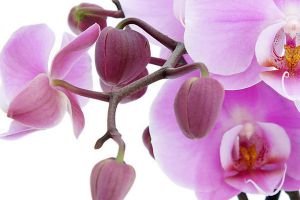
What to Do When a Phalaenopsis Orchid Loses Its Leaves? Causes and Solutions
This plant is very poorly adapted to cold climates and likes to grow in warm places, and the most suitable temperature for its growth is between 15°C and 20°C. In winter, if the temperature drops below 10°C, this plant will stop growing, and if the temperature falls below 5°C, it will even die. Due to its own physiological structure, this plant can adapt to low-humidity environments, but if the environment where it is grown is too humid, it often suffers from diseases.
-
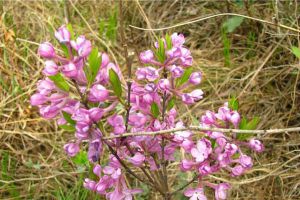
What to Do When Daphne Leaves Turn Black? Causes and Solutions
The daphne (Daphne odora) can be considered, to some extent, a fairly versatile flowering plant. It not only has medicinal and ornamental value, but can also greatly lift the mood of those at home. However, daphne leaves very easily become diseased from turning black, which affects the plant's lifespan, so when growing it you need to observe it frequently and understand the causes of the problem.
-
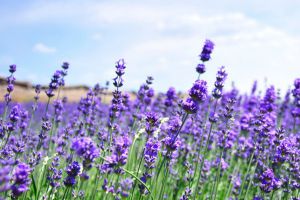
Reasons and Solutions for Yellowing Lavender Leaves
Lavender is a beautiful and romantic flowering plant that many garden lovers enjoy growing. Its green leaves and purple flowers represent romance and symbolize waiting for love! So what should you do if the lavender leaves turn yellow? Don't worry. First, we need to find out why they are turning yellow, and then treat the problem accordingly. So what are the factors that cause lavender leaves to turn yellow, and how should you address them? Don't worry, let me explain slowly:
条件筛选