-
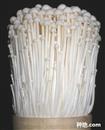
How to supplement nutrient solution for enoki mushrooms? A detailed guide to the method
How to cultivate white enoki mushrooms? Please advise. To cultivate white enoki mushrooms, you can refer to the following method: 1. Choose a suitable cultivation time. Most white enoki mushroom varieties are low-temperature types; the optimum temperature for mycelial growth is 18-20°C, and the optimum temperature for mushroom formation is 6-8°C. Accordingly, white enoki mushrooms are generally suitable for cultivation from October to the first ten days of March of the following year...
-
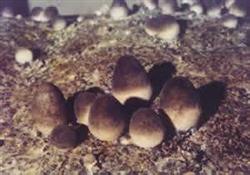
What to do when Pleurotus nebrodensis mushrooms grow deformed? Introduction to practical solutions
Help wanted: what methods can increase the yield of straw mushrooms? Farming Network teaches you three methods to increase straw mushroom yield: secondary inoculation - adopting a secondary inoculation measure helps increase straw mushroom yield. Straw mushroom mycelium grows too fast and ages very easily, which weakens its vitality and prevents it from effectively using the nutrients in the substrate to continue...
-
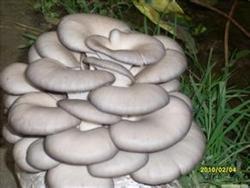
What are the common problems during the mycelium running stage of oyster mushrooms? Solutions included
In oyster mushroom cultivation, pests and diseases are stumbling blocks. Recognizing and controlling them promptly is of great significance for normal production. Once pests and diseases are found, failure to take timely measures will seriously affect oyster mushroom yields and sometimes cause total crop failure. Therefore, one should choose excellent and highly resistant spawn strains, strengthen scientific management, and create conditions favorable for mushroom mycelium...
-
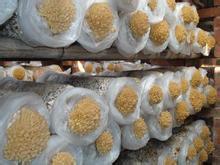
Spraying Enoki Mushrooms with Rare Earth Solution Promotes Growth
In the cultivation of enoki mushrooms (Flammulina velutipes), spraying a rare earth solution onto the mushroom beds (growing bags) can promote mycelial growth and increase the yield and quality of enoki mushrooms. The specific method is: spray once with the rare earth solution every 3 days, applying 500 milliliters per square meter of mushroom bed each time, while spraying clean water daily to maintain relative humidity; when the fruiting bodies grow to meet the standard...
-
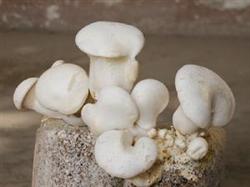
How to prevent deformed mushrooms in white king oyster mushrooms? Cause analysis and solutions
1. Unreasonable room and shed structure. White king oyster mushroom cultivation sites are divided into indoor mushroom rooms and outdoor mushroom sheds. Because of unreasonable design, air often does not circulate and severe oxygen deficiency occurs, causing the aerobic white king oyster mushroom to develop deformities. An ideal mushroom shed should face south from the north or face east from the west. The room or shed should not be too large. Generally, a rectangular shed room should hold 300... per shed.
-

What to Do When Hollow Mushrooms Appear? Causes and Solutions
This condition is often accompanied by thin, small fruiting bodies, thin caps, and sparse fruiting. It mostly occurs in the late fruiting stage, and is caused by insufficient water in the substrate, insufficient nutrients, low humidity, a relative air humidity staying below 80% for a long time, and disrupted cell elongation within the stipe. Prevention methods: after harvesting the first flush, promptly inject water and nutrient solution into the growing bags, or carry out soil casing cultivation again. The mushroom shed should be shaded to lower the temperature, and when spraying water, spray lightly and frequently, raising the relative air humidity to around 90% to prevent it.
-
What to do if the second flush of mushrooms does not appear? Causes and solutions
Normally, after the first flush of mushrooms is harvested, the second flush will begin to appear in about 10 days. In some cases, no mushrooms appear for a long time. The main reasons are, first, a high yield in the first flush and too long a growing period, causing a serious shortage of water content in the growing medium; second, temperature that is too low or too high, affecting the timing and yield of the next flush. The solution is to soak the growing medium bags in clean water for 1-2 hours, adding to the water 1% white sugar, 0.3% potassium dihydrogen phosphate, 0.5%-1% magnesium sulfate, 0.1% urea, and 0.1% zinc sulfate
-
What to Do If Edible Mushrooms Do Not Form Primordia? Causes and Solutions
In edible mushroom cultivation, it is common to see mycelium growing too vigorously, neither forming primordia nor producing mushrooms. Moreover, the mycelium keeps increasing and forms a thick layer of mycelial film, seriously affecting edible mushroom production. Once this happens, you can use a bamboo strip to tap lightly on the growing mycelium to break up the overgrown mycelium and press it firmly against the substrate. In this way, after 2 to 3 days, the mycelium will form primordia and produce mushrooms, without affecting the yield.
-
Reasons for Slow Mycelial Growth in Oyster Mushrooms and Solutions
During the cultivation and management process, it is necessary to understand the biological characteristics of different varieties and the requirements of the mycelium during its growth and development stages for nutrients, moisture, temperature, light, pH, and other environmental factors. After inoculation (at a 10%-15% inoculation rate), mycelium extending outward from the spawn block can be observed in the culture room within 2-3 days, growing 3-5 cm in 7-10 days, fully colonizing the bag in 20-30 days, and producing mushrooms in 35-45 days. If these standards are not met, the reasons are: (1) The raw materials have been stored for too long and are highly acidic,
-
Seven methods of applying nutrient solutions to increase oyster mushroom yields
1. Sucrose and calcium carbonate phosphate mixed solution: sucrose 1%, calcium carbonate 1%, potassium dihydrogen phosphate 0.1%. Use when the mycelium has covered the mushroom bed and before fruiting bodies appear. 2. Urea and citric acid mixed solution: urea 0.5%, citric acid 0.1%, adjust pH to 7 with sodium hydroxide. Use after the first flush of mushrooms is harvested. Using it after the second flush is not effective and instead hinders oyster mushroom growth. 3. Sugar, urea and citric acid mixed solution: sucrose, citric acid and urea 1% each, adjust pH to 7. Same
条件筛选