-
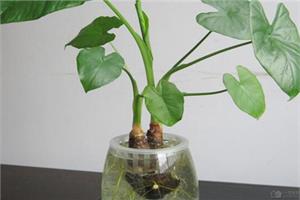
Dumb Cane (Dieffenbachia) is suitable for hydroponic growing: a detailed guide to the root-soaking method
Dumb Cane is suitable for growing in water: how to soak the roots of Dumb Cane
-
Can soaking fruits and vegetables in salt water really wash away pesticide residues? The truth revealed
Many people worry that the vegetables and fruits bought from the market have pesticide residues, so they wash them in various ways before eating. The most common is that people always like to wash...
-

Can soaking fruits and vegetables in vinegar remove pesticide residues?
Can soaking fruits and vegetables in vinegar remove pesticide residues?
-
Analysis of Common Misconceptions About Soaking and Disinfecting Eel Fry
In many years of fishery production, aquaculture technicians have accumulated rich farming experience. Soaking fish fry in salt water for disinfection is one of the traditional practices of farmers in various regions. However, aquaculture experts in China and some eel farmers have found in practice that the method of soaking and disinfecting fish fry in salt water, which is widely used for other fish species, is not suitable for use in eel farming. In early 2000, based on experiments, a scholar put forward the view that "using salt water to disinfect eels is unsafe." The experiment showed that after using salt water to disinfect the body of
-
Why Schisandra chinensis seedlings should be soaked in water before planting and the suitable soaking time
Schisandra chinensis seedlings naturally have indistinct main and lateral roots and many fine fibrous roots. After the seedlings leave the nursery, they go through several stages such as transport, storage and transplanting, and water loss occurs in both the root and crown areas. Using such seedlings results in a low survival rate, so before planting they should be soaked in water for 24 hours.
-
Sowing Method for Gastrodia elata Seeds After Soaking in Fungal Liquid
(1) Preparing the fungal bed: Start preparing the fungal bed in April. Because temperatures in Northeast China are low, outdoor cultivation of Gastrodia elata in winter is prone to frost damage, so wooden boxes are used to grow Gastrodia elata, with the wooden boxes serving as fungal beds. Place a layer of base culture material at the bottom of the wooden box, then place 5 high-quality fungal sticks, fill the gaps with humus soil or sawdust mixed with sand (3:1), then cover with an 18 cm thick layer of semi-decomposed fallen branches and leaves, water to maintain moisture, and wait until the seeds are collected, then sow immediately. (2) Sowing method: Take liquid Armillaria mellea spawn grown on good culture material and dilute it slightly with sterile water. Pour the freshly
-
How to process oyster mushrooms by soaking in egg white liquid and deep-frying?
When dried oyster mushroom products are rehydrated and then cooked before eating, they are hard to satisfy consumers in terms of shape, flavor and mouthfeel. However, dried oyster mushroom products processed by soaking in egg white liquid and deep-frying can better retain the original shape and color of the fresh mushrooms, and have a soft mouthfeel so they can be eaten directly. The processing method is as follows: (1) Raw material preparation. Separate and break apart fresh oyster mushrooms, and select those with a cap diameter of about 3 cm for later use. Dissolve dried egg white powder in warm water to make a 13% aqueous solution for later use. (2) Vacuum soaking. Put the oyster mushrooms into the prepared
-
How to treat licorice seeds? A detailed guide to the warm water soaking method
Soak the seeds in warm water at 60°C, stirring constantly. Once the water temperature drops, remove the seeds and soak them in clean water until they swell, then remove and drain them before sowing. Warm water soaking can increase the germination rate of the seeds by 15%-20%. Alternatively, soak the seeds in warm water at 60°C for 4-6 hours, remove them and place them in a warm spot, cover with a damp cloth, and rinse with clean water twice a day, then sow once the seeds crack open.
-
Key Technical Points for Shiitake Mushroom Mycelial Growth and Soaking Management
After inoculation, the mycelium begins to germinate and colonize from days 1-6. At this time, the bag temperature is 1-3°C lower than the room temperature. The room temperature can be controlled at 28°C, and the indoor relative humidity should be kept below 70%. From days 7-15 of mycelial growth, the mycelium germinates and grows 4-5 cm. It is necessary to check whether the mycelial growth is normal. If contaminating microorganisms are found, promptly remove them from the cultivation room for handling, and maintain the room temperature at 24-27°C. Pay attention to ventilation. From days 16-25 of mycelial growth, the mycelium becomes interconnected. Remove the mycelial strips to allow oxygen to enter directly into the depths of the bag. After oxygen is introduced, the mycelial temperature rises rapidly within 12 hours.
-
Soaking water from onion skins can be used as fertilizer
The solution made by soaking onion skins not only contains a substance that can kill pathogenic microorganisms in the soil, but also contains a variety of trace elements, and can be used as fertilizer for crops. 1. If onion skin soaking liquid is used as fertilizer for indoor flowers, the branches grow luxuriantly and the flowers become more vivid. 2. Yellowing cucumber seedlings are especially suitable for spraying with onion skin soaking liquid; after spraying, the seedlings turn from yellow to green, grow vigorously, and soon bloom and bear fruit. Method for making onion skin soaking liquid: use 100 g of onion skins, add 25 g of hot water, soak for 4 days, and it can be used as fertilizer
条件筛选