Can soaking fruits and vegetables in salt water really wash away pesticide residues? The truth revealed
Many people worry that the vegetables and fruits bought from the market have pesticide residues, so they wash them in various ways before eating. The most common is that people always like to add a little salt when washing fruits and vegetables, believing that salt can sterilize and remove pesticide residues on the skin. Some merchants have even launched special fruit and vegetable washing salt. But does doing this really work?
Salt is the king of all flavors, a condiment people commonly use. If no salt is added when cooking or making cold dishes, the food is simply tasteless. In addition, besides seasoning, salt also has an insecticidal effect and can kill mollusks (insects) with slime, such as slugs, snails and leeches. However, the claim that "salt water can effectively remove pesticides" has no scientific basis. Because the chemical composition of salt is relatively stable, soaking in salt water is not outstanding at removing methamidophos and dimethoate. Due to the salting-out effect caused by salt, residual organophosphorus pesticides may become even harder to wash out of fruits and vegetables with water.So when soaking fruits and vegetables in salt water, what actually works is the water. Its effect is only this: salt can accelerate the dehydration of vegetables, thereby drawing out some of the pesticides that have already entered the tissues, but the effect is very low.
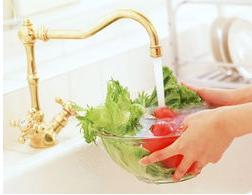
In fact, to remove pesticide residues from vegetables and fruits, you only need to wash them repeatedly and thoroughly with clean water. Of course, under the guidance of the national policy advocating the use of high-efficiency and low-toxicity pesticides, some low-toxicity pesticides are occupying an increasingly dominant position, and their impact on people will also become smaller and smaller, to the point of being negligible.
Below are some convenient and feasible methods to reduce pesticide residues:
1. Alkaline water soaking and washing method: Most pesticides are acidic, and soaking in alkaline water can cause a neutralization reaction, making it more effective at removing pesticide residues from vegetables. So one of the simplest ways to clean pesticide residues from fruits and vegetables is to use edible alkali. Generally, add 5-10 grams of edible alkali to 500 ml of clean water to make alkaline water. Put the initially rinsed fruits and vegetables into the alkaline water, prepare enough alkaline water according to the amount of vegetables, soak for 5-15 minutes, then rinse the fruits and vegetables with clean water. Repeating the washing about three times works better.
2. Rice water soaking and washing method: At present, most vegetable farmers and fruit farmers use organophosphorus pesticides and carbamate pesticides. These commonly used pesticides generally quickly lose most of their toxicity when they encounter alkaline solutions, and rice water is weakly alkaline, so it can play a detoxifying role. If uncut vegetables and fruits are first soaked in rice water for a few minutes, then rinsed clean with water, most of the pesticide residues on the surface of the vegetables and fruits can be removed or detoxified.
3. Clean water soaking and washing method: Generally, first wash off the surface dirt with clean water and remove the parts with visible stains. Then cover the fruits and vegetables with clean water to about five cm above them and soak for about 10 minutes. If necessary, add cleaning agents such as fruit and vegetable detergent to increase the dissolution of pesticides. Washing and soaking 2-3 times like this can basically remove most pesticide residues.