-

Suitable Growing Environment for Apple Trees and Tips for Applying Calcium Fertilizer
The apples produced by apple trees taste sweet and tart and are rich in vitamins and minerals, making them one of the fruits we commonly eat in daily life. After planting, an apple tree generally takes two to three years to bear fruit, with some variation among different varieties. So where are
-

How to improve the survival rate of flowers? Skillfully applying microbial fertilizer to improve the survival rate of flowers
How to improve the survival rate of flowers? Skillfully applying microbial fertilizer to improve the survival rate of flowers
-
Methods for Skillfully Applying Foliar Fertilizer to Tea Plants to Improve Quality
If famous tea is contaminated, especially export products, its output value and reputation will suffer serious damage. To improve tea quality and yield, in addition to measures such as growing green manure in tea gardens, mulching to retain moisture, applying sufficient farmyard manure after each harvest, and improving tea-making techniques, foliar fertilizer should also be used skillfully. This is a good method that uses a small amount of fertilizer, takes effect quickly, and yields high returns, generally increasing yield by 20%-30% or more. The techniques are: Fertilization timing. When the new shoots of each round of tea in spring, summer, and autumn sprout and grow to the stage of one bud and one initial leaf, choose a windless sunny day at early morning, evening, or on a cloudy day for spraying, once a week for 2-3 consecutive sprays. Spray until water drips from the leaf surface. Fertilizer ratio. Mainly nitrogen, phosphorus, and potassium, supplemented by micronutrient fertilizers, with a ratio of 4:1:1. Micronutrient fertilizers are proportioned according to the principle of supplementing whatever the tea plant lacks. Fertilization concentration. The fertilization concentration is related to the fertilizer variety and weather conditions. According to experiments, urea is 0.5%, superphosphate 1%, potassium sulfate 0.5%, zinc sulfate 50-100 ppm, and ferric molybdate 20-50 ppm. If the concentration is too high, fertilizer damage is likely to occur; otherwise, it will not be effective. Combination with multiple substances. It can be combined with pest control, sprinkler irrigation, and plant growth regulators, saving labor and making mechanized operation easier to achieve. Chemical properties of fertilizers and pesticides. Acidic fertilizers should be combined with acidic pesticides, and alkaline fertilizers with alkaline pesticides, so as not to produce chemical reactions or precipitates, preventing mutual cancellation of fertilizer and pesticide efficacy. Use biological pesticides to control pests and diseases. Using biological pesticides to control tea plant pests and diseases is the best choice, as it is safe, reliable, pollution-free, and harmless, with low cost and high control efficacy, such as Bt emulsion, Bacillus thuringiensis, Beauveria bassiana, agricultural antibiotics, and plant antibiotics.
-
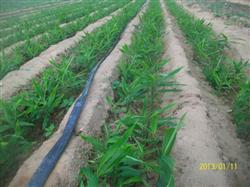
How to skillfully apply nitrogen fertilizer to ginger for high quality and high yield
Reasonably applying suitable varieties of nitrogen fertilizer according to the fertilizer uptake pattern of ginger can greatly increase yield, improve quality, increase the starch, protein and volatile oil content of commercial ginger, and reduce the soluble sugar and cellulose content. Among the four nitrogen fertilizers ammonium bicarbonate, sodium nitrate, urea and ammonium nitrate, sodium nitrate has the...
-
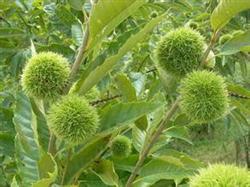
Key Technical Points for Skillfully Applying Boron Fertilizer to Chestnut Trees
According to surveys, in areas where chestnuts grow normally, 15% of the burrs are empty, and in some cases the rate is even as high as over 50%, seriously affecting chestnut growth. Boron deficiency is the main cause of empty chestnut burrs. Applying boron fertilizer can markedly inhibit the formation of empty chestnut burrs and increase yield. In spring, before the chestnuts sprout, apply it in a ring-shaped trench or in holes...
-
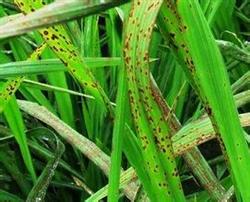
Identifying Zinc Deficiency Symptoms in Rice and Techniques for Skillfully Applying Zinc Fertilizer in Paddy Fields
Zinc is one of the essential trace elements for the growth and development of rice. Zinc deficiency in rice shows obvious symptoms. When rice is deficient in zinc, chlorotic yellow-white spots first appear in the midrib area of the lower leaves, with reddish-brown spots and irregular patches forming on them, which then gradually expand into reddish-brown streaks, turning reddish-brown and drying from the leaf tip downward, and from...
条件筛选