-

How to Apply Fertilizer Skillfully to Cotton? A Explanation of Practical Technical Points
Fertilizer is the material basis for high cotton yields, and applying fertilizer according to need is the highest principle of cotton fertilization. Where conditions allow, soil testing and fertilizer recommendation should be carried out, and based on the available nutrient content of the soil and the needs for high cotton yields, the type and amount of fertilizer to apply should be determined. For most cotton fields in the north, the amount of potassium fertilizer should be increased, the amount of phosphorus fertilizer reduced, and nitrogen fertilizer mainly used for topdressing, or a formula fertilizer with "high potassium, low phosphorus, medium nitrogen" should be applied. If a compound fertilizer with equal amounts of nitrogen, phosphorus and potassium is used, the amount per mu should not exceed 25 kg, plus an additional 12.5 kg of potassium fertilizer
-
Correct Methods and Techniques for Skillfully Harvesting Edible Mushrooms
Edible mushrooms are nutritious vegetables much loved by urban and rural people, and they are also an important way for farmers to increase income and become wealthy. Therefore, the following techniques should be mastered during harvesting: 1. Grasp the best harvest period. Various mushrooms and wood ear fungi are basically ready to harvest when they mature in July and August, when their appearance is beautiful, their color is fresh and glossy, and they taste good. Take shiitake mushrooms as an example: the signs of maturity in July and August are that the partial veil has broken, the cap has not yet fully opened, and there is still a slight inward curl, forming a "gong rim"; the gills have all elongated and changed from white to
-
How to Skillfully Master the Pig Feed-to-Water Ratio? A Must-Read for Pig Farmers
Mixing pig feed with too much water and making it too thin is a long-standing habit among rural people. It has many drawbacks: First, when the feed is mixed too thin, the water content in the daily ration increases relatively, the nutritional components are insufficient, saliva secretion is greatly reduced, the gastric juice is diluted, and the feed stays in the stomach for a shorter time, severely reducing the feed's utilization rate. Second, it increases the physiological burden and raises the body's heat consumption. In addition, in autumn and winter, because pigs urinate more, the pigpen becomes damp and cold, seriously affecting the pigs' growth, development and health. It can thus be seen that pig feed is better prepared as a moist mash, which not only saves
-
Methods for Skillfully Applying Foliar Fertilizer to Tea Plants to Improve Quality
If famous tea is contaminated, especially export products, its output value and reputation will suffer serious damage. To improve tea quality and yield, in addition to measures such as growing green manure in tea gardens, mulching to retain moisture, applying sufficient farmyard manure after each harvest, and improving tea-making techniques, foliar fertilizer should also be used skillfully. This is a good method that uses a small amount of fertilizer, takes effect quickly, and yields high returns, generally increasing yield by 20%-30% or more. The techniques are: Fertilization timing. When the new shoots of each round of tea in spring, summer, and autumn sprout and grow to the stage of one bud and one initial leaf, choose a windless sunny day at early morning, evening, or on a cloudy day for spraying, once a week for 2-3 consecutive sprays. Spray until water drips from the leaf surface. Fertilizer ratio. Mainly nitrogen, phosphorus, and potassium, supplemented by micronutrient fertilizers, with a ratio of 4:1:1. Micronutrient fertilizers are proportioned according to the principle of supplementing whatever the tea plant lacks. Fertilization concentration. The fertilization concentration is related to the fertilizer variety and weather conditions. According to experiments, urea is 0.5%, superphosphate 1%, potassium sulfate 0.5%, zinc sulfate 50-100 ppm, and ferric molybdate 20-50 ppm. If the concentration is too high, fertilizer damage is likely to occur; otherwise, it will not be effective. Combination with multiple substances. It can be combined with pest control, sprinkler irrigation, and plant growth regulators, saving labor and making mechanized operation easier to achieve. Chemical properties of fertilizers and pesticides. Acidic fertilizers should be combined with acidic pesticides, and alkaline fertilizers with alkaline pesticides, so as not to produce chemical reactions or precipitates, preventing mutual cancellation of fertilizer and pesticide efficacy. Use biological pesticides to control pests and diseases. Using biological pesticides to control tea plant pests and diseases is the best choice, as it is safe, reliable, pollution-free, and harmless, with low cost and high control efficacy, such as Bt emulsion, Bacillus thuringiensis, Beauveria bassiana, agricultural antibiotics, and plant antibiotics.
-
How to skillfully manage late-season wheat? These technical points must be mastered
Ensure sufficient soil moisture and base fertilizer. For late-season wheat, never rush to sow by seizing moisture; on the premise of ensuring adequate soil moisture, apply heavy base fertilizer, and where conditions permit, apply 3-5 cubic meters of high-quality farmyard manure per mu; at the same time, according to yield requirements, mix 2/3 of the total nitrogen, phosphorus and potassium chemical fertilizers invested throughout the growth period with farmyard manure, spread them on the surface and plow them into the soil. Choose the right variety and increase the seeding rate. Late-season wheat is suitable for semi-winter varieties, which can be selected according to local conditions. At the same time, determine the actual number of days of late sowing according to local autumn temperatures. Generally, it is advisable to increase the seeding rate by 0.5 kg for each day of delayed sowing, and never
-
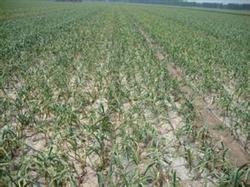
Good garlic growth depends on the skillful application of four kinds of fertilizer
Year-after-year garlic cultivation creates a series of problems that give farmers a headache. Because land resources are limited, continuous cropping of garlic is very common in Feng County, Jiangsu, and this has also led to the buildup of various pathogens in the soil, causing the trace elements that garlic can easily absorb to gradually decline, resulting in deficiency symptoms. In addition, garlic...
-
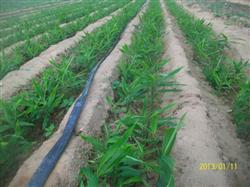
How to skillfully apply nitrogen fertilizer to ginger for high quality and high yield
Reasonably applying suitable varieties of nitrogen fertilizer according to the fertilizer uptake pattern of ginger can greatly increase yield, improve quality, increase the starch, protein and volatile oil content of commercial ginger, and reduce the soluble sugar and cellulose content. Among the four nitrogen fertilizers ammonium bicarbonate, sodium nitrate, urea and ammonium nitrate, sodium nitrate has the...
-
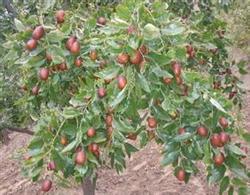
What are the key technical points for skillful fertilization of jujube trees to promote high yields?
Only through scientific and rational fertilization can jujube trees be strengthened, their resistance to pests and diseases improved, quality enhanced, and yields increased. Fertilization of jujube trees is divided into base fertilizer and topdressing. The scientifically appropriate time for applying base fertilizer is from the jujube fruit ripening stage until the soil thaws the following year, while topdressing is carried out in three applications: before bud break, at the early full-bloom stage, and during the rapid fruit swelling stage...
-
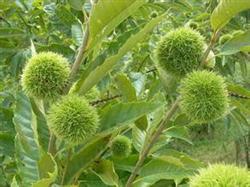
Key Technical Points for Skillfully Applying Boron Fertilizer to Chestnut Trees
According to surveys, in areas where chestnuts grow normally, 15% of the burrs are empty, and in some cases the rate is even as high as over 50%, seriously affecting chestnut growth. Boron deficiency is the main cause of empty chestnut burrs. Applying boron fertilizer can markedly inhibit the formation of empty chestnut burrs and increase yield. In spring, before the chestnuts sprout, apply it in a ring-shaped trench or in holes...
-
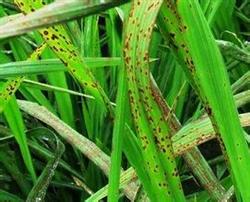
Identifying Zinc Deficiency Symptoms in Rice and Techniques for Skillfully Applying Zinc Fertilizer in Paddy Fields
Zinc is one of the essential trace elements for the growth and development of rice. Zinc deficiency in rice shows obvious symptoms. When rice is deficient in zinc, chlorotic yellow-white spots first appear in the midrib area of the lower leaves, with reddish-brown spots and irregular patches forming on them, which then gradually expand into reddish-brown streaks, turning reddish-brown and drying from the leaf tip downward, and from...
条件筛选