-

Flowing water fish farming brings in gold and silver, farmers are busy getting rich
Flowing water fish farming: busy getting rich with flowing gold and silver
-
Is Silver Queen (Aglaonema) Poisonous? Care Methods, Precautions and Bedroom Placement Explained
1. Silver Queen likes to live in a constant-temperature environment, so if you often water it with warm water, it can survive for a longer time. 2. Do not let water accumulate in the Silver Queen's pot (watering too frequently), as this easily leads to root rot. It is best to water only when you see the potting soil is dry. If the pot is relatively deep
-
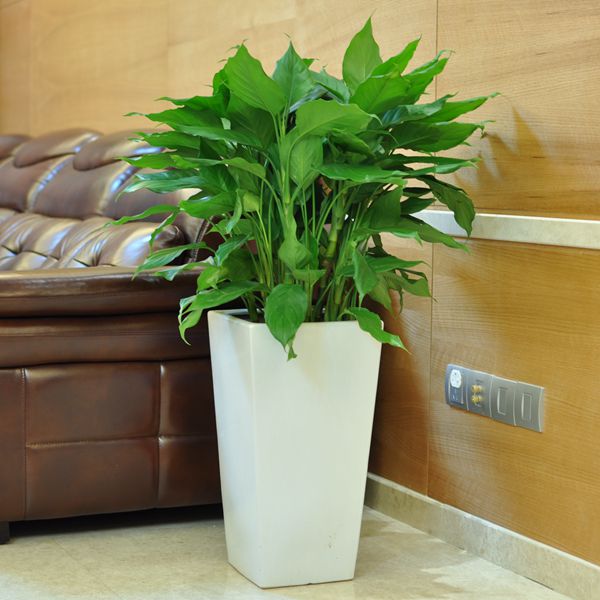
Silver Queen care methods and precautions
1. Soil: For potted Silver Queen, loose peat soil or turf soil is best. A mix of leaf mold and sandy loam can also be used, acidified with a small amount of diluted ferrous sulfate. 2. Watering: During the peak growth seasons of spring and autumn, Silver Queen needs ample watering, and the potting soil should be kept consistently moist
-
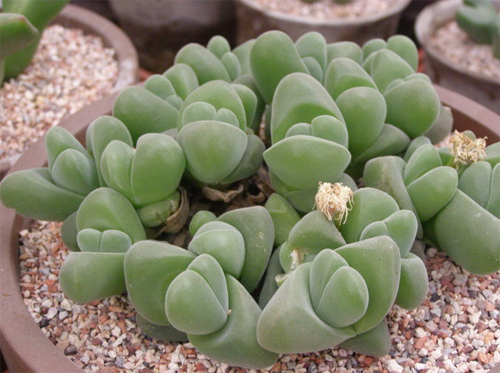
Aloinopsis schooneesii, also known as Silver Light Jade: Detailed Guide to Cultivation Methods and Flowering Key Points
Aloinopsis schooneesii grows in a very cute way, somewhat like a living stone, and it also has a lovely name, Silver Light Jade. It can even bloom. What are the cultivation methods for Aloinopsis schooneesii? What points should be noted? What other aliases does it have? What do its flowers look like?
-
A farming method for cage polyculture of grass carp and silver carp in reservoirs
The so-called "cage-in-cage in reservoir cages" means placing 4 small cages inside 1 large cage, and "grass carp on top, silver carp below" means raising grass carp in the small cages and bighead carp in the upper and lower interlayers between the small cages and the large cage (the small cages are 5 m high, the large cage is 5.5 m high, and the interlayer is 0.5 m high). The grass carp in the small cages are intensively cultured at high density by feeding compound pellet feed, while the bighead carp in the large cage mainly use grass carp feces and drifted feed as bait, with no special feeding, in an extensive, low-density grazing-style culture. This farming model
-
What kind of fish is the silver crucian carp? A comprehensive introduction to its breed characteristics
The silver crucian carp, also known as the Japanese crucian carp, the Osumi crucian carp, the Kawachi crucian carp, etc. Because the silver crucian carp has advantages such as a wide feeding habit, fast growth, large individual size, a high catch rate, and few diseases, it can grow, develop, mature, and spawn well in all kinds of freshwater bodies in our country, and is generally welcomed by fish farmers. It has already been promoted over large areas in many provinces and cities in our country. 1. Breed origin The silver crucian carp is native to Japan's long-standing Lake Biwa. Around 1897, a fisherman from Kawachi District, Osaka Prefecture, moved it into inland rivers and ponds for rearing. After many years of domestication and careful selection
-
What kind of fox is the silver frost fox? Let us introduce you to fox breeds
Breed introduction: Mating a male silver fox with a female blue fox produces offspring that are silver frost foxes; they cannot be kept for breeding. Such fox pelts are valuable and priced slightly higher than locally produced blue fox pelts. The fur is thick and plush, the coat color is grayish-blue and glossy, the guard hairs are even, and the soles of the paws have dense hair, making it suitable for severe cold climate conditions. The lifespan is generally 8-10 years, and the usable period is 4-6 years. Sexual maturity occurs at 9-11 months of age. Estrus occurs from mid-February to early May each year, breeding only once a year, and the gestation period is 52 days. Herd average
-
Prevention and Treatment of Fulminant Hemorrhagic Disease in Silver Carp and Bighead Carp in Hill Ponds and Reservoirs
In 2005, a large-scale die-off of silver carp and bighead carp occurred in the Mianhuatan Reservoir, affecting 200 mu with a mortality rate of 70%. The disease was prone to recurrence and difficult to control, and was diagnosed as fulminant hemorrhagic disease of silver carp and bighead carp. This disease is highly harmful, and fish farmers should attach great importance to it. I. Epidemic situation: The disease readily becomes epidemic from March to May and from August to October each year, with mortality during outbreaks reaching as high as 70-90%. II. Symptoms: "Dark floating head" often occurs, initially at
-
How to make silverfish baked eggs? A simple home-style recipe that is easy to learn
Ingredients: 4 eggs, 1/3 LB silverfish, some green peas. Seasoning: salt, 1 slice ginger, vinegar. Method: 1. First squeeze the silverfish dry, add a little salt, stir-fry briefly in an oiled pan with one slice of ginger, then remove and set aside. Remove the ginger slice. 2. Stir-fry the green peas until cooked, then remove and set aside. 3. Beat 4 eggs, add some salt and mix well. Heat oil in a pan, using a little more cooking oil, and heat over high heat until 80 to 90 percent hot (the oil is very hot). Pour in the eggs and fry into one large egg pancake, which takes only a few seconds, then immediately turn to low heat and bake.
-
Detailed Explanation of the Processing Technology for Canned Silver Carp in Tomato Sauce
I. Process Flow: Raw Material Inspection --- Raw Material Processing --- Salting --- Flour Mixing --- Frying --- Adding Tomato Sauce --- Filling Cans --- Sealing Cans --- Sterilization --- Incubation Test --- Packaging --- Finished Product. II. Key Operating Points. 1. Raw Material Inspection. (1) Use fresh (iced) or well-frozen silver carp (Hypophthalmichthys molitrix), with the fish body intact, normal odor, clean eyeballs, bright cornea, bright red gills, firm and elastic muscle, and tight connection between bone and flesh. (2) Raw fish weighing over 1000 g per fish.
条件筛选