-

What should be noted when cultivating shiitake mushrooms off-season?
Shiitake mushrooms cultivated off-season can usually fruit in spring; such shiitake mushrooms are of good quality, fetch a high price, and have a good market. To develop shiitake cultivation in the future, the number of off-season crops must be increased, so that supplies are available to the market year-round and economic returns can also be raised. The principles and methods of off-season cultivation are basically the same as those of spring cultivation, but the following four points should be noted: 1. Inoculation season: inoculation should be carried out when the local average temperature is steadily below 10°C. 2. During the spawn-running process, the temperature requirement of 7-13°C should be met as much as possible; spawn running can be carried out in a greenhouse or a single-board machine room (referring to a room with a temperature of 0-13°C).
-
What issues should be noted in the export processing of fresh-keeping shiitake mushrooms?
I. Raw material selection In the processing of fresh-keeping shiitake mushrooms, the first thing to note is the freshness of the raw materials, which is an important factor determining the quality of the finished fresh-keeping shiitake mushrooms. The raw materials must be fresh, and the color must be normal; secondly, the mushroom caps must be complete and round in shape, the stems must be intact, and the mushroom bodies must retain the graceful form of natural growth; the mushroom flesh must be thick, the edges of the caps must be neatly incurred, the partial veil unbroken or slightly open, and not fully opened; the cap diameter must be no less than 38 mm; and there must be no pests or diseases, off-odors, or soil impurities. II. Raw material handling and cold storage First,
-
What should be noted when keeping clownfish in a mixed tank?
Clownfish belong to the damselfish family (Pomacentridae), and they all have rather aggressive temperaments, especially showing hostility toward newly introduced fish of the same kind. Mixed keeping is not a problem, but the following conditions are required: 1. Several fish should be introduced into the tank at the same time, with the time interval kept as short as possible, and the smaller individuals introduced before the larger ones. 2. There should be a large number of sea anemones (carpets) in the tank; for three kinds of fish, at least three sea anemones (carpets) are needed. 3. The tank must be large enough, and the sea anemones (carpets) should be distributed evenly. The above three points only help avoid fights among them as much as possible, but they cannot
-
What should be noted before koi are introduced into the pond?
Transporting koi is simple: just place them in a plastic bag filled with oxygen. Juvenile or medium-sized fish can be carried by the hobbyist, but large fish are usually shipped by the dealer. New fish carry a high risk of pathogens or parasites, and if not handled properly they often infect healthy fish. Therefore, the transport water should preferably be dosed with salt and antibiotics. Anchor worms and fish lice are visible to the naked eye; if found, they must be removed immediately and the wounds disinfected. The most important thing is adjusting the water temperature. Dealer pond water is generally warmer than the hobbyist's pond water. If the temperature difference exceeds 5°C, the fish easily catch cold,
-
What issues should be noted when harvesting edible mushrooms
1. Harvest at the right time. When edible mushrooms are 70-80% mature, they look beautiful and taste good. Take shiitake mushrooms (Lentinula edodes) as an example: the sign of 70-80% maturity is that the partial veil has broken, the cap has not yet fully opened and still curls inward slightly, forming a "gong rim"; the gills have fully extended and turned from white to yellowish-brown or dark brown. This is the suitable harvest period for shiitake mushrooms. 2. Pay attention to picking technique. When picking edible mushrooms, all stemmed mushrooms, such as shiitake, straw mushrooms, oyster mushrooms, and bamboo fungus (Phallus indusiatus), must be picked according to the principle of picking the large and leaving the small. When picking, pinch the base of the mushroom stem tightly with your thumb and index finger,
-
What are the methods for collecting goose down and feathers, and what points should be noted?
1. Plucking from the carcass means collecting all the goose down and feathers at once after slaughter, and it is further divided into three collection methods: hot-water scalding, steam plucking and dry plucking. The hot-water scalding method is also called the soaking-and-scalding method or the scalding-and-defeathering method. After the goose is slaughtered, collect the goose blood and drain it as completely as possible to ensure the quality of the goose carcass and internal organs, so that the carcass has no residual blood, the body surface is clean and attractive, and the meat quality is good. It is best to pull out the large quills on both wings (tip quills, blade quills, nest quills) before scalding and store and sell them separately. Otherwise, once mixed into the feathers, they not only affect down quality but are also treated as waste and wasted. After slaughter, use
-

-

What points should be noted when fertilizing cyclamen?
During the various growth stages of cyclamen, the types and amounts of fertilizer required are all different, and this must be paid close attention to when growing it. Fertilizing cyclamen cannot be generalized; each stage has its own emphasis. Under normal circumstances, the peak of potassium uptake is from May to September
-
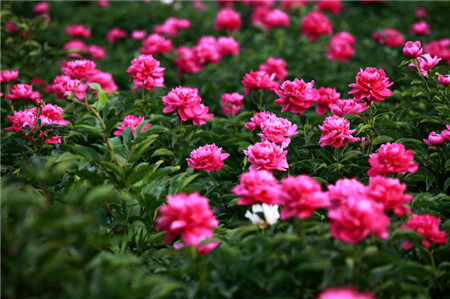
What points should be noted when planting peonies?
Peonies (Paeonia lactiflora) originated in northern China and are perennial herbaceous plants with fleshy roots. There are now over a thousand varieties worldwide, and about 180 in China. Peonies are highly adaptable and cold-hardy, and can overwinter outdoors in northern China. Wild species are currently distributed in areas such as the Qinling Mountains and the Dabie Mountains. However, three points should be noted when planting peonies: 1. The soil must have good drainage.
-
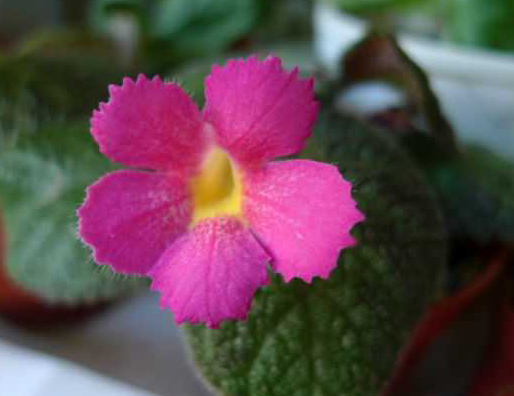
What should be noted when caring for an Episcia?
Episcia is also known as red tongcao. The flowers are solitary in the leaf axils, crimson red, blooming in summer. Common varieties include 'Emerald Queen', with dark green leaves and silver-white midribs; copper-green Episcia, with copper-green leaves and reddish leaf margins; chocolate Episcia, with silver-white main veins, as well as silver-glow Episcia and variegated Episcia, etc.
条件筛选