-

-

What should be noted for fishery production during heavy snow
The rain and snow weather process since January 10 has affected 77.862 million people in 14 provinces (regions, municipalities) including Anhui, Jiangxi, Henan, and Hunan, with 28 deaths caused by the disaster. Ningbo City also began experiencing heavy snowfall starting at 4:00 this morning, with snow accumulation reaching 2.5 cm. Facing the heaviest snow in 50 years nationwide, fishery production in Yinzhou District should pay attention to the following points: 1. Deepen pond water levels as much as possible to prevent fish from being frostbitten due to excessively low water levels. Because when the pond water level drops too much
-
What should be noted when intercropping in a peach orchard?
Points to note when intercropping in a peach orchard: after the peach trees are planted, the trees are still small, so tall-stemmed crops are not suitable for the intercropped land; peanuts, root and tuber crops, and legumes are preferable. Intercropped crops must not be planted too close to the tree trunks. Generally, for newly planted trees, a tree plate of about 1 sq m can be left, and for trees that have just begun to bear fruit, a tree plate of about 2 to 3 sq m should be left, to prevent the intercropped crops from competing with the fruit trees for fertilizer and water. To increase soil organic matter, green manure can be interplanted between the rows of peach trees. Interplanting green manure is an important way to resolve the competition between fruit trees and grain crops for fertilizer.
-
What issues should be noted during the processing of yellow peaches?
Influenced by international yellow peach market prices, domestic yellow peach prices have been climbing steadily, with purchase prices maintained at 2-3.6 yuan/kg, an average price of 2.6 yuan/kg, and average output value of yellow peach orchards at 7800 yuan/mu, with the highest reaching 10,000 yuan, generally 2-5 times that of ordinary peach orchards, showing very significant economic benefits. 1. Pay attention to selecting excellent varieties: Yellow peach varieties used for canning require non-melting flesh, firm texture, good elasticity, low juice content, clingstone, no red streaks in the flesh, and preferably no
-
What should be noted when herding ducks in spring?
Choose good grazing grounds. During spring plowing, in rice-growing areas, ducks can be grazed in green manure fields that have been plowed and are being prepared for transplanting rice seedlings. Such fields contain plenty of natural plant and animal feed, such as grass seeds, grass roots, earthworms, and insects. After the rice seedlings are transplanted, ducks should not be taken into the fields to graze; grazing can resume only after the rice is harvested. Graze carefully. In river network areas, make full use of river channels for grazing. Generally, when taking the ducks out to graze, it is better to go upstream, when the ducks are full of energy and catch more food. In the cold spring season, when windy weather occurs, graze against the wind to prevent the wind from lifting the ducks' feathers and causing them to lose too much body heat. In areas with abundant feed
-
What should be noted when growing Gastrodia elata in boxes?
① You must choose high-quality fungus logs, preferably those with many young rhizomorphs distributed evenly. ② The fungus logs must be free of contamination by other fungi. ③ If there are not many rhizomorphs on the fungus logs, you may appropriately add some fungus branches or secondary or tertiary solid spawn of Armillaria mellea. You can also cover the fungus logs with a layer of culture substrate for cultivating Armillaria mellea (because the substrate contains Armillaria mellea, which acts as spawn). ④ If a piece of fungus wood is placed parallel 3 cm beside a high-quality fungus log, once the fungus wood connects with and grows Armillaria mellea well in the later stage, it can continuously supply nutrients to Gastrodia elata. But do not plant the Gastrodia near the fungus wood
-
What should be noted in mechanized potato harvesting
When harvesting potatoes mechanically, in order to save time, labor and effort, improve the economic benefits of machine use and the marketable rate of potatoes, the following issues should be noted. (1) About 10 days before the determined harvest date, the vines should first be rolled or cut (the method of rolling vines is to thread old tires onto an axle in a string and pull them with a tractor to roll the vines), so that the potato skins age and are prevented from being damaged during harvest, which would affect the quality of marketable potatoes. (2) The number of potato pickers matched to each machine unit should be reasonable. Small harvesters are generally matched with
-
What technical points should be noted for indoor cultivation of oyster mushrooms?
Oyster mushrooms are welcomed by people for their delicious taste, short production cycle and ease of cultivation. Especially in Northeast China, where the climate is cold in winter and spring and fresh vegetables are scarce, growing oyster mushrooms indoors to supply the market is truly a good way to make money. However, a prominent problem in indoor cultivation of oyster mushrooms is that the air temperature is not easy to control and the surface layer of the substrate dries out easily, affecting oyster mushroom production. After repeated trials, the author believes that casing soil cultivation gives good results. 1. Mushroom house selection. Abandoned or temporarily unused houses can be chosen as the mushroom house (they must be repainted with limewater), and heating and ventilation facilities are required.
-
What key points should be noted for late-planted rice when transplanting into fields prepared with stored water?
The general requirement for transplanting late-planted rice into fields prepared with stored water is to seize the water, prepare the field, and transplant the seedlings, increasing the number of hills, seedlings, and panicles. For rice fields transplanted with stored water, as soon as rainfall occurs or another water source becomes available, measures such as blocking, diverting, and pumping water should be taken immediately to seize the water, prepare the field, and transplant the seedlings. For late-planted fields, planting density should be increased. For seedlings aged 60-70 days, transplant more than 13,000 hills per mu (8 x 6 cun), with two seedlings per hill (2 grains of rice); for seedlings aged over 70 days, transplant more than 15,000 hills per mu (8 x 5 cun), with about 10 seedlings per hill, so that the number of seedlings planted per mu reaches 150,000
-
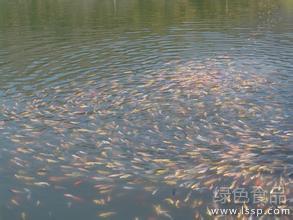
What should be noted when cultivating fish fingerlings in summer? Good-quality fingerlings are the foundation of successful fish farming
Good-quality fingerlings are the foundation of successful fish farming: precautions for cultivating fish fingerlings in summer
条件筛选