-
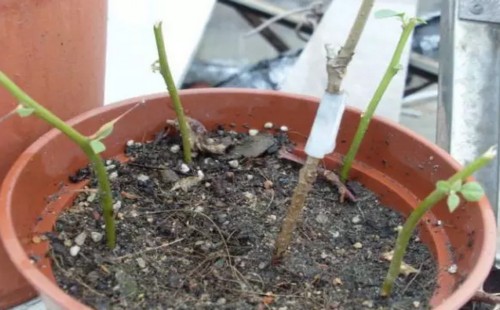
What should be noted when taking cuttings of Bougainvillea?
Potted Bougainvillea has high ornamental value, especially during the flowering period, and to obtain high-quality potted plants, we generally use cuttings to propagate young plants. Although the cutting method and process for Bougainvillea are relatively simple, there are still some precautions that need our attention.
-
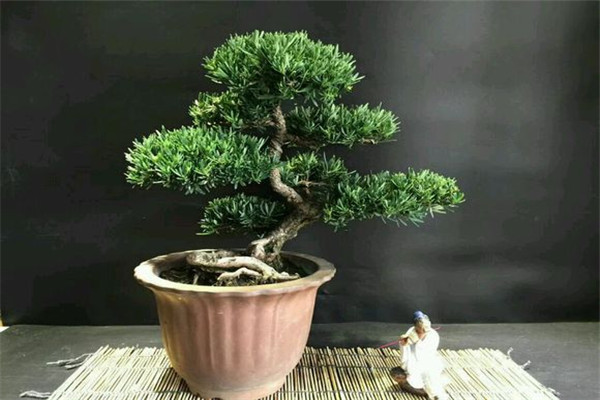
What should be noted in the cultivation of Buddhist pine, and how to shape and set its posture?
Buddhist pine (Podocarpus macrophyllus) is an evergreen coniferous tree, reaching up to 20 m tall, distributed across many provinces and regions of China, with very few wild trees, mainly cultivated in gardens as an ornamental tree. So, what should be noted in the cultivation of Buddhist pine? How to shape and set its posture? What should be noted in the cultivation of Buddhist pine?
-

What are the symbolic meanings of plum blossoms and what should be noted when planting them?
The plum blossom is a traditional famous flower of our country, and there has also been debate about making it the national flower. So what are the symbolic meanings of the plum blossom? What should be noted when planting plum blossoms? Below, the editors of Tuliu.com will answer these one by one. The symbolic meanings of the plum blossom: 1. The flower language of the plum blossom is strength, noble purity, defying snow and frost, unyielding through a hundred hardships, and a proud and upright character.
-
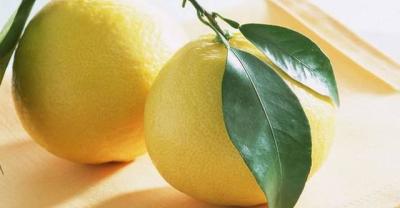
What should be noted when growing cherries?
1. Site selection and orchard establishment. "Chinese cherry" can grow normally where the average annual temperature is above 15-16°C and the annual rainfall is between 700-1000 mm. Although varieties of the "Chinese cherry" type...
-
What should be noted when growing corn?
Recently, the weather in Northeast China has continued to be clear, the moisture content of wet grain has decreased, and prices have continued to rise! The life of corn goes through several stages: seed germination, emergence, jointing, differentiation and formation of tassels and ears...
-

What technical points should be noted when introducing tea plants?
Tea plant introduction is simple and easy to achieve results. Since the 1950s, the area planted with improved varieties has been expanded. For example, the Yunnan large-leaf variety was introduced to Guangdong, Guangxi, Sichuan, Guizhou and other provinces and autonomous regions, and the area has reached more than 1 million mu. Fujian, Zhejiang and other provinces used introduced and acclimatized Yunnan large-leaf varieties as original material to breed a group of excellent high-yield new varieties. New progress has been made in introducing tea from the south to the north. The northernmost boundary of tea plant distribution in China has shifted from about 34°40'N to near 37°49'N, advancing northward by more than 350 km. Tea varieties have also been introduced successively from the former Soviet Union, Ja
-
What should be noted when advancing the cotton sowing date?
Can the cotton sowing date really be advanced? Based on many years of cotton sowing practice, the lessons in this regard are very profound. It is true that using plastic film mulching for nutrient-pot seedling raising can also allow sowing in mid-to-late March and produce cotton seedlings in early April, and large-scale demonstrations have been carried out in production, but the result is that management is very difficult, and it is also hard to ensure full stands and strong seedlings. First, cold waves are frequent in early to mid-April, temperature fluctuations are large, north winds occur many times, and it is very difficult to judge when to uncover and cover the seedbed film; second, if continuous rainy weather occurs, it is difficult to ventilate the cotton seedlings on the seedbed, which very easily leads to spindly seedlings and causes cotton seedlings to lodge; third, low temperature and rain also easily induce diseases such as damping-off, anthracnose, and seedling blight, causing patches of dead seedlings in the seedbed; fourth, early sowing prolongs the seedling age of cotton seedlings, forcing them to be transplanted into the field too early. When early-transplanted cotton seedlings encounter cold waves, missing plants and broken rows often result from dead seedlings, generally 10%-20% missing plants, and in severe cases 30%-50% missing plants. In recent years, many new varieties have been introduced in cotton production, especially hybrid insect-resistant cotton, which is relatively expensive. If the area of missing plants is too large, it will not only cause economic losses, but also make it difficult to achieve one sowing, one transplanting, and one full stand of cotton. The planned cotton field area often cannot be realized, and it is even harder to ensure that excellent cotton seed is planted to achieve a high and bumper harvest.
-

What points should be noted when fertilizing cyclamen?
During the various growth stages of cyclamen, the types and amounts of fertilizer required are all different, and this must be paid close attention to when growing it. Fertilizing cyclamen cannot be generalized; each stage has its own emphasis. Under normal circumstances, the peak of potassium uptake is from May to September
-
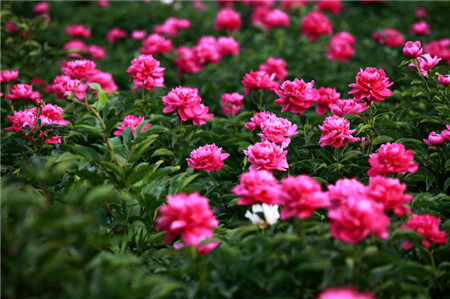
What points should be noted when planting peonies?
Peonies (Paeonia lactiflora) originated in northern China and are perennial herbaceous plants with fleshy roots. There are now over a thousand varieties worldwide, and about 180 in China. Peonies are highly adaptable and cold-hardy, and can overwinter outdoors in northern China. Wild species are currently distributed in areas such as the Qinling Mountains and the Dabie Mountains. However, three points should be noted when planting peonies: 1. The soil must have good drainage.
-
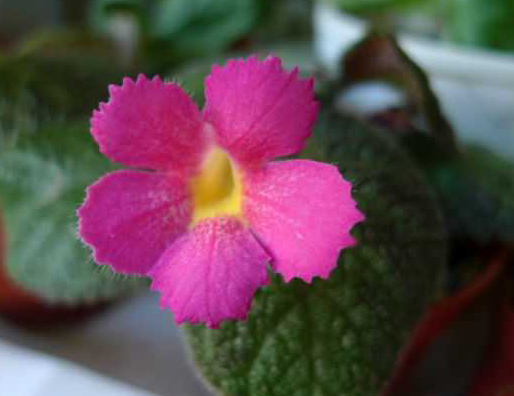
What should be noted when caring for an Episcia?
Episcia is also known as red tongcao. The flowers are solitary in the leaf axils, crimson red, blooming in summer. Common varieties include 'Emerald Queen', with dark green leaves and silver-white midribs; copper-green Episcia, with copper-green leaves and reddish leaf margins; chocolate Episcia, with silver-white main veins, as well as silver-glow Episcia and variegated Episcia, etc.
条件筛选