-

What issues should be noted in the export processing of fresh-keeping shiitake mushrooms?
I. Raw material selection In the processing of fresh-keeping shiitake mushrooms, the first thing to note is the freshness of the raw materials, which is an important factor determining the quality of the finished fresh-keeping shiitake mushrooms. The raw materials must be fresh, and the color must be normal; secondly, the mushroom caps must be complete and round in shape, the stems must be intact, and the mushroom bodies must retain the graceful form of natural growth; the mushroom flesh must be thick, the edges of the caps must be neatly incurred, the partial veil unbroken or slightly open, and not fully opened; the cap diameter must be no less than 38 mm; and there must be no pests or diseases, off-odors, or soil impurities. II. Raw material handling and cold storage First,
-
What should be noted when keeping clownfish in a mixed tank?
Clownfish belong to the damselfish family (Pomacentridae), and they all have rather aggressive temperaments, especially showing hostility toward newly introduced fish of the same kind. Mixed keeping is not a problem, but the following conditions are required: 1. Several fish should be introduced into the tank at the same time, with the time interval kept as short as possible, and the smaller individuals introduced before the larger ones. 2. There should be a large number of sea anemones (carpets) in the tank; for three kinds of fish, at least three sea anemones (carpets) are needed. 3. The tank must be large enough, and the sea anemones (carpets) should be distributed evenly. The above three points only help avoid fights among them as much as possible, but they cannot
-
What are the precautions for stocking fish fingerlings in early spring? Farmers should keep these points in mind
1. Fingerling quality: The fingerlings to be stocked should be of the same species and same age, uniform in size, robust and uninjured, with intact scales and fin rays, strong upstream swimming ability, and after being removed from water, the gill cover should not open and the fish should keep jumping. 2. Fingerling disinfection: When disinfecting fingerlings, note: ① The medicine should be prepared and used immediately; use clean water to prepare the solution, avoid using fertilized water, and avoid direct sunlight when soaking the fingerlings in the medicine. ② The dosage must be accurate, avoiding insufficient or excessive medication. ③ The soaking time should be appropriate. If signs of poisoning appear in the fingerlings, immediately add water
-
What are the medication precautions for dogs? Owners should keep these points in mind
There are 4 commonly used methods of administration: oral, injection, enema and topical, and each of them has several ways. (1) Oral administration 1) Mixing with feed. Mix the drug directly into an appropriate amount of feed the dog likes and stir well, letting it eat on its own. If necessary, withhold one meal beforehand. This method is suitable when the sick dog still has an appetite and the drug has no unusual taste, is non-irritating and the dose is not large. 2) Oral dosing. When the dose of tablets, pills or capsules is not large, they can be wrapped directly in soft paper, the sick dog's mouth opened, and the packet placed over the tongue
-
Which six diseases should be prevented when keeping dogs in spring?
Spring is a period of high incidence for various dog diseases. Therefore, it is very important to do a good job in the prevention and treatment of dog diseases in spring. Specifically, the prevention and treatment of the following six diseases should be carried out well. 1. Rabies Rabies, commonly known as mad dog disease and hydrophobia, is an acute, contact zoonotic disease caused by rabies virus, mainly invading the central nervous system. Preventive measures: The principle of prevention is mainly to do a good job in "prevention, inspection, elimination, and treatment." 1. Prevention: Make sure vaccination is done well. Dilute each bottle of vaccine with 10 ml of sterile water. After fully dissolving, inject 1 ml subcutaneously or intramuscularly into each dog.
-
How should garlic scapes be stored in winter to keep them fresh longer?
Temperature management of the storage room. Garlic is a plant with relatively strong cold resistance, and garlic scapes, being the flower stalks of garlic, still have relatively strong physiological cold resistance. When the storage ambient temperature reaches their freezing point, the preservation effect is best. The freezing point temperature of garlic scapes is -0.8 to -1°C (varying with solids content). When the scape temperature is above -0.8°C, tissue freezing will not occur, so it is safe. Based on diverse practical experience, the recommended cold storage index for garlic scape room temperature is -1 to 0°C. Within this range, lower the upper
-
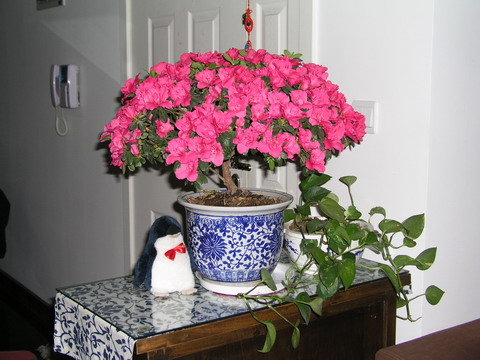
What should you pay attention to when growing flowers in winter? Keep these care points in mind
Indoors in winter, keeping a few pots of flowers and plants not only purifies the air but also adds vitality to a room, filling your living room and parlor with the spirit of spring and delighting the eye. However, because winter brings low temperatures and low humidity, rooms with heating are extremely dry while rooms without heating are very cold and dim, which is very unfavorable to the growth of flowers and plants
-

What should you pay attention to when growing wampee? Keep these key points in mind
What should you pay attention to when growing wampee
-

What should you pay attention to when growing wisteria? Keep these care points in mind
Wisteria is also known as tengluo. It is a large deciduous climber. The flower clusters hang down, densely packed, light purple, fragrant, blooming from April to May. Wisteria is long-lived, with old stems twisting and twining; when it blooms profusely in spring, strings of flower clusters hang from the tree, and it can be twined around pergolas and flower gates in courtyards. Wisteria likes sunlight, tolerates slight shade, and has strong cold resistance
-

What should you do when pitcher plant leaves turn yellow? Water and fertilize appropriately, and keep the environment stable.
The pitcher plant (Nepenthes) is a relatively uncommon potted plant, and it is loved by many people because it can catch mosquitoes and flies. However, compared with other mosquito-repelling plants such as pitcher plants, night-blooming jasmine (Cestrum nocturnum), and geraniums, far too few people grow pitcher plants, so beginners often run into situations of improper care.
条件筛选