-
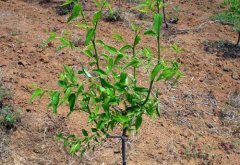
How to plant red jujube saplings and train their tree shape, and what are the common pests and diseases?
How should red jujube saplings be planted and trained into a tree shape? What are the common diseases in red jujube cultivation and how are they controlled? At present, red jujube trees are mostly grown with dwarfing cultivation, with tree height 1.5 to 2.5 m, which makes it convenient to pick fruit in pick-your-own orchards. Therefore, after the saplings are planted, the branches should be gradually pulled down to dwarf the tree.
-
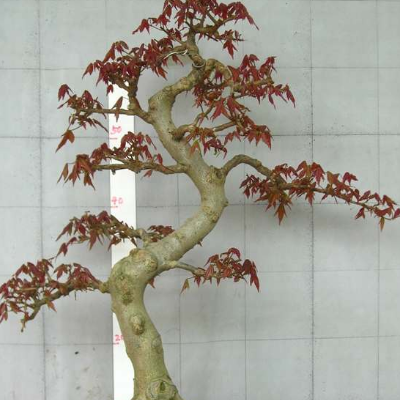
How to shape and care for a trident maple bonsai?
Trident maple (Acer buergerianum) is a tree, usually grown as an ornamental, and it can grow very, very tall. Trident maple can also be made into a bonsai. How do you shape a trident maple bonsai? How do you care for a trident maple bonsai: How to shape a trident maple bonsai: generally, it is best to carry out shaping design during the growing season
-
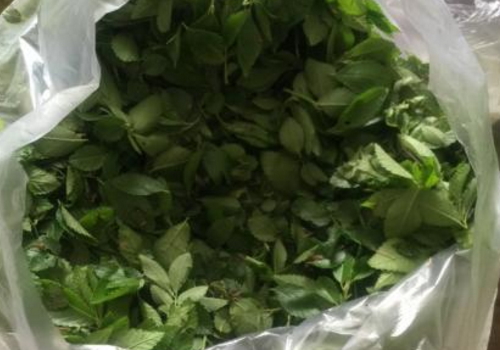
Shape characteristics of elm leaves and solutions for yellowing leaves
Elm leaves, these can be eaten, and eating them has certain benefits for the body. What do elm leaves look like? What to do if they turn yellow? What elm leaves look like: long ovate, leaf margins serrated, leaves relatively thin, veins clear, leaf underside and surface relatively rough. What to do if elm leaves turn yellow: 1. Water yellowing: potting soil waterlogged and wet for a long time
-
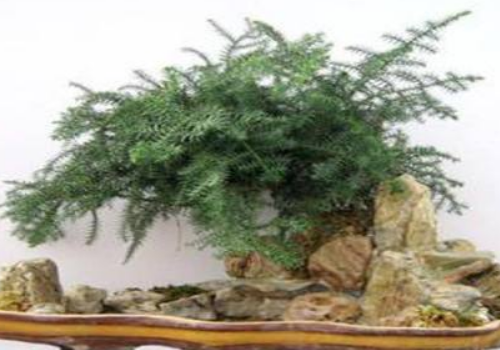
How to Grow and Shape a Potted Norfolk Island Pine
The Norfolk Island pine (Araucaria cunninghamii) is highly ornamental and is now often used for bonsai. How do you grow a potted Norfolk Island pine? How do you shape it? How to grow a potted Norfolk Island pine: 1. When first transplanting it into a pot, take the Norfolk Island pine out of its original pot and remove a certain amount of soil from the bottom upward, but do not remove it all, so as not to damage the roots.
-

How to bake and shape Gastrodia elata after steaming and boiling
Place the Gastrodia elata taken out after steaming and boiling on a pre-prepared kang (heated brick bed). The temperature on the kang should initially be 50-60°C. After baking for 2-3 hours, raise it to 70-80°C. When it is 60-70% dry, take it out and flatten it with a wooden board. Finally, bake it over charcoal fire with sulfur until completely dry, and it becomes commercial Gastrodia elata. Sun-drying can also be used for processing, but the time required is too long, so it is rarely used. Generally, drying over a high fire is better. Practice has proved that Gastrodia elata steamed in a basket is the best, while the quality of that boiled in water is poorer.
-
What shapes do potato fried snacks come in
The raw material formula uses dried potato powder as the main ingredient, with gluten powder, soybean protein powder, dried egg powder, polysaccharides and starch as auxiliary ingredients. In the production method, one or more of the components selected from the above auxiliary ingredients are added to the dried potato powder. There are no special restrictions on the amount of each component added, but the most suitable addition amounts are respectively: gluten powder 0.5-20% (weight percentage, the same below), soybean protein powder 0.2-10%, dried egg powder 0
-
Key Points of Peach-Shaped Plum Cultivation Techniques, A Guide to Growing This Rare Fruit
The peach-shaped plum is a deciduous small tree of the Rosaceae family, blooming from late March to early-to-mid April. This variety sets fruit very well: long fruit branches, medium fruit branches, short fruit branches and bouquet-like fruit branches can all bear fruit, and it also shows clustered fruiting. The fruit ripens from late July to early August and has a very good in-season consumer market. The peach-shaped plum is drought-tolerant and cold-tolerant, and is not demanding about soil; it can be planted wherever peaches and plums are suitable for cultivation. Choose a site with irrigation and drainage conditions to establish the orchard. If planting on hillsides, the slope should be under 25°
-
Introduction to the Snake-shaped Lei Bamboo Variety and Its Main Characteristics
Recently, during a survey of Lei bamboo (Phyllostachys praecox) provenance, the forestry department of Lin'an City discovered a patch of "strange bamboo" with curved culms on a Lei bamboo hill in Chongyang Village, Jincheng Subdistrict. It was later identified by Professor Fang Wei of the Bamboo Department of Zhejiang Forestry College as a variant of Lei bamboo. Recently, accompanied by the hill owner Jiang Changfu, we conducted an on-site survey on the hill. The area is about 10 mu, with more than 2,000 plants. The culms are mostly "S"-shaped, and the curvature of new culms is more pronounced than that of mother culms; the rhizomes are also uneven. The curved bamboo is monopodial and scattered, with culm height 2-6 m and circumference at eye level
-
Detailed explanation of the production technique for ring-shaped garlic chili
Garlic chili: It uses a unique formula and a distinctive production method, giving garlic chili a unique flavor and mouthfeel. It is fragrant, spicy, crisp, and flaky, and all ingredients and spices are fully packed inside the chili rings. During the stir-frying process, the product does not stick to the pan and does not burn; the ingredients and spices combine, making the product crisp and flaky, enhancing its fresh savory aroma, and giving the product a more natural flavor. After tasting by many people and fellow chefs, it has received high praise and is a rare table condiment.
-
How should potted oleander be pruned and shaped
Oleander leaves are borne in whorls of three and it has typical three-forked branching: each time it is pruned, 3 new shoots grow from the stem nodes. People often use this branching trait to shape and prune it, so that each plant keeps 3 main branches on the trunk, and each main branch keeps 3 more branches, the tree form commonly known as "three forks and nine tops". After a potted oleander has established, the first pruning can generally be done according to the plant's height and personal preference, choosing and keeping a trunk of 30-40 cm and pinching it to encourage side branches. When the new shoots grow to 4-6 cm long, choose 3 appropriately positioned thick branches and remove the rest
条件筛选