-

New disease-resistant, high-yield rice variety launched by Bayer CropScience
On May 14, 2008, Bayer CropScience announced the launch in India of ArizeRDhani, the world's first hybrid rice variety resistant to bacterial leaf blight. Compared with conventional varieties, this new variety can increase yields by 20%-30% and provides the crop with strong protection against the highly destructive bacterial leaf blight. "Rice is a staple food in many developing countries and emerging markets. Although global demand for this crop continues to grow, the occurrence of diseases can greatly affect harvests and threaten food supply.
-
Scientific Potassium Application for High Yield and Quality in Garlic
Potassium is an essential nutrient for crop growth, and its role in increasing crop yields and improving the quality of agricultural products has been confirmed in many crops, but there are still few reports on the effect of potassium on garlic yield and quality. Through two years of field trials, the Soil and Fertilizer Institute of the Zhejiang Academy of Agricultural Sciences proved that potassium application to garlic achieves high yield and quality. 1. The role of potassium application in garlic. The results of two years of field trials showed that potassium fertilizer application to garlic had an obvious yield-increasing effect. Under equal nitrogen and phosphorus levels, applying potassium fertilizer compared with no potassium fertilizer increased yield by 60.0
-
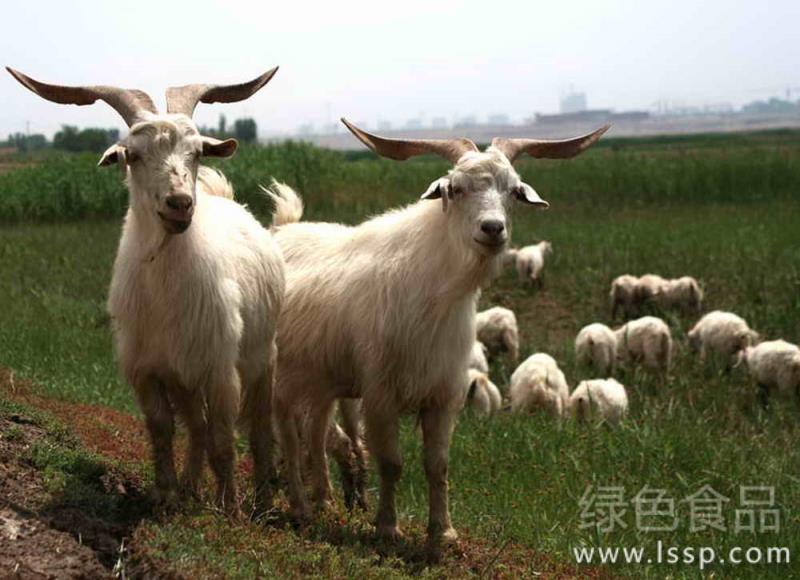
Sheep foot-and-mouth disease has a high mortality rate; how can it be prevented and controlled scientifically?
Sheep foot-and-mouth disease has a high mortality rate; how to prevent and control foot-and-mouth disease in sheep
-
Special Topic on Sandworm Farming Techniques: A Complete Analysis of Scientific Methods and Practical Tips
Overview of Sandworms The sandworm (Nereid), English name - Clamworm, belongs to the phylum Annelida, class Polychaeta, and is commonly known as sea worm, sea maggot, sea centipede, and sea leech. Those harvested and farmed are mostly large species of the genera Perinereis Kinberg and Neanthes Kinberg. They are worm-shaped, with larger individuals reaching more than 10 cm in body length, and some species reaching more than 20 cm. The cross-section is round or slightly flattened, with many body segments. The body is divided into head
-
There is more to feeding rabbits than meets the eye: do these five checks for scientific feeding
First, check the rabbit's size. An adult rabbit weighing about 3.5 kg needs 150-200 g of feed per day; a young rabbit weighing about 1.75 kg needs 100-150 g of feed per day. The feed should be of a moisture level that it forms a ball when gently squeezed and falls apart when the hand is released. Second, check whether the rabbit is fat or thin. For a fat rabbit, appropriately reduce the amount of concentrate feed and increase green feed or roughage; for a thin rabbit, supplement nutrition and feed more concentrate, and you can also feed some soaked soybeans, or mash bean dregs, mix them with boiling water, and stir them into the feed to give to the rabbit. Third, check whether the droppings are dry or wet. If the rabbit's drop
-
What are the scientific methods for promoting lactation in lactating sows?
The quality of milk from a lactating sow, that is, the amount of milk secreted, directly affects the growth rate and health of the piglets. Therefore, once a lactating sow has insufficient milk or no milk, scientific lactation promotion must be carried out. The types of sow milk deficiency are analyzed as follows: 1. Lactation promotion method for first-litter sows: Insufficient milk in first-litter sows is mostly caused by insufficient mammary gland development or a low dietary nutrient level. Therefore, manual massage of the udder 1-2 times daily during the week before and after farrowing should be performed to promote mammary gland development and recovery of lactation function. For sows with insufficient milk after farrowing, 1-2 afterbirths from healthy sows can be used
-
How to Scientifically Promote Milk Production in Lactating Sows? A Detailed Guide to the Methods
The quality of the milk of lactating sows, that is, how much milk they secrete, directly affects the growth rate and health of the piglets. Therefore, once a lactating sow has insufficient or low milk supply, scientific milk promotion must be carried out. The types of milk deficiency in sows are analyzed as follows: 1. Milk promotion method for first-litter sows: Low milk production in first-litter sows is mostly caused by insufficient mammary gland development or a low dietary nutrient level. Therefore, the udder should be manually massaged 1-2 times daily before farrowing and for one week after farrowing to promote mammary gland development and the recovery of lactation function. For sows with low milk production after farrowing, the afterbirth of a healthy sow can be used
-
Yingbuluo Nanguo Pear Builds Its Brand Through Scientific Management
1. Fruit tree pruning: Through winter pruning and spring pruning, the fruiting branches are spread out and an umbrella-shaped canopy is formed to achieve ventilation and light penetration. Pay special attention to summer pruning (mid-summer pruning), removing all water sprouts, back branches and new shoots from mature fruit trees, reducing waste of tree nutrients, maintaining the canopy in a moderate state, and ensuring that all nutrients produced by the leaves are effectively used for fruit growth and tree development. 2. Applying farmyard manure: Farmyard manure has a complete range of nutrients and is the most ideal fertilizer for improving fruit quality. Bao Dianhong's orchard applies farmyard manure once every two years, with 200-250 kg of fully decomposed farmyard manure per tree, plus some chemical fertilizer each year. He believes that doing so can both keep the tree vigorous and control excessive tree growth that causes canopy shading, ensuring fruit coloration and improving fruit quality.
-
Four key aspects to grasp in scientific fox farming
Foxes have very high economic value. Their main product, fox fur, belongs to the long-haired fur category and has the advantages of being tough and wear-resistant, soft and lightweight, warm and attractive; it is a high-quality raw material for making fur products such as fur collars, hats and fur mats. To raise them reasonably and let them create higher value, the following points should be grasped: (1) Grasp the selection and breeding of fine varieties. As people's aesthetic views improve and the international fur market changes, in the selection and breeding of fox varieties, the following two points should be used as "reference points" for high-quality breeding as much as possible. The general direction:
-
How to Fertilize Lilies: Master the Key Points of Scientific Fertilization Techniques
Lilies are perennial herbaceous plants of the Liliaceae family. They are mainly produced in Henan, Hubei, Hunan, Jiangxi, Zhejiang, Guangdong, Guangxi and other provinces (autonomous regions). The medicinal part is the bulb. Lilies prefer cool conditions and are relatively cold-tolerant; they prefer dry conditions and fear waterlogging; they are strongly shade-tolerant, but prefer light during the budding and flowering stage; they prefer deep, fertile sandy loam and have a relatively strong tolerance for fertilizer. Key points of fertilization techniques: For base fertilizer, apply 3000-4000kg of barnyard manure per 667 sq m. For topdressing, the first application at thawing time, apply 150
条件筛选